A third DWI charge in Texas is not just another legal problem—it’s a potential catastrophe. This is the moment when a serious situation escalates into a life-altering crisis, as the charge automatically jumps from a misdemeanor to a third-degree felony. The consequences you face are no longer just fines and weekend classes; they are years in state prison, financially crippling penalties, and the permanent stigma of being a convicted felon.
Your freedom, your career, and your entire future are hanging in the balance. The urgency of the situation cannot be overstated; immediate and decisive action is required to protect what you’ve built.
The Critical Leap From Misdemeanor to Felony DWI
If you are facing a third DWI charge in the Houston area, you have crossed a critical legal threshold. While first and second offenses are classified as misdemeanors—serious in their own right—a third arrest catapults your case into felony territory, where the potential outcomes are devastating.
This is no longer a matter of mere inconvenience. It is a fight to preserve your fundamental way of life.
The escalation is swift and severe. Once you are charged with a 3rd offense DWI in Texas, the legal approach changes dramatically. Prosecutors will likely view the case not as an isolated mistake but as a pattern of dangerous behavior, and the penalties are structured to reflect that grave perception.
Texas Has No Lookback Period
One of the most unforgiving aspects of Texas DWI law is its indefinite memory. Unlike some states that have a “lookback period” where old convictions fade away for sentencing purposes, Texas does not forget.
Any prior final conviction for Driving While Intoxicated (DWI) or Boating While Intoxicated (BWI) counts against you, regardless of how long ago it occurred. A mistake from ten, twenty, or even thirty years ago can resurface to elevate a new charge to a felony. For many Houston residents, this is a shocking realization—that a past event they considered long behind them can suddenly threaten their entire future.
As you can see, the consequences are severe and demand an immediate, strategic defense. The possibility of significant prison time and the long-term loss of your driving privileges are very real.
Understanding the Escalation of Consequences
To truly grasp what is at stake, it is essential to see how the penalties stack up with each offense. The jump from a second to a third DWI is less of a step and more of a plunge off a cliff.
Here’s a look at how dramatically the penalties for DWI escalate in Texas.
How Texas DWI Penalties Escalate
| Offense Level | Classification | Potential Prison Time | Maximum Fine | License Suspension Period |
|---|---|---|---|---|
| 1st DWI | Class B Misdemeanor | Up to 180 days in jail | Up to $2,000 | 90 days to 1 year |
| 2nd DWI | Class A Misdemeanor | 30 days to 1 year in jail | Up to $4,000 | 180 days to 2 years |
| 3rd DWI | Third-Degree Felony | 2 to 10 years in prison | Up to $10,000 | 180 days to 2 years |
This table shows the clear, unforgiving path from a misdemeanor with a chance of probation to a felony where prison time can be a primary consideration. It is not just a change in legal terminology; it is a fundamental shift that can irrevocably alter the course of your life.
A misdemeanor conviction is damaging. A felony conviction is catastrophic. It can strip you of fundamental civil rights, such as the right to vote or own a firearm, and creates lifelong barriers to securing employment or housing.
This massive jump in severity underscores the absolute necessity of retaining an experienced and strategic legal defense team. An arrest is not a conviction, but fighting a third charge is a complex battle that must be waged with skill and urgency. For a deeper dive into the long-term impact, review our comprehensive Houston DWI guide covering the consequences and penalties of a DWI conviction.
Understanding the Severe Penalties of a Felony DWI
A third DWI conviction is not just another mark on your record; it is a direct and immediate threat to your liberty. The state of Texas views this as a pattern of behavior that endangers the public, and the penalties are designed to be severe and life-altering. Understanding the gravity of these consequences is the first step toward building an effective defense.

Unlike misdemeanor offenses where probation might be a more probable outcome, a third-degree felony carries the very real possibility of years in a state prison. The law treats this charge with extreme seriousness, and the penalties reflect that.
Prison Time: The Stark Reality
When you are facing a 3rd offense DWI in Texas, prison is not a distant threat—it is a central part of the conversation. A conviction for a third-degree felony comes with a sentencing range of two to ten years in a Texas state prison. This is not county jail time; this is hard time in the Texas Department of Criminal Justice.
Let’s be clear about what that means. A two-year minimum sentence means losing years of your life. It means being separated from your family, losing your job, missing birthdays and holidays, and being completely removed from your community. While a judge has discretion within the sentencing range, the law mandates a prison sentence upon conviction unless your attorney can successfully negotiate and argue for a specific alternative like probation.
The Texas Penal Code is clear: a third DWI conviction carries mandatory jail time.
Financial Burdens That Can Cripple You
Beyond the loss of your liberty, a felony DWI conviction delivers a crushing financial blow. The court can impose a fine of up to $10,000—a massive increase from the fines associated with first and second offenses.
But that is just the beginning. This fine does not include the other staggering costs that accumulate with a conviction, such as:
- Court Costs and Fees: These administrative charges can easily add thousands more to what you owe.
- Probation Fees: If you are fortunate enough to receive community supervision, you will pay monthly fees for the entire term.
- Skyrocketing Insurance Premiums: Your auto insurance rates will become exorbitant, assuming your provider does not cancel your policy altogether.
- Ignition Interlock Device Costs: You will be responsible for the installation and monthly monitoring fees for this device, which can run hundreds of dollars each year.
The total financial fallout often dwarfs the initial fine, creating a long-term economic hardship that can impact you and your family for years to come.
The Long Road of Community Supervision
Even if your legal counsel secures community supervision (probation) instead of a lengthy prison sentence, it is anything but a “get-out-of-jail-free” card. Felony probation in Texas is intensive, restrictive, and can last for up to ten years.
The conditions are far more stringent than for a misdemeanor and are designed to monitor nearly every aspect of your life. A typical felony probation order will include:
- Strict Reporting: You must report to a probation officer regularly, usually in person.
- Mandatory Counseling: Expect to be ordered into substance abuse treatment programs, which you must complete at your own expense.
- Community Service: Courts can order hundreds of hours of community service that you must complete on your own time.
- Travel Restrictions: You cannot leave the county or state without explicit permission from your probation officer and the court.
- Ignition Interlock Device (IID): An IID will be required on any vehicle you drive, preventing it from starting if it detects alcohol on your breath.
Any violation of these terms—no matter how minor—can result in the revocation of your probation. If that happens, you could be sent to prison to serve out the original sentence. This constant scrutiny makes successfully completing a long probation term an enormous challenge.
How a Felony DWI Record Changes Your Life Forever
The consequences of a third DWI conviction do not end when you leave the courtroom. The gavel falls, and you are handed more than just a sentence—you are handed the permanent label of “convicted felon.” This is not a temporary problem. It is a fundamental shift in your legal status that creates a ripple effect, touching nearly every aspect of your life long after you have served your time.
That felony DWI record casts a long and dark shadow, creating frustrating and persistent obstacles that can be incredibly difficult to overcome.
Your Career and Professional Goals Hit a Wall
In today’s competitive job market, a background check is a standard requirement for almost any professional career. When a felony DWI conviction appears, it often means your application goes straight to the rejection pile.
Many fields, especially those requiring a professional license, become completely inaccessible. This includes careers in:
- Healthcare: Roles in nursing, medicine, or any position with direct patient care are now out of reach.
- Education: Teaching and school administration positions are effectively barred.
- Finance: Banking, financial advising, and insurance careers will be closed to you.
- Government and Law: Any job requiring a security clearance or a law license is probably no longer an option.
Even in industries without strict licensing rules, many employers will hesitate. They often view a felony as a sign of poor judgment or unreliability. A single conviction can derail a career you have spent years building, limiting you to lower-paying jobs with little hope for advancement.
Good Luck Finding a Place to Live
Securing safe and stable housing is another area where a felony record creates immense difficulties. Landlords and property management companies almost always run background checks on prospective tenants, and a felony DWI is often grounds for automatic denial.
This can trap you in a difficult cycle. Your housing options may be restricted to less desirable neighborhoods, or you might have to rely on the generosity of family and friends just to have a roof over your head. The stability that comes with having your own home is suddenly jeopardized, adding a massive amount of stress to an already overwhelming situation.
A felony conviction is more than just a legal classification; it is a brand that follows you. The social and legal ramifications for individuals convicted of a third DWI in Texas are profound and long-lasting, significantly affecting future employment, housing, and civil rights.
The simple reality is that doors that were once wide open will now be slammed shut, impacting not just your life but the lives of your family members who depend on you.
Kiss Some of Your Fundamental Rights Goodbye
Perhaps the most sobering consequence is the loss of civil rights that most citizens take for granted. This is not a temporary penalty; some of these losses are permanent.
In Texas, a felony conviction means:
- The Right to Vote: You lose your right to vote while incarcerated, on parole, or on probation. This right is only restored after you have fully completed your entire sentence, including any period of supervision.
- The Right to Own a Firearm: Under both federal and Texas law, a convicted felon is permanently prohibited from possessing a firearm away from their home. This is a lifetime ban that can only be reversed through a governor’s pardon.
- The Right to Serve on a Jury: A felony conviction disqualifies you from serving on a jury in Texas. Your ability to participate in this core civic duty is gone.
These are not minor inconveniences—they are foundational rights of American citizenship that are stripped away. You can learn more about how a DWI stays with you by reading our detailed article on the permanence of a criminal record. The combined effect of these losses is isolating and demoralizing, forever altering your place in your community.
Navigating the Felony DWI Legal Process
When you are facing a felony DWI in the Harris County court system, the journey is far more complex and intimidating than for a misdemeanor. This is not about a single court date; it is a long, arduous road with multiple critical stages, each presenting both risks and opportunities. Understanding these steps is paramount to building a strong defense that can protect your future.

From the moment of your arrest, the legal machinery begins to turn. Every phase, from securing your release on bond to potentially facing a jury, has its own set of rules and procedures. A skilled criminal defense requires navigating them all with foresight and precision.
The First Steps: Arraignment and Bond
After an arrest for a 3rd offense DWI in Texas, the first official court proceedings are the arraignment and the bond hearing. At the arraignment, the charges against you are formally read, and you will enter a plea—almost always “not guilty” at this preliminary stage.
Immediately following, the judge will determine the terms of your pre-trial release by setting your bond. Because you are facing a felony, the court automatically views you as a higher risk. The judge will consider your criminal history, your ties to the community, and the specific facts of your case before setting a bond amount and any conditions you must follow while out on release.
The Grand Jury Indictment Process
A major difference from misdemeanors is that every felony case in Texas must be presented to a grand jury. This is a panel of citizens who meet in secret to review the prosecutor’s evidence and decide if there is sufficient “probable cause” to formally charge you with a crime.
The grand jury does not determine guilt or innocence. Its sole function is to assess whether the state has enough evidence to proceed with a felony prosecution. If the grand jury agrees the state has met this burden, it issues an indictment—the formal charging document. This is a critical hurdle the prosecution must clear.
An indictment is not a conviction. It simply means the state has presented enough evidence to bring a formal charge. In some cases, a skilled defense attorney can present information to the grand jury that may persuade them not to indict, but this is a complex and strategic maneuver.
Discovery and Pre-Trial Motions
Once an indictment is issued, the case enters the discovery phase. This is where your attorney formally demands all the evidence the state has compiled against you. This includes far more than just the police report; it encompasses every piece of the puzzle: dashcam and bodycam videos, breath or blood test results, witness statements, and even the arresting officer’s training and disciplinary records.
After a thorough review of this evidence, your attorney can file pre-trial motions. These are powerful legal tools designed to challenge the state’s actions and weaken their case. Common motions include:
- Motion to Suppress Evidence: Was the initial traffic stop lawful? If the officer lacked reasonable suspicion to pull you over, any evidence obtained as a result of that stop could be thrown out.
- Motion to Challenge Test Results: This motion places the breath or blood test under intense scrutiny. We can question everything from the breathalyzer’s calibration records to whether the chain of custody for a blood sample was properly maintained.
- Motion to Challenge Prior Convictions: Your charge is a felony only because of prior DWIs. This motion attacks the legal validity of those prior convictions to determine if they can be used against you.
Winning these motions can sometimes lead to a dismissal or provide significant leverage in plea negotiations. This is also the time to address the civil side of your case. You can learn more about the separate battle to save your driver’s license in our guide to the Administrative License Revocation (ALR) hearing.
The High-Stakes Choice: Plea Bargain or Trial
As your court date approaches, the prosecutor will likely extend a plea bargain offer. This is a proposed resolution: you agree to plead guilty in exchange for a known sentence. For a third DWI, that might mean an agreement on a specific prison term or the possibility of probation after serving an initial period of jail time.
Deciding whether to accept a plea or proceed to trial is one of the most significant decisions you will ever make. It demands a cold, objective analysis of the evidence, the strength of your defenses, and the immense risks of leaving your fate in the hands of a jury. A trial is an all-or-nothing gamble. A plea bargain provides certainty. This is a conversation that must be had with an experienced lawyer who can help you weigh the odds and choose the right path for your specific situation.
How to Build a Defense Against a Third DWI Charge
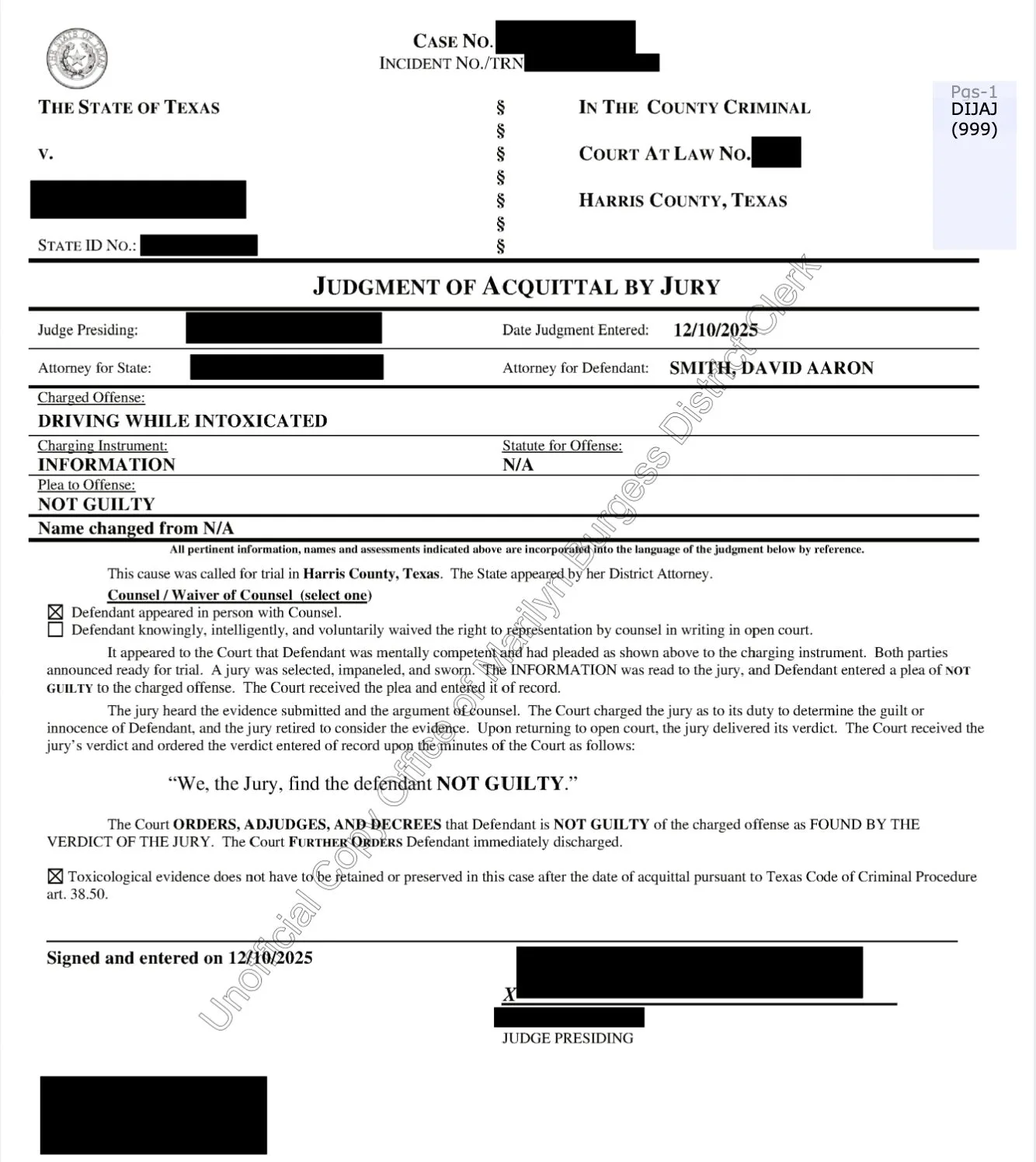
An arrest is not a conviction. While the penalties for a third DWI in Texas are incredibly severe, it is critical to remember that the state still bears the burden of proving its case against you beyond a reasonable doubt. A felony DWI charge can feel insurmountable, but the case against you is rarely airtight.
A strong defense is not about making excuses; it is about holding the prosecution and law enforcement accountable to the strict letter of the law. Every piece of evidence, every procedure followed, and every step of the process must be meticulously scrutinized. Successfully challenging just one element of the state’s case can sometimes be enough to protect your future.
Challenging the Initial Traffic Stop
Every DWI case begins at a single moment: the traffic stop. A police officer cannot pull you over based on a mere hunch. The Fourth Amendment protects you from unreasonable searches and seizures, and that protection starts before the officer even activates their emergency lights.
To lawfully stop your vehicle, an officer must minimally have reasonable suspicion that you have violated a law. This could be a simple traffic infraction, like speeding or failing to signal, or more direct signs of impairment. If an attorney can demonstrate that the officer had no valid legal basis for the stop, any evidence gathered afterward—field sobriety tests, breath or blood results, and even the officer’s own observations—could be suppressed.
A successful challenge to the legality of the traffic stop can dismantle the prosecution’s entire case before it even gets started. If the stop itself was unlawful, everything that follows may be considered “fruit of the poisonous tree” and deemed inadmissible.
This is often one of the first and most powerful lines of defense in any DWI case.
Scrutinizing Sobriety and Chemical Tests
Following a stop, law enforcement relies heavily on field sobriety tests (FSTs) and chemical tests (breath or blood) to build their case. However, these tests are far from infallible and are often fertile ground for a skilled defense.
- Field Sobriety Tests: The standardized FSTs are essentially physical performance exercises that many people would struggle with even when completely sober. Factors like medical conditions, prior injuries, fatigue, or even the officer providing incorrect instructions can lead to a “failure.” A good lawyer will question whether the tests were administered correctly and if the results are a reliable indicator of intoxication.
- Breath Tests: The machines used for breath testing require precise calibration and regular maintenance to function properly. If there are gaps in the machine’s service logs or evidence of malfunction, the results become highly questionable. Furthermore, conditions like acid reflux or residual mouth alcohol from mouthwash can contaminate a sample and produce an artificially high reading.
- Blood Tests: While often perceived as more accurate, blood tests have their own vulnerabilities. The sample must be properly drawn by a qualified professional, stored correctly, and transported with a meticulously documented chain of custody. Any break in this chain or sign of contamination can render the blood result unreliable and/or inadmissible in court.
Each of these tests presents an opportunity to challenge the state’s evidence against you.
Attacking the Validity of Prior Convictions
A third DWI is a felony only because of the two prior convictions. This means the prosecution must prove those old cases are legally valid and can be used to enhance your current charge. This is not always as straightforward as it seems.
An experienced defense attorney will investigate the records of your previous DWIs, searching for procedural errors or constitutional violations. For instance, was one of the priors from another state with different laws? Were you properly represented by counsel in those cases? If a prior conviction can be proven invalid for enhancement purposes, the entire felony charge could be reduced to a misdemeanor, which dramatically changes the entire landscape of your case. Building a robust defense for a 3rd offense dwi texas charge absolutely requires this kind of detailed investigation into your past.
Why You Must Act Immediately After an Arrest
After an arrest for a third DWI in Texas, the most valuable asset you have is time—and the clock starts ticking the moment you are charged. The decisions you make in the first few hours and days are not just important; they are absolutely critical to the outcome of your case. When your entire future is on the line, passivity is not an option.
This is not just about fighting the criminal charges, either. There is a second, parallel battle that begins immediately for your driving privileges, and it has its own strict, non-negotiable deadlines. Understanding this two-front war is the first step, and why time is critical in hiring a defense attorney cannot be overstated.
The Clock Is Ticking on Your Driver’s License
One of the most pressing deadlines you face is the 15-day window to request an Administrative License Revocation (ALR) hearing. To be clear: if you or your lawyer do not formally request this hearing within 15 days of your arrest, the Texas Department of Public Safety will automatically suspend your license. There are no extensions.
This is an administrative process that runs completely separate from your criminal case. If you miss this deadline, you forfeit your right to challenge the suspension. It is that simple. Retaining skilled legal counsel immediately ensures this crucial deadline is not missed, giving you a fighting chance to maintain your driving privileges while the criminal case proceeds.
Statistical trends show that the third DWI offense serves as a critical point in Texas’ impaired driving policy framework. The felony designation aims to deter recidivism by imposing more severe consequences, reflecting the state’s strategy to reduce repeat offenses and improve road safety. For more details on these trends, review the official crime records and statistical information from the Texas DPS.
Taking swift action also means preserving evidence that could be vital to your defense. Witness memories fade. Surveillance footage is erased. The scene of the arrest changes. An immediate investigation by a legal team can secure this fragile evidence before it disappears forever. When you are facing the life-altering penalties of a 3rd offense dwi texas, waiting to act is a gamble you simply cannot afford to take.
Common Questions About a 3rd DWI in Texas
When you are facing a third DWI charge, a storm of urgent questions hits you all at once. The situation feels overwhelming, but getting clear, direct answers is the first step toward regaining some control. Below are answers to the most common concerns people have when the stakes are this high.
Is Jail Time Mandatory for a Third DWI Conviction?
Yes. A conviction for a 3rd offense DWI in Texas is a third-degree felony, and the law requires jail time as a condition of any probation. If a person is assessed prison time, the minimum is 2 years and the maximum is 10 years.
The sentencing range is two to ten years in a prison facility. While probation—what the courts call “community supervision”—is technically possible, it is far more difficult to obtain than for a misdemeanor.
Can a Third DWI Charge Be Reduced?
It is an uphill battle, but it is not impossible. Securing a reduction of a felony DWI charge requires a meticulous and aggressive legal defense from day one. An experienced attorney might achieve a reduction by:
- Challenging the Evidence: Demonstrating the initial traffic stop was illegal or that the breath or blood test results are completely unreliable.
- Attacking the Prior Convictions: Proving that one of the old DWI cases on your record is invalid and cannot be used to enhance the new charge to a felony.
- Negotiating a Lesser Charge: In some situations, a prosecutor may be persuaded to reduce the charge to a non-felony offense like reckless driving if the case against you has serious flaws.
Can I Get Probation for a Third DWI in Texas?
It is possible, but it is by no means guaranteed, and the terms are incredibly severe. If a judge sentences you to community supervision for a felony DWI, you should be prepared for:
- An initial jail or prison term before probation even begins.
- A lengthy supervision period, often between five and ten years.
- Extremely strict conditions, including hundreds of hours of community service, mandatory counseling, and a zero-tolerance policy for alcohol.
If you violate even one of these conditions, your probation can be revoked, and you could be sent straight to prison to serve out the original sentence. The complexity and life-altering stakes of a 3rd offense DWI in Texas make obtaining immediate, experienced legal help an absolute necessity.
The legal system is complicated, and the consequences of a felony conviction last a lifetime. To protect your rights and build the strongest possible defense, you need an advocate with deep experience in Texas criminal law.
Discover more from David Smith Law Firm, PLLC
Subscribe to get the latest posts sent to your email.