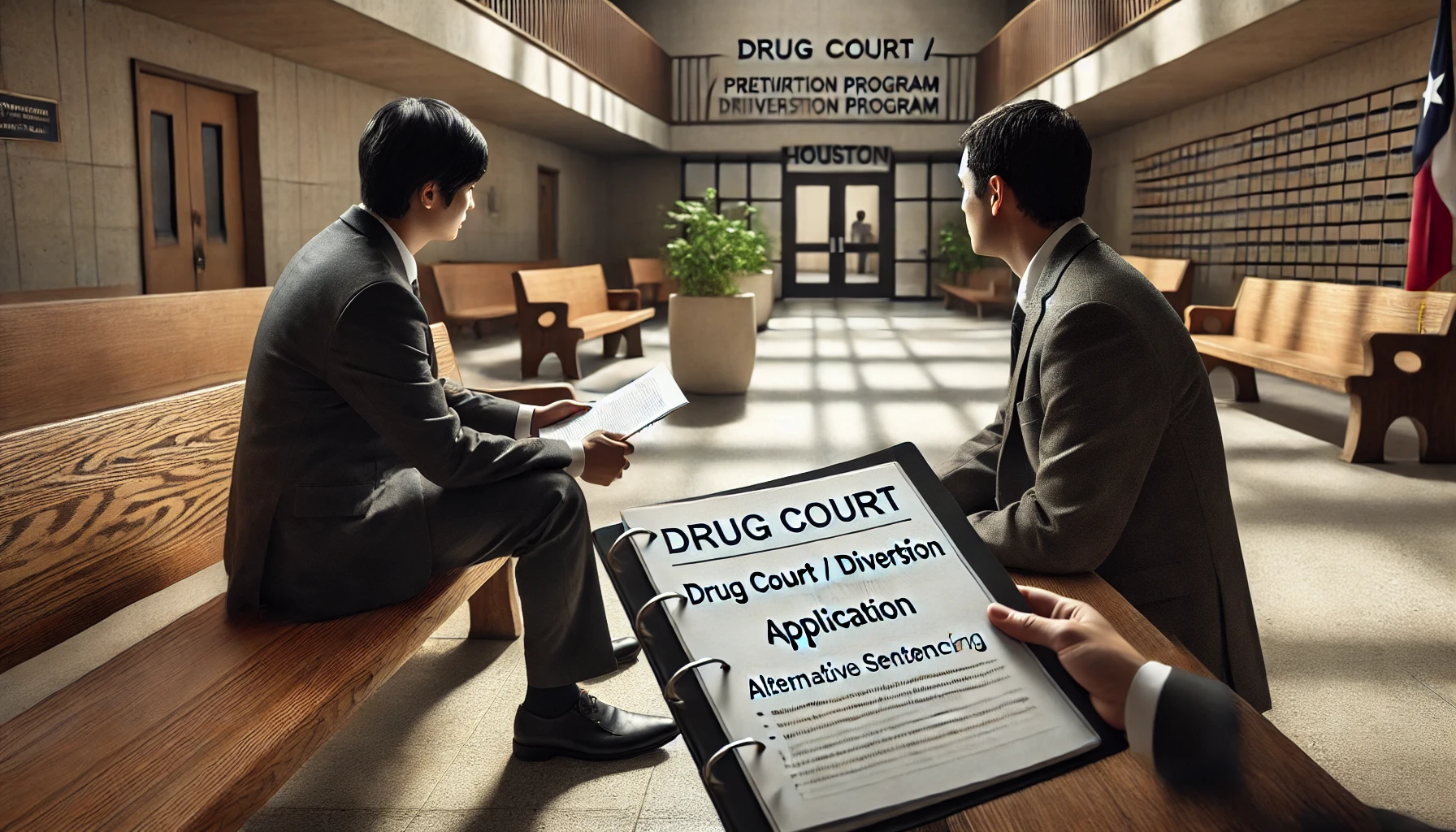
Alternative Sentencing: Drug Courts and Diversion Programs
Pathways to Avoid Incarceration in Texas Drug Cases
Not every drug charge in Texas has to end with jail time. In fact, for many non-violent offenders—especially those dealing with addiction or mental health challenges—the criminal justice system offers alternatives to traditional prosecution and incarceration. These are known as alternative sentencing options, and they could be your best chance at getting your life back on track without a permanent conviction.
In this post, we’ll explore how drug courts, pretrial diversion, and other alternative sentencing programs work in Texas, who qualifies, and how the right lawyer can help you get into them.
? For every post in this series, scroll down to “Related Posts.”
What Is Alternative Sentencing?
Alternative sentencing refers to court-approved options that allow a person to resolve criminal charges without jail or prison—and in some cases, without a conviction. These programs are designed for people who are struggling with substance abuse, are first-time offenders, or have underlying issues that make them better suited for treatment than punishment.
In drug cases, alternative sentencing is often the difference between having a record—and getting a second chance.
Why Do Texas Courts Offer These Options?
Texas courts—especially in large counties like Harris, Fort Bend, and Brazoria—recognize that traditional incarceration doesn’t solve addiction. It’s expensive, ineffective, and often makes things worse.
Alternative sentencing programs:
- Reduce repeat offenses
- Offer treatment over punishment
- Help people stay employed and connected to their families
- Clear space in overcrowded jails and courts
They also reflect a broader shift toward rehabilitation-focused justice, particularly in non-violent drug cases.
What Are Drug Courts?
Drug courts are special court dockets that handle cases involving substance abuse. Instead of jail, qualifying defendants enter a treatment-based supervision program managed by the court.
If accepted, you’ll be required to:
- Attend frequent court check-ins
- Participate in outpatient or inpatient treatment
- Submit to random drug testing
- Complete counseling, education, or job programs
- Stay arrest-free for the duration of the program
The court monitors your progress closely. If you complete the program successfully, your charges are often dismissed or reduced. If you don’t follow the rules, the court may impose sanctions—or send you back through traditional prosecution.
Drug court is not a soft option. It’s demanding and requires commitment. But it’s also one of the few court processes that offers a true path to recovery and record clearing.
What Is Pretrial Diversion?
Pretrial diversion is a voluntary agreement between you and the prosecutor’s office. If you complete certain conditions, the state agrees to drop the charges and dismiss your case.
To qualify, you generally must:
- Be a first-time offender
- Be charged with a non-violent misdemeanor or low-level felony
- Take responsibility for your actions without pleading guilty
- Agree to terms like drug testing, community service, and education classes
If you complete the diversion successfully:
- The case is dismissed
- You may be eligible for expunction (complete erasure of your record)
- You can move forward without a conviction or probation history
This is one of the most powerful alternatives available—but it’s also one of the most selective. Your attorney will need to submit an application, show mitigating evidence, and convince the DA’s office that you deserve the opportunity.
Deferred Adjudication vs. Diversion
Deferred adjudication is another common alternative. It’s not the same as diversion, but it’s often the next best thing.
In deferred adjudication:
- You enter a guilty or no-contest plea
- The court withholds a finding of guilt
- You complete a term of community supervision (probation)
- If successful, your case is dismissed and may be eligible for record sealing (nondisclosure)
However, if you violate the terms, the judge can sentence you to the full range of punishment, including jail or prison. That’s why it’s crucial to have an attorney who can explain the risks and help you stay in compliance.
Who Qualifies for Alternative Sentencing?
Each county sets its own eligibility rules, but in general, you’re more likely to qualify if:
- This is your first or second offense
- Your case involves personal use, not distribution
- You have no history of violent offenses
- You show a willingness to complete treatment or counseling
- You hire an attorney early enough to apply for alternatives
Cases involving drug trafficking, weapons, child endangerment, or prior violent felonies are usually excluded. But every case is different—and sometimes exceptions can be made.
What Can a Lawyer Do to Help?
A good criminal defense attorney doesn’t just defend you in court—they fight to get you into the best possible program.
Your lawyer will:
- Determine whether you qualify for drug court or diversion
- Gather documents and personal history to support your application
- Present your case to the prosecutor or judge persuasively
- Negotiate terms that are realistic for your situation
- Guide you through every step of the program to avoid violations
Getting into diversion or drug court isn’t automatic. It requires strategy, timing, and credibility—and the earlier your lawyer gets involved, the better your chances.
See Why Hiring an Attorney Early Makes a Difference for more on early intervention.
Real-Life Example: Diversion Success Story
One of our clients, a 23-year-old college student, was arrested for possession of less than a gram of cocaine. It was her first offense. She was scared, embarrassed, and didn’t want the arrest to ruin her career.
We acted fast. Within days, we submitted an application for pretrial diversion, gathered letters of support, and presented her academic records and clean drug tests. The prosecutor approved her for a 6-month diversion plan.
She completed the program successfully. The charge was dismissed, and we filed for expunction a few months later. Now she has a clean record—and a fresh start.
What If You’re Already on Probation or Serving Time?
Even after sentencing, alternatives may still be available.
Your attorney may be able to:
- Request early termination of probation
- Modify the terms of your supervision
- Seek transfer to a treatment program
- Apply for parole with a strong rehabilitation record
- File a motion for shock probation (early release from jail in certain cases)
See What Happens After a Drug Crime Conviction? for more about life after sentencing.
Conclusion: A Drug Arrest Doesn’t Have to End in a Conviction
Drug court. Diversion. Deferred adjudication. These are not loopholes—they are smart, structured alternativesdesigned to help people who need help, not punishment.
If you or a loved one is facing a drug charge in Houston or anywhere in Texas, ask your attorney about every available alternative. The sooner you act, the more doors are open—and the more you can protect your record, your freedom, and your future.
Discover more from David Smith Law Firm, PLLC
Subscribe to get the latest posts sent to your email.