Hiring a Criminal Defense Attorney in Houston: Why Every Second Counts
After an arrest in the Houston area, the single most important decision you’ll make is hiring a criminal defense attorney. The first few hours are absolutely critical. What happens in that small window between an arrest and your first court appearance can set the entire tone for your case. A skilled local lawyer can start building your defense, protecting your rights, and sometimes even influencing the case before formal charges are ever filed. The urgency cannot be overstated; your future is on the line.
Why Your First Move After an Arrest Is Critical

Facing a criminal charge in Harris County is disorienting and stressful. From the moment you’re arrested, the system starts moving at lightning speed, and every decision you make—or fail to make—can have a permanent impact on your life.
Getting a good lawyer isn’t just a good idea; it’s the most crucial step you can take to protect your future. Without an advocate, you are on your own, facing trained investigators and prosecutors whose sole job is to secure a conviction. The danger is real and immediate: you could easily say something incriminating or sign away your rights without even realizing the consequences.
The Dangers of Delay
Waiting to hire an attorney is one of the biggest and most damaging mistakes you can make. The early hours are when a strong defense is forged. A proactive lawyer gets to work for you right away, intervening at the most vital stage.
This early intervention is about more than just showing up in court. It involves crucial actions that simply cannot wait:
- Preserving Evidence: Key evidence disappears fast. Surveillance footage from a Houston business gets overwritten, witness memories fade, and digital records can be deleted. An attorney can immediately send preservation letters and subpoenas to lock that information down before it’s gone forever.
- Investigating the Allegations: While the facts are still fresh, your lawyer needs to be interviewing witnesses, visiting the scene of the alleged incident, and picking apart the prosecution’s story to find the weaknesses.
- Protecting Your Rights: An attorney is your shield. They step in during police interrogations, tell you exactly what to say (and what not to), and stop law enforcement from using manipulative tactics to get a confession.
Taking Control of the Narrative
Hiring a defense attorney is about taking back control when everything feels chaotic. An experienced lawyer can open a line of communication with the prosecutor’s office, present your side of the story, and sometimes even negotiate a resolution before things escalate further.
This is also the time to get ready for your first court dates. For instance, understanding what happens at an arraignment hearing is a key first step your attorney will walk you through, so you’re not going in blind.
By acting swiftly, you shift from a defensive position to a proactive one. Instead of simply reacting to the prosecution’s moves, your attorney can start shaping a defense strategy designed to achieve the best possible outcome.
Evaluating Experience in Court

When your freedom is on the line, simply having a licensed attorney isn’t going to cut it. You need a courtroom veteran.
This is where the real work begins. Evaluating an attorney’s actual, hands-on experience is the single most important part of the hiring process.
Let’s be clear: not all legal experience is created equal. A lawyer who spends their days handling non-criminal cases won’t generally have the set needed for a criminal trial. You need someone whose entire practice revolves around criminal charges just like yours, whether it’s a DWI, drug possession, assault, or a more serious felony.
The legal field is massive. The United States has around 463,000 law firms, and a staggering 75% of them are small shops with six or fewer attorneys. This means most lawyers specialize, so finding one whose niche perfectly aligns with your criminal defense needs is critical. You can learn more about the current landscape of law firms in the U.S. and what it means for your search.
Beyond the Law Books: Why Local Knowledge Is Power
An attorney’s true value isn’t just in knowing the law; it’s in knowing the local legal environment. Someone who regularly practices in Houston-area courts understands the unwritten rules and, more importantly, the key players.
They know the prosecutors—their tendencies, their negotiation tactics, and how they build different types of cases. They’ve stood in front of the local judges and learned their courtroom procedures, their expectations, and their judicial philosophies.
This insider knowledge is a massive strategic advantage. It allows your attorney to possibly anticipate the prosecution’s next move, navigate procedural quirks unique to that court, and build a defense strategy that actually resonates with the specific judge and jury pool you’ll be facing.
Asking the Right Questions to Uncover Real Experience
Anyone can make big claims on a website. To get a true sense of an attorney’s capabilities, you have to ask targeted questions that cut through the marketing fluff and get to verifiable facts.
During your consultation, it’s time to shift the conversation from general assurances to concrete specifics. Try asking questions like these:
- How many jury trials have you personally handled for a charge like mine?
- What percentage of your practice is dedicated specifically to criminal defense?
- How familiar are you with the prosecutors and judges at the courthouse where my case is filed?
- Can you walk me through a past case similar to mine and explain your strategic approach?
The answers will tell you everything you need to know. You aren’t just looking for a lawyer; you’re looking for a strategist who has already fought—and won—battles in the exact same arena where yours is about to take place. That focus on proven, local results is how you find the right person for the job.
Making Sense of Legal Fees and Your Investment

Let’s be honest: when you’re facing a criminal charge, money is one of the first things on your mind. The cost of hiring a good lawyer can feel overwhelming, especially when your world has just been turned upside down. It’s a huge source of anxiety for nearly everyone.
But it’s critical to reframe this decision. Don’t think of it as just another expense. See it for what it truly is: a vital investment in protecting your future.
Viewing it as a cost will make you hunt for the cheapest option. Viewing it as an investment pushes you to find the best possible value to safeguard your freedom, your job, and your reputation.
How Criminal Defense Lawyers Typically Charge
When you start meeting with attorneys, you’ll run into a few common fee structures. Knowing what they are ahead of time will help you ask the right questions and understand what you’re getting into.
- Flat Fee: This is a common model you’ll see in criminal defense. An attorney quotes you a single, all-inclusive price to handle your entire case, from the first court date to the final verdict. The big advantage here is certainty—you know exactly what you’ll pay, no matter how many hours your case takes.
- Retainer Fee: A retainer is more like a down payment. You pay a lump sum upfront, and the lawyer bills their hourly work against that amount. If the initial retainer runs out, you’ll have to add more funds to keep them on the case. This is more typical for complex, unpredictable cases where the timeline is a major question mark. Some lawyers set up a flat fee, and then earn a portion of that flat fee at various stages in the defense of your case. These stages should be disclosed to the “potential client” before they become a “client”.
A reputable lawyer will be completely transparent about their fees during your first meeting. They’ll explain which structure they use, what it covers, and what it doesn’t cover—things like expert witness fees or the cost of hiring a private investigator.
A conviction carries a devastating financial ripple effect that can last a lifetime. Fines, court costs, job loss, and suspension of professional licenses can quickly add up to far more than the cost of a strong defense. The right attorney isn’t a cost; they are your protection against those long-term consequences.
Understanding What You’re Really Paying For
Skilled legal representation doesn’t come cheap, and for good reason. It requires an immense amount of expertise, dedication, and time. The average salary for a criminal defense attorney in the U.S. can range from $77,500 to over $136,500 annually, a number that reflects the years of experience and heavy responsibility involved in defending someone’s freedom.
You can dig deeper into legal professional salaries and what they mean for clients. Your investment secures a dedicated advocate who knows how to navigate the Harris County court system, pick apart the prosecution’s evidence, and negotiate effectively on your behalf.
Ultimately, your goal during a consultation is to have a clear, straightforward conversation about every potential cost. A true professional will welcome these questions and make sure you understand the complete financial picture. This kind of transparency allows you to move forward confidently, without worrying about surprise bills down the road, and invest in the best possible defense for your case.
How To Get The Most Out Of Your Attorney Consultation
Your first meeting with a potential attorney isn’t just a sales pitch—it’s your chance to interview someone for one of the most important jobs of your life. To make it count, you need to walk in prepared. Being organized and knowing what to look for will give you the clarity you need to choose the right advocate for your case.
When you show up ready, it sends a powerful message: you’re serious about your defense. Before you even walk through the door, get all your relevant documents together.
What to Bring to Your First Meeting
This isn’t just about shuffling papers. It’s about giving the attorney a complete, unfiltered picture from day one. Your goal is to be an open book so they can give you a realistic assessment of what you’re up against.
Here’s a quick checklist of what to gather:
- Official Documents: Your bail or bond paperwork, the police report (if you have it), any tickets or citations you were issued, and any notices for upcoming court dates.
- Your Version of Events: Write down everything that happened, exactly as you remember it, while the details are still fresh. Don’t leave anything out, even if it feels embarrassing or irrelevant. The smallest detail can sometimes be the most important.
- A List of Questions: In the stress of the meeting, it’s easy to forget what you wanted to ask. Prepare a list ahead of time so you can walk out with the answers you need.
With these items in hand, you’re not just a potential client; you’re a prepared partner in your own defense. This allows the attorney to cut through the noise and get right to the legal heart of your situation.
Look for More Than Just Answers
Pay close attention to how the attorney interacts with you. Are they genuinely listening to your story, or are they just rushing you along to get to the next appointment?
A great lawyer asks insightful, follow-up questions. This shows they are already thinking strategically about your case. They should also be able to explain complex legal concepts in plain English, without hiding behind confusing jargon.
The best consultations feel like a strategic collaboration, not an interrogation. You should leave feeling heard, respected, and more informed—not more confused or intimidated. That initial rapport is often a strong indicator of how they’ll communicate with you throughout your case.
This simple graphic shows the straightforward process of finding and hiring the right criminal defense lawyer.
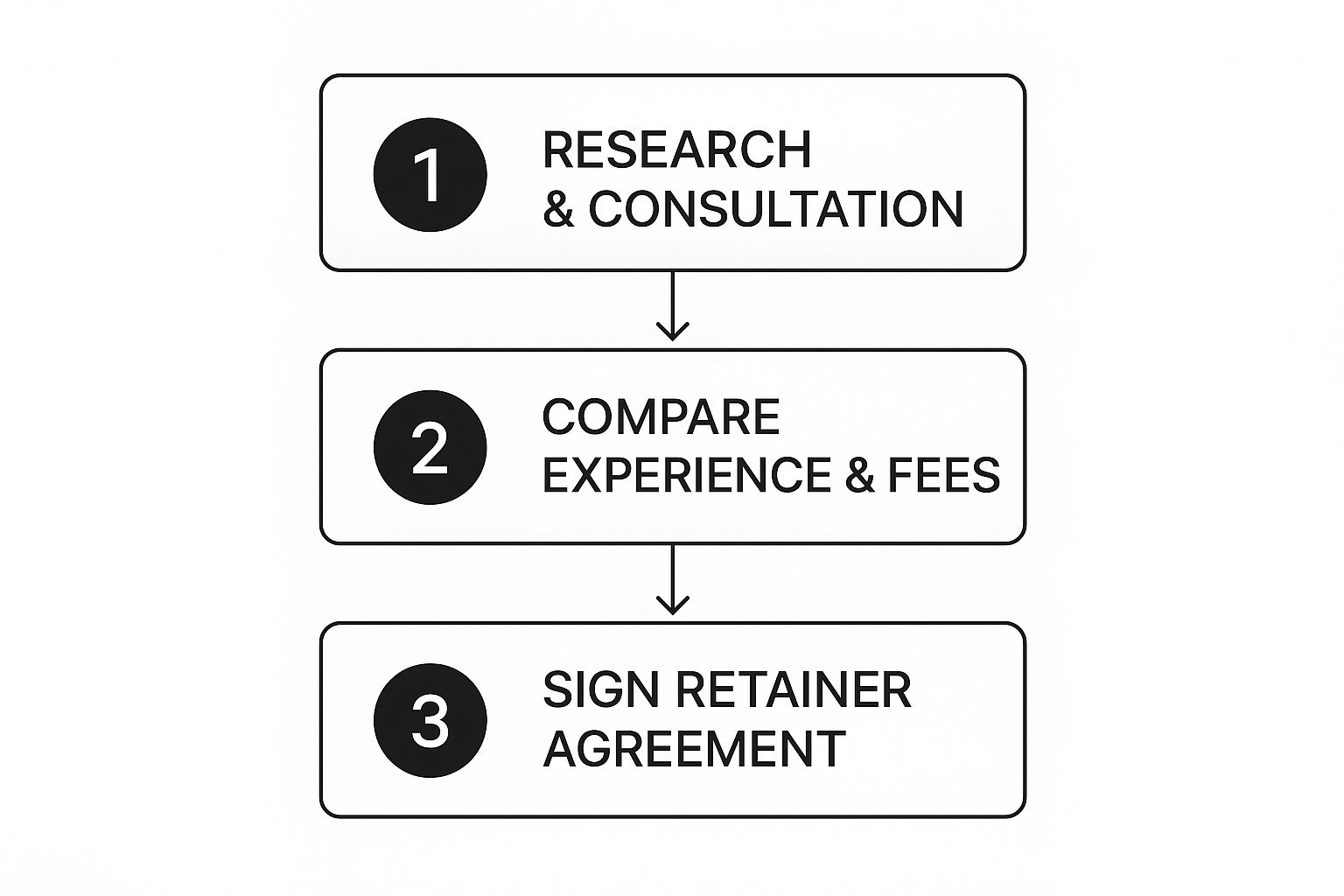
As the graphic shows, after your research and consultations, the most critical step is carefully comparing your options before making a final decision.
Essential Questions for Your Attorney Consultation
Going beyond surface-level questions is how you’ll gauge an attorney’s true capability. Your questions should probe their strategic thinking, their communication style, and exactly how they would approach a case like yours. The answers will reveal their depth of experience and whether their approach is the right fit.
To help you get the most out of this critical meeting, here’s a table of questions designed to get you the information you truly need.
| Category | Question to Ask | What You Should Hear |
|---|---|---|
| Experience | How many cases like mine have you handled in this specific court? | Specific examples, not just a general number. You want someone who knows the local prosecutors and judges. |
| Strategy | Based on what I’ve told you, what are the potential strengths and weaknesses of my case right now? | A candid, realistic assessment. Beware of anyone who guarantees a specific outcome. |
| Communication | If I hire you, will I be working directly with you or an associate? How often will I get updates? | A clear explanation of their communication process and who your primary point of contact will be. |
| Fees | Can you explain your fee structure? Is it a flat fee or hourly? What does the initial retainer cover? | A transparent, straightforward breakdown of all costs. There should be no surprises. |
An attorney’s answers—and how they answer—will tell you everything you need to know.
To give you more context for their answers, especially regarding trial strategy, check out our guide on how to prepare for trial. This initial meeting truly sets the foundation for your entire defense, so be ready to dig deep to find the best possible representation.
Warning Signs of an Ineffective Lawyer
Hiring the wrong attorney can be just as damaging as having no representation at all. While most lawyers are dedicated professionals, a few can actively sabotage your case through incompetence or unethical behavior. Recognizing the warning signs early on isn’t just smart—it’s crucial for protecting your rights and your future.
Think of your initial search as a protective measure. You aren’t just looking for credentials; you’re looking for a trustworthy advocate. If something feels off during your consultation, it probably is.
The Guaranteed Win and Other Ethical Red Flags
One of the most glaring warning signs is an attorney who guarantees a specific outcome. No ethical lawyer can or will promise a dismissal, an acquittal, or a certain plea bargain. The legal system is inherently unpredictable, and making that kind of promise is a major ethical breach.
An honest attorney will give you a realistic assessment of your case—the good, the bad, and the ugly. They’ll promise to fight like hell for you, not promise a result they can’t possibly control.
Be on the lookout for other behaviors that signal a lack of professionalism or focus on your best interests:
- High-Pressure Tactics: If an attorney pressures you to sign a retainer agreement on the spot without giving you time to think it over, that’s a huge red flag. A good lawyer wants you to be confident in your choice.
- Vague Fee Structures: A lawyer who is evasive about their fees, can’t clearly explain their billing, or won’t put it in writing is bad news. You should be able to walk away knowing exactly what to expect financially.
- Dismissive Attitude: Does the lawyer seem distracted? Are they constantly checking their phone or cutting you off while you speak? Someone who doesn’t respect you in the initial meeting isn’t going to give your case the attention it deserves later.
Communication Breakdowns Are Case Killers
Poor communication is more than just an annoyance; it’s a sign of a disorganized and ineffective practice. When you’re facing criminal charges, you need an attorney who is responsive and keeps you in the loop. If you’re constantly struggling to reach your lawyer or their staff, that’s a serious problem.
A competent attorney has a clear system for client communication. They’ll tell you who your main point of contact is and set reasonable expectations for returning calls and emails. If a lawyer is hard to reach from the very beginning, just imagine how tough it will be to get updates once your case is actually underway.
This lack of responsiveness can lead to missed deadlines, strategic errors, and a complete breakdown of your defense. Making the right choice when hiring a criminal defense attorney means finding someone who is not just skilled in the courtroom but also accessible and ready to communicate.
Making Your Final Choice with Confidence
You’ve done the interviews, you’ve gathered your notes, and now it’s time to decide. The real work isn’t just about comparing credentials on paper; it’s about trusting your gut. This is the moment you have to synthesize everything you’ve learned and felt.
Who did you feel you could truly partner with during one of the most stressful times of your life? Who took the time to explain their strategy in a way you could actually understand? Who made you feel heard and respected—not like just another case file on their desk? These factors are every bit as important as a lawyer’s win-loss record.
Weighing the Critical Factors
Think back on your conversations and organize your impressions. Sometimes, a simple side-by-side comparison can make the best choice obvious.
Here are the key areas to stack each candidate up against:
- Clarity and Strategy: Which attorney gave you the clearest, most logical vision for your defense? Did they have a plan, or just vague promises?
- Local Experience: Who showed they had recent, relevant experience in the specific Houston court where your case is filed? This local knowledge is invaluable.
- Rapport and Trust: With whom did you feel the most comfortable being completely, brutally honest? Your defense depends on it.
A detail-oriented attorney will also use modern tools to make sure nothing slips through the cracks. For example, ensuring that every critical conversation, from client interviews to witness statements, is accurately documented is a sign of a meticulous and organized practice. This is often achieved through methods like efficient audio to text transcription.
Taking the Final Steps
Once you’ve made your choice, the final steps are pretty straightforward. You’ll need to formally retain the attorney, which involves signing a representation agreement and paying the agreed-upon fee. Make sure you read this document carefully—it outlines the exact scope of their work and confirms the financial terms you discussed.
This final decision is about more than hiring a lawyer; it’s about securing peace of mind. You are choosing an advocate who will stand between you and the power of the state, fighting for your rights at every turn.
Your new attorney will immediately get to work. They’ll notify the court and the prosecution that they represent you, officially taking over all communications. From there, the real work of building your defense begins. For more detailed guidance, be sure to review these essential questions to ask when choosing a criminal defense lawyer.
It’s a good thing the demand for skilled lawyers remains steady. The U.S. Bureau of Labor Statistics projects that lawyer employment will grow by about 4% in the coming years, with roughly 31,500 new job openings annually. This consistent need ensures that when you’re looking for a criminal defense attorney, you have a field of dedicated professionals to choose from.
Common Questions People Ask When Hiring a Defense Attorney
When you’re suddenly thrown into the criminal justice system, questions come fast and furious. Here are some of the most common things people ask when they need to find a lawyer in the Houston area, answered directly.
How Quickly Do I Need to Hire a Lawyer After an Arrest?
Immediately. This isn’t an exaggeration. The time between your arrest and your first court date is a critical window.
In those first hours and days, a skilled attorney can get to work right away. They can start their own investigation, get in touch with the prosecutor’s office on your behalf, and file legal motions to preserve evidence—like security footage—that could disappear forever.
Waiting to act is one of the biggest mistakes you can make. It puts you on the back foot from the very beginning. The time to secure legal counsel is now.
Discover more from David Smith Law Firm, PLLC
Subscribe to get the latest posts sent to your email.