
If you’re facing criminal charges in Houston, your world has been turned upside down. It’s a stressful, high-stakes situation, and the single most important decision you’ll make in the next few hours is who you hire to defend you. Your choice of a criminal defense attorney will directly impact your freedom, your reputation, and your future. You have to act fast, but you also have to act smart. The urgency cannot be overstated; every moment you wait, the prosecution is building its case against you.
Your First Move After a Houston Arrest

The moments right after an arrest are pure chaos. Everything feels uncertain. But this is precisely when you need to make a clear-headed, decisive move. The best thing you can do for yourself is to get a competent Houston criminal defense lawyer on the phone—immediately. The clock starts ticking the second you’re in custody.
A skilled Houston-area attorney does more than just show up for court dates. They become your shield from the very beginning. They can step in during police questioning, stop you from accidentally saying something that hurts your case, and start the urgent process of gathering evidence before it disappears. Don’t speak to law enforcement without legal representation.
What you do—or don’t do—in the first 48 hours can set the tone for your entire case. Securing a lawyer right away isn’t just a good idea; it’s the foundation of a strong defense strategy and your best chance at a favorable outcome.
Why Acting Fast Is a Game-Changer
In a criminal case, time is a resource you can’t get back. A proactive defense attorney hits the ground running, and their first moves can be critical for building a solid defense that’s tailored to your specific situation here in Harris County. Every second counts.
Early intervention often looks like this:
- Stopping Charges Before They’re Filed: Sometimes, a sharp lawyer can get in front of the prosecutor before charges are officially filed. This can lead to the case being dropped entirely (a “no-bill”) or reduced to something less serious right from the start.
- Saving Critical Evidence: Key evidence like surveillance videos from local businesses or witness memories can vanish in a matter of days. Your attorney can immediately send out preservation letters and get investigators on the ground to lock down that information before it’s gone for good.
- Arguing for a Reasonable Bond: The right lawyer will fight to get you released on a reasonable bond in Harris County. This lets you help build your own defense from home instead of from a jail cell, which is a significant strategic advantage.
Choosing an advocate when you’re under this kind of pressure is tough. It helps to have a quick checklist of what to look for right out of the gate.
Immediate Attorney Vetting Checklist
When you’re making that first urgent call, you need to quickly figure out if you’re talking to the right person. This table breaks down the essentials for choosing a Houston criminal lawyer.
| Criteria | Why It Matters | What to Look For |
|---|---|---|
| Local Harris County Experience | The Houston legal system has its own players and unspoken rules. An attorney who knows the local courts has a distinct advantage. | Asks specific questions about the court, prosecutor, and arresting agency. Knows the local landscape. |
| Focus on Criminal Defense | You may not want a jack-of-all-trades; you need a specialist in Texas criminal law. | Their website and conversation are 100% focused on criminal law. |
| Responsiveness | An emergency needs an emergency response. Your freedom is at stake. | They (or their staff) answer the phone or call you back within a few hours, not days. |
| Clear Next Steps | A good lawyer will calm the chaos, not add to it. | They tell you exactly what you need to do right now and what they will do next. |
This initial check helps you filter out the wrong fits so you can focus on qualified candidates who can protect your rights immediately.
The goal is to find someone who not only knows Texas law inside and out but is also a familiar face in Houston and Harris County courtrooms. To get a better sense of what this involves, see our guide on hiring a criminal defense attorney, which walks you through the long-term implications of your decision.
Evaluating an Attorney’s Experience and Specialization

When you’re facing criminal charges in Texas, your future is on the line. This is not the time to hire just any lawyer. You need a specialist—a true criminal defense attorney who lives and breathes this area of law. Your future depends on making the right choice now.
The legal world is huge. An attorney who is a wizard with corporate mergers or wills may be completely out of their element in a Houston criminal courtroom. You have to look beyond the law degree and focus on what really counts: a specific, relevant track record in criminal defense in the Greater Houston Area.
A general practice lawyer might understand the black-and-white text of the law, but a dedicated criminal defense attorney understands the system. They know the Harris County prosecutors, they’ve argued in front of the local judges, and they know the unwritten rules of the courthouse. That kind of insider knowledge is a massive advantage a generalist just can’t offer.
Distinguishing Generalists from Specialists
So, how do you tell the difference? It comes down to asking the right questions. A specialist’s entire career is built on handling cases just like yours, whether it’s a DWI in Houston, a drug charge in Harris County, or a serious felony. A generalist dabbles.
Look for these dead giveaways of a true specialist:
- Case History: They can talk confidently and in detail about their experience with charges similar to yours. They won’t hesitate.
- Trial Record: A real specialist isn’t afraid to go to trial. They should have a history of taking cases to a jury—and winning.
- Local Focus: Their practice is centered on Houston and the surrounding counties like Harris, Fort Bend, and Montgomery. This demonstrates a deep familiarity with the exact justice system you’re up against.
When you hire a specialist, you’re not just paying for legal knowledge. You’re investing in their network, their reputation in the local courts, and their years of experience navigating the exact challenges you’re facing. This is a critical investment in your future.
Verifying a Lawyer’s Track Record
Don’t just take an attorney’s word for their experience. You have to verify it. Sure, you can check their standing with the State Bar of Texas, but that’s just scratching the surface.
Go deeper. Ask if they are board-certified in criminal law—a tough-to-earn distinction held by only a small fraction of Texas attorneys. It’s a clear sign of dedication and expertise.
Making this choice requires a clear head. When you’re under pressure, it helps to improve your decision-making skills so you can cut through the marketing fluff and focus on what matters: a proven history of success in criminal defense. This is a critical step to ensure you find an attorney who doesn’t just practice criminal law, but masters it.
Making the Most of Your Attorney Consultation
The first meeting with a potential lawyer is more than just a meet-and-greet. Think of it as the most important job interview you’ll ever conduct, where you’re the one hiring. This single meeting can set the tone for your entire case, and walking in prepared can make all the difference. Your goal is simple: leave with a clear head, a solid grasp of your options, and a gut feeling about who you can trust to fight for you.
To get the most out of it, you need to do a little homework. Pull together every piece of paper you have related to your case—the arrest report, bail paperwork, citations, anything. A good attorney wants to see the facts, not just hear a story. This lets them give you real feedback instead of speaking in vague hypotheticals.
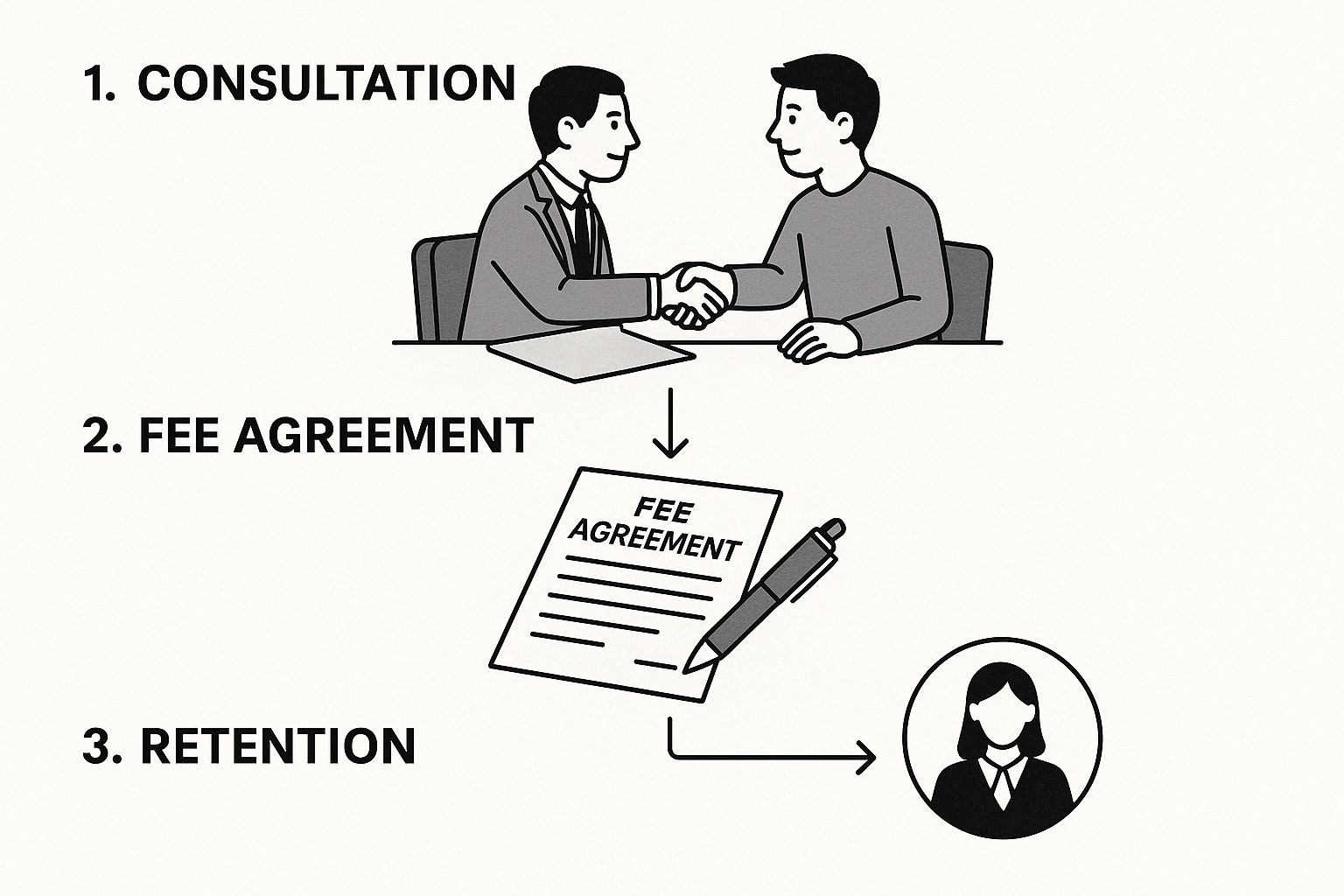
Ultimately, this first meeting should lead to a clear, transparent agreement about fees and expectations. That handshake is the foundation of a strong attorney-client relationship, which is essential for mounting a successful defense.
Asking the Right Questions
While the cost is obviously important, your questions need to go much deeper. You’re trying to figure out their actual experience, how they communicate, and what their initial gut instinct is on a defense strategy. Be wary of grand promises or answers that feel fuzzy. You want a lawyer who gives it to you straight.
To help you get right to the point, here is a breakdown of essential questions to ask during your consultation. These are designed to cut through the fluff and give you the information you truly need to make a smart decision.
Essential Questions for Your Attorney Consultation
| Question Category | Specific Question to Ask | What the Answer Reveals |
|---|---|---|
| Experience & Caseload | “Who exactly will be handling my case—you, or a junior associate?” | This tells you who will be standing next to you in court and managing your defense day-to-day. |
| Local Knowledge | “What’s your experience with cases like mine specifically in Harris County criminal courts?” | This reveals if they know the local prosecutors, judges, and court procedures, which is a huge advantage. |
| Strategy & Honesty | “What are the potential outcomes here, both good and bad?” | A good, ethical lawyer will never guarantee a result. They should lay out a realistic range of possibilities. |
| Communication | “How will we stay in touch, and how often will I get updates?” | This sets expectations from the start about whether you’ll talk to the attorney, a paralegal, or a case manager. |
Asking direct questions like these helps you evaluate not just their qualifications, but their honesty and approach. For a more detailed look into this crucial first meeting, you can learn more about what to expect in your first attorney consultation in our in-depth guide.
Interpreting the Answers and Trusting Your Gut
Listen to the answers, but also pay close attention to how the attorney makes you feel. Are they really hearing you out, or are you just another case file on their desk? Do you feel rushed, dismissed, or respected? This relationship is built on trust, and that personal connection is non-negotiable.
An attorney who listens intently, answers directly, and explains complex legal concepts in plain English is demonstrating respect for you and your situation. This is often a strong indicator of the type of advocate they will be.
When it’s all said and done, the choice is yours. Take a breath after the meeting and reflect. Do you feel a sense of clarity and confidence, or are you leaving with more anxiety than you had walking in? Your future is on the line. Choose the lawyer who not only has the right credentials but also gives you the unshakable feeling that your case is in the right hands.
Understanding Legal Fees and Retainer Agreements
Let’s be honest: one of the biggest sources of stress when you’re facing criminal charges is the cost. It’s completely normal to worry about how you’re going to afford a strong defense. The last thing you need is a confusing conversation about money that leaves you with more questions than answers.
Getting a firm handle on how a lawyer charges isn’t just about budgeting. It’s about finding an attorney who is transparent and professional, so you can focus on your case without worrying about surprise bills later on.
Common Fee Arrangements in Criminal Defense
In criminal law, you’ll typically run into one of a few fee structures. There’s no single “best” one; it really depends on the complexity of your case.
- Flat Fee: This is exactly what it sounds like—a single, fixed price for the entire case, or at least for a specific stage of it (like everything up to trial). Flat fees are great for more straightforward cases, like a first-offense DWI or a simple misdemeanor in Houston. The big advantage here is predictability. You know the total cost from day one.
- Hourly Rate: For complex felony cases where the timeline is unpredictable, many attorneys charge by the hour. You’re billed for the actual time your lawyer and their team spend on your case—every phone call, court appearance, and motion they draft. This usually requires a retainer to get started.
- Retainer Fee: Think of a retainer as a down payment for legal services. If you’re on an hourly plan, the lawyer draws from this fund as they work. You may need to add more money to it if the initial amount runs out. For flat-fee cases, the retainer simply secures the attorney’s commitment to represent you.
A professional will always put the fee agreement in writing. Always. If an attorney is vague about costs or won’t give you a written contract, that’s a massive red flag. Walk away. Your defense is too important to leave to someone who isn’t transparent.
What to Look for in a Retainer Agreement
The retainer agreement is your contract with the law firm. It’s a legally binding document, so don’t just skim it and sign. This is your chance to make sure everyone is on the same page.
Before you put pen to paper, make sure the agreement clearly spells out these details:
- Scope of Services: What exactly does the fee cover? Does it take you all the way through a jury trial, or does it only cover pre-trial work? Are appeals included? Get specific.
- Itemized Costs: The agreement should be crystal clear about what is and isn’t included. Ask about extra costs like hiring expert witnesses, private investigators, court filing fees, or travel expenses. You need to know if these are covered or will be billed separately.
- Payment Terms: How and when is the money due? Is it a lump sum upfront, or is a payment plan available? The contract should detail the full schedule.
Legal contracts can be dense, but this is one document you need to read carefully. To help you navigate it, we’ve put together a guide on reading and understanding a legal retainer agreement. Taking the time to understand these terms protects you and ensures you’re making a financially sound decision for your defense.
Spotting Red Flags Before You Hire
This is the final, and maybe most important, gut-check. You’ve reviewed their experience, you understand the costs, but now you have to look for the warning signs. Choosing the wrong attorney can be just as damaging as having none at all, and a slick sales pitch can sometimes hide a serious lack of substance. Your freedom is too important to leave to chance.
An immediate, giant red flag is any attorney who guarantees a specific outcome. If you hear words like “I guarantee a dismissal” or “we’ll definitely get a ‘not guilty’ verdict,” you should walk away. The legal system is filled with uncertainty. No ethical, experienced lawyer can promise a certain result. That kind of talk is unprofessional and a violation of professional ethics, not a sign of genuine confidence.
Another major warning sign is terrible communication from the jump. If an attorney is hard to reach, doesn’t return your calls, or seems distracted during your consultation, just imagine what it will be like once they have your money. You need a lawyer who actually listens and treats your case with the urgency it deserves.
Trusting Your Instincts
Beyond the obvious signs, you have to trust your gut. How does this person make you feel? Are they treating you with respect, or do you feel like you’re just another case file on their desk? A solid attorney-client relationship has to be built on trust. If something feels off, it probably is.
Here are a few more subtle but critical red flags to keep an eye out for:
- A Disorganized Office: Piles of unfiled papers and a chaotic environment can signal a disorganized approach to casework. You don’t want your file lost in that mess.
- A Vague or Nonexistent Strategy: They should be able to give you a preliminary game plan. It doesn’t have to be set in stone, but they should have some initial ideas about how to approach your defense.
- High-Pressure Sales Tactics: You should never feel bullied into signing a contract right then and there. A true professional will give you the time and space you need to make a decision.
The decision of who represents you is intensely personal. You’re not just hiring a lawyer; you are placing your future in this person’s hands. If you don’t feel a sense of confidence and trust, keep looking.
Making a Confident Final Decision
Making the right choice comes down to weighing everything together—their track record in Houston, their proposed strategy, how they communicate, and what they charge. It’s not about finding the lawyer with the flashiest ads or the highest price tag. It’s about finding the right advocate for you.
This process is critical because who you hire can dramatically change the outcome. Take a breath and review your notes from each meeting. Compare their strengths and weaknesses side-by-side. The best choice is the attorney who not only has the right credentials but also gives you the peace of mind that you have a dedicated fighter in your corner. Don’t rush this final step—your future depends on it.
Got Questions About Finding a Houston Defense Lawyer?
Even with a clear roadmap, you probably still have some questions floating around. That’s not just normal—it’s smart. Picking the right legal advocate is a huge decision, especially when you’re navigating the justice system in a place as sprawling and complex as the Greater Houston Area.
Let’s tackle some of the most pressing questions people have when they’re in your shoes.
How Soon Should I Hire an Attorney After an Arrest?
The answer? Immediately.
Time is absolutely not on your side after an arrest in Houston. The first few hours and days are a critical window where a proactive lawyer can make a game-changing impact on your case.
With an attorney on board right away, they can:
- Prevent mistakes during questioning by making sure you invoke your right to remain silent.
- Start preserving crucial evidence, like security footage that businesses might tape over in a day or two.
- Get to work on a reasonable bond so you can fight your case from home, not from a jail cell.
Waiting to hire a lawyer is like giving the prosecution a head start in a race you can’t afford to lose. The sooner you have an advocate in your corner, the stronger your defense will be from day one.
Why Does Local Harris County Experience Matter So Much?
Here’s something you won’t read in a law book: the legal system isn’t just about statutes and case law. It’s about people. Having a lawyer who is a familiar, respected face in the Harris County criminal courts is a massive, tangible advantage.
This isn’t about shady backroom deals. It’s about credibility and well-informed strategy.
An attorney with deep local roots understands the personalities and tendencies of the prosecutors and judges in Houston. They know which arguments land with certain judges and how specific DAs like to build their cases. That inside knowledge allows them to tailor your defense in a way an outsider simply can’t.
How Can I Really Judge an Attorney’s Trial Record?
Don’t be shy—ask direct questions about their experience in the courtroom. A true trial lawyer will be open and confident when talking about their record.
Try asking things like:
- “How many jury trials have you handled for a case like mine in Harris County?”
- “When was the last time you took a case to trial and won?”
- “What’s your philosophy on plea negotiations versus fighting a case in front of a jury?”
If a lawyer gets evasive or only wants to talk about plea bargains, that could be a red flag. You want someone who isn’t afraid to go the distance if that’s what your case demands.
Does the Attorney’s Background Matter for My Case?
Absolutely. An attorney’s professional background can shape their entire perspective and give them a unique edge. For instance, a former prosecutor knows the other side’s playbook inside and out, which is invaluable when you’re building a defense.
The right attorney brings more than just legal knowledge to the table; they bring experience, local insight, and a commitment to justice that aligns with the specific needs of your case.
Choosing your defender is the most important decision you will make. It sets the course for your entire case and directly impacts your future. Armed with the right information, you can move forward with confidence, knowing you’ve found a true advocate to fight for you.
Navigating the complexities of a criminal charge requires expert guidance and a dedicated defense. At David Smith Law Firm, PLLC, we are committed to protecting the rights and futures of our clients.
Discover more from David Smith Law Firm, PLLC
Subscribe to get the latest posts sent to your email.