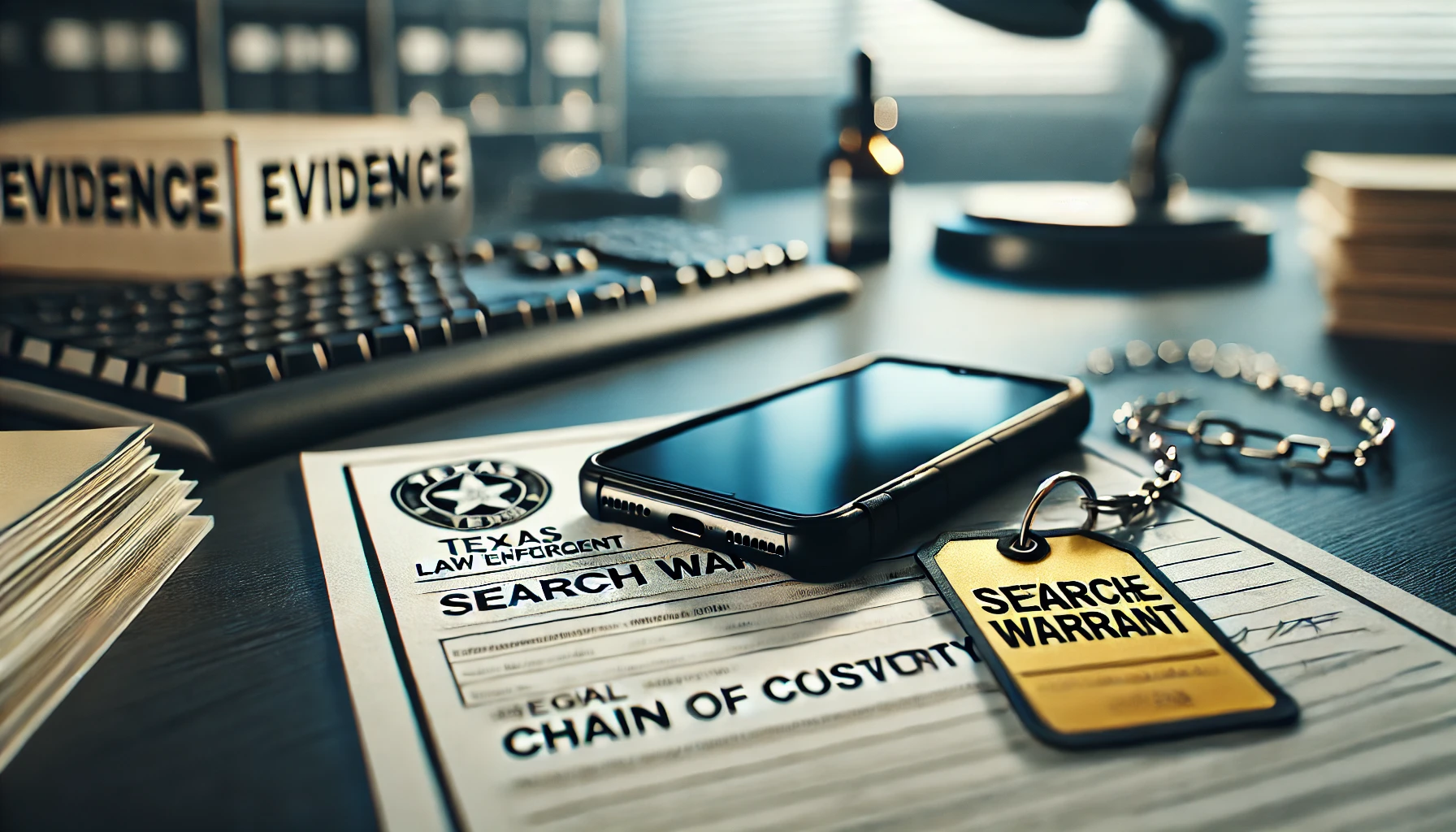
When law enforcement shows up at your door with a search warrant—or worse, takes your phone or laptop without one—it’s not just about what they find. It’s about how they got it.
In Texas, the search and seizure of digital devices is one of the most contested—and consequential—issues in cybercrime defense. Whether you’re facing allegations of online threats, hacking, financial fraud, or harassment, the way police obtain your digital evidence can determine whether it’s admissible in court—or thrown out entirely.
In this post, we’ll break down what constitutes a lawful vs. unlawful digital search, what the Constitution and Texas law require, and how criminal defense attorneys challenge improper device seizures in cybercrime cases.
Why Digital Searches Are Different
Your smartphone contains more personal information than your home, your car, and your bank account combined. It can reveal:
- Who you talk to
- Where you’ve been
- What you searched for
- Who you follow and message
- Financial accounts
- App usage and login patterns
- Photos, videos, and screenshots
- Work documents or passwords
Because of this, courts treat digital devices with greater privacy protections. In 2014, the U.S. Supreme Court ruled in Riley v. California that police must obtain a warrant before searching a digital device—except in a few narrow exceptions.
What Makes a Digital Search Legal in Texas?
To legally search and seize your phone, tablet, laptop, or external drive in Texas, law enforcement must follow both:
- The U.S. Constitution (Fourth Amendment)
- The Texas Code of Criminal Procedure (Chapter 18)
A lawful search typically involves:
- A valid search warrant
- Signed by a judge with jurisdiction
- Based on probable cause
- Specific about the devices to be searched and what they’re looking for
- Lawful arrest with limited search authority
- Officers can seize your phone during an arrest, but they cannot search its contents without a warrant
- Voluntary consent
- If you give permission to search your device, it’s fair game—so never consent without speaking to a lawyer.
- Exigent circumstances
- In rare cases, police may search without a warrant to prevent imminent destruction of evidence, danger to life, or ongoing crimes
When Is a Digital Search Illegal?
A search or seizure becomes illegal when:
- There is no warrant and no valid exception
- The warrant is too vague or overly broad
- Police searched beyond the scope of the warrant
- The device was taken from someone not named in the warrant
- The search continued after the warrant expired
- Consent was coerced, misunderstood, or fabricated
Examples of unlawful digital searches include:
- Police taking your phone during a traffic stop without a warrant or arrest
- Officers demanding your passcode without a valid court order
- Searching your cloud accounts or email without judicial approval
- Using a warrant for one file or folder to comb through your entire device
See How Law Enforcement Seizes and Examines Devices for how searches are supposed to happen—and what to look for if they didn’t.
What Happens If the Search Was Illegal?
If the search violated your rights, your attorney can file a motion to suppress under Texas Code of Criminal Procedure § 38.23. If granted:
- The evidence is excluded from trial
- Prosecutors may be forced to drop or reduce charges
- The entire case may be dismissed if the evidence was central
Judges take illegal digital searches seriously. Once suppressed, the prosecution can’t even mention the excluded evidence in court.
Challenging a Search: What Defense Attorneys Look For
At David Smith Law Firm, PLLC, we examine every detail of how your digital evidence was collected. We look for:
1. Defects in the Search Warrant
- Was it too broad (“all digital data on the phone”)?
- Was the judge outside their jurisdiction?
- Was the judge authorized to sign the particular warrant? For example, we have encountered and successfully argued for evidence to be suppressed as a result of a void search warrant in a murder trial when the magistrate was not a lawyer, and the court was not a court of record.
- Was the affidavit based on stale or weak evidence?
2. Scope Violations
If the warrant authorizes a search for “communications with [victim],” police can’t look at your financial apps, photo albums, or unrelated chats.
3. Improper Seizure Without Warrant
Did officers grab your phone “just in case” without arresting you? That’s likely unconstitutional.
4. Consent Errors
Were you threatened, confused, or pressured into unlocking your phone? Was the consent in writing? We may argue it was not truly voluntary.
5. Delayed or Unexecuted Warrants
Warrants must be executed within a certain timeframe. If police took too long or failed to follow procedure, the search could be invalid.
What About Device Passwords and Encryption?
Texas law generally protects your right not to provide your passcode or decrypt your device, based on the Fifth Amendment.
However, in some cases, prosecutors seek a court order compelling you to unlock your device. If granted, failure to comply could result in contempt of court.
Your attorney may fight this order by arguing:
- Compelled disclosure violates your right against self-incrimination
- The government already has alternative access
- The request is overbroad or not narrowly tailored
When Search and Seizure Law Meets Digital Forensics
Once a device is seized, law enforcement creates a forensic image of the hard drive. But if the seizure itself was unlawful, any analysis of that data—even if incriminating—may be tainted under the “fruit of the poisonous tree” doctrine.
See How to Challenge the Validity of Digital Evidence for more on how we attack faulty forensics, improper authentication, and biased interpretation.
Can Digital Evidence Ever Be Recovered After a Bad Search?
Sometimes, yes—if the state can show they would have found it anyway through independent means (the “inevitable discovery” doctrine). But the burden is on the prosecution, and it’s high.
That’s why it’s critical to examine the earliest steps in the case. If law enforcement overreached at the beginning, you may be able to knock out the central evidence before trial.
Final Thought: The Best Defense Might Be a Bad Warrant
In cybercrime cases, the prosecution often relies on digital evidence pulled from seized devices. But if that seizure violated your rights, we may be able to suppress the evidence and dismantle the state’s entire case.
At David Smith Law Firm, PLLC, we specialize in challenging unlawful digital searches. David is board-certified in criminal law, a former felony prosecutor, and experienced in fighting search warrants, forensic overreach, and tech-based intrusions.
**Call (713) 769-5000 or schedule a confidential consultation at https://appointment.davidsmith.law/#/Schedule If your phone, computer, or cloud data is part of a criminal investigation, let us help protect your rights—and your future.
Discover more from David Smith Law Firm, PLLC
Subscribe to get the latest posts sent to your email.