
What Happens After a Drug Crime Conviction?
Navigating Probation, Parole, or Prison in Texas
For many people charged with drug offenses in Texas, the greatest fear isn’t the courtroom—it’s what comes next if there’s a conviction.
Maybe you took a plea deal to avoid a trial. Maybe the evidence was stacked against you. Maybe your attorney fought hard but the jury didn’t believe your story. Regardless of how you got here, the outcome is now the same: you’ve been convicted of a drug crime.
So what happens next?
The answer depends on a lot of factors—including the level of offense, your prior record, and the sentence handed down by the court. But understanding what’s ahead can help you take back control and start preparing for your future.
In this post, we’ll walk through the three most common paths after a drug conviction in Texas: probation, parole, and prison. You’ll also learn how to reduce long-term damage and how the right legal help—even post-conviction—can make a huge difference.
? For every post in this series, scroll down to “Related Posts.”
1. The Sentencing Phase: What Happens After Conviction?
Immediately after conviction (either by plea or trial), your case moves into sentencing.
Depending on your plea deal or the judge’s discretion, you may be sentenced to:
- Jail or prison time
- Community supervision (probation)
- A combination of both
The judge will consider several factors:
- Type and amount of drug involved
- Whether you have prior convictions
- Whether there was intent to distribute
- Whether weapons, minors, or violence were involved
- Mitigating factors like mental health or addiction
In felony cases, the court may also order a pre-sentence investigation (PSI)—a report compiled by a probation officer that recommends sentencing based on your background, risk level, and needs.
2. Probation (Community Supervision)
Probation is one of the most common outcomes for non-violent drug offenders, especially first-time offenders. In Texas, it’s also called community supervision.
If you’re sentenced to probation, you’ll stay out of jail or prison but must follow strict conditions, such as:
- Regular check-ins with a probation officer
- Random drug testing
- Curfews or travel restrictions
- Community service hours
- Substance abuse treatment or counseling
- Employment or education requirements
- Avoiding new arrests
Violating any of these conditions can result in a motion to revoke probation, which could send you to jail or prison to serve out the original sentence.
Your attorney can often help modify or reduce probation terms, especially if you’ve complied for a long period.
3. Deferred Adjudication vs. Straight Probation
It’s important to understand the difference between deferred adjudication and regular probation:
Deferred adjudication means:
- You pleaded guilty or no contest
- The judge withheld a conviction
- If you complete probation, the charge is dismissed
- You may be eligible for record sealing (nondisclosure) later
Straight probation (post-conviction) means:
- You’ve been formally convicted
- You’re still under supervision, but the conviction remains
- You may not be eligible for sealing or expunction
If your lawyer can negotiate deferred adjudication before conviction, it gives you a chance to avoid a permanent criminal record—especially helpful for employment, housing, and licensing.
4. Parole
If you’re sentenced to state prison, you may not serve your entire sentence behind bars. You may become eligible for parole, which allows you to finish your sentence in the community under supervision.
In Texas, parole is handled by the Texas Board of Pardons and Paroles. You become eligible based on:
- The type of offense
- How much of your sentence you’ve served
- Your conduct in prison
- Your criminal history
Parole supervision often mirrors probation:
- Drug testing
- Regular check-ins
- Restrictions on housing and employment
- No association with other offenders
Parole can be revoked for violations, sending you back to prison. But many people complete it successfully and go on to rebuild their lives.
5. Jail and Prison Time
Not all drug convictions lead to incarceration—but some do, especially if:
- You’re convicted of a felony
- You have prior convictions
- The charge involved large quantities or intent to distribute
- You rejected a plea deal and lost at trial
County Jail: Sentences under one year are usually served in county jail
State Jail Felony: Texas has a special category for low-level felony drug offenses (like possession of under one gram of cocaine). State jail time is served day-for-day—no parole, no good time credits.
Prison (TDCJ): More serious felony convictions (distribution, manufacturing, repeat offenses) can result in 2 years to life in the Texas Department of Criminal Justice.
Even if you’re incarcerated, you may be eligible for:
- Drug treatment programs
- Educational or vocational training
- Early release under certain conditions
A post-conviction defense attorney can help you apply for parole, modify your sentence, or seek post-conviction relief(like appeals or writs).
6. What About Diversion or Drug Court?
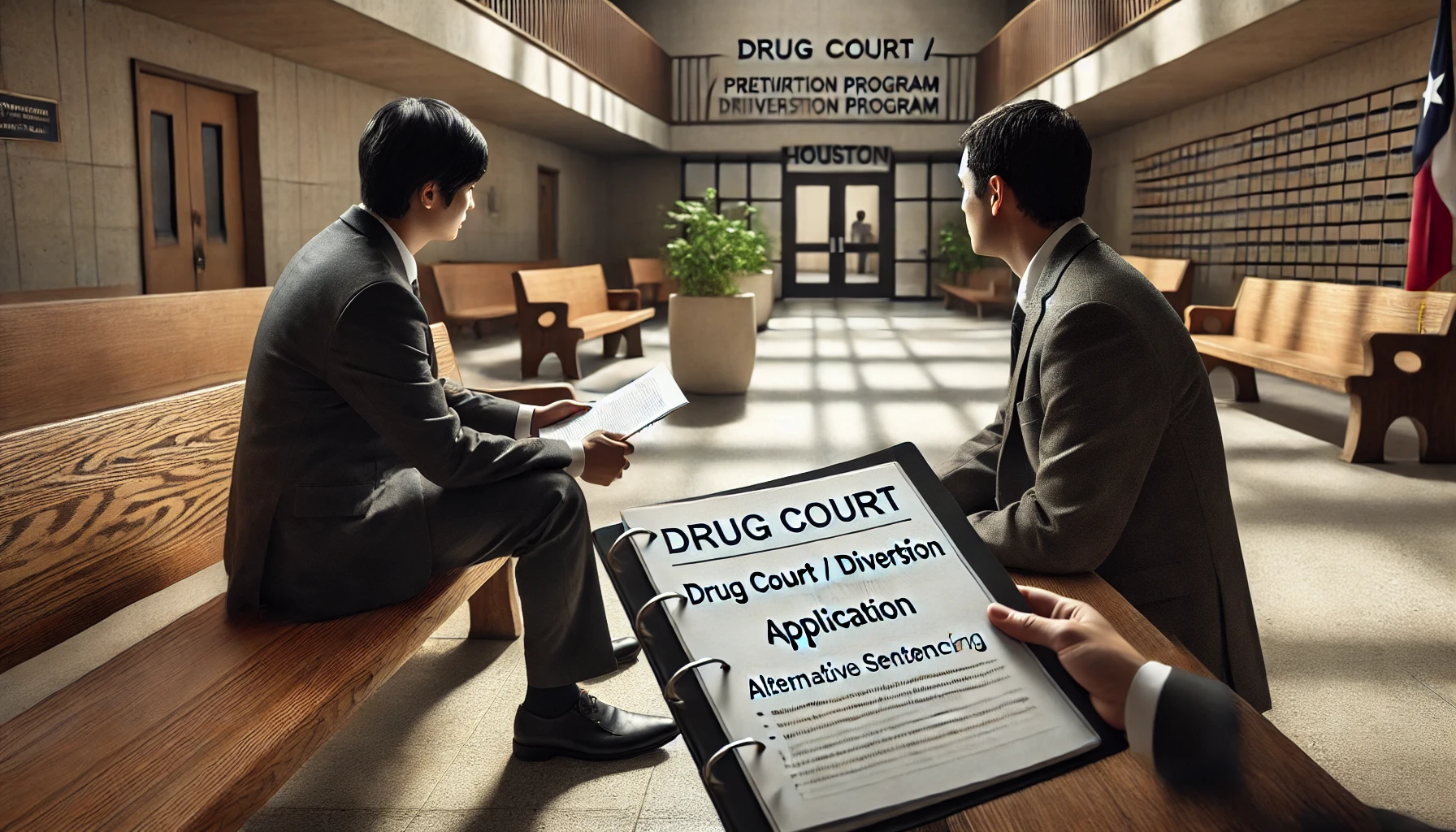
Some counties in Texas, including Harris County, offer drug court programs for non-violent offenders struggling with addiction. These programs aim to rehabilitate rather than punish.
Participants must:
- Agree to regular court appearances
- Attend counseling or rehab
- Submit to frequent drug testing
- Stay clean and compliant for the full program (typically 12–24 months)
If completed, charges may be dismissed or reduced.
Drug court is not a post-conviction program—but in some cases, your attorney may be able to negotiate placement after arrest but before trial or sentencing. It’s worth asking your lawyer if you qualify.
7. Life After a Drug Conviction: What’s Next?
Whether you’re serving probation, parole, or time behind bars, the goal is always to complete your sentence, avoid further violations, and move forward.
After your sentence, you may need help with:
- Record sealing (nondisclosure) if you received deferred adjudication
- Expunction if your case was dismissed or overturned
- Restoring gun rights or professional licenses
- Re-entering the workforce or housing market
- Expunging old drug cases that are holding you back
An attorney who handles post-conviction relief or record cleanup can help with these next steps.
8. What If You’re Still Waiting on Sentencing?
If you’ve been convicted but haven’t been sentenced yet, it’s not too late to take action.
A skilled attorney can still:
- Present mitigating evidence to the judge
- Request a pre-sentence investigation
- Push for probation or deferred adjudication
- Argue for reduced sentencing
- Help you qualify for treatment or diversion
Don’t assume the case is over. A strong final push can still impact the outcome.
Conclusion: A Conviction Isn’t the End—But It’s a Turning Point
Getting convicted of a drug offense in Texas is a serious blow—but it’s not the end of the story. With the right guidance, support, and strategy, many people complete probation, comply with parole, and move forward with sealed records, new jobs, and clean slates.
If you or someone you care about has been convicted—or is facing sentencing—don’t wait. The decisions made now will shape your future for years to come.
Discover more from David Smith Law Firm, PLLC
Subscribe to get the latest posts sent to your email.