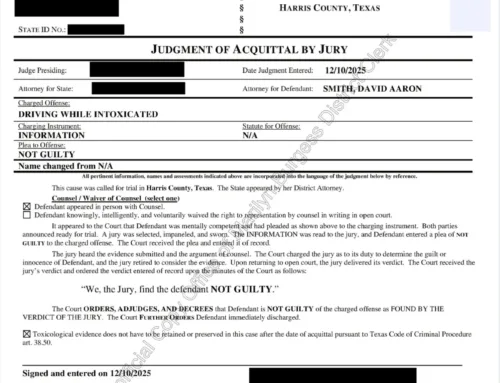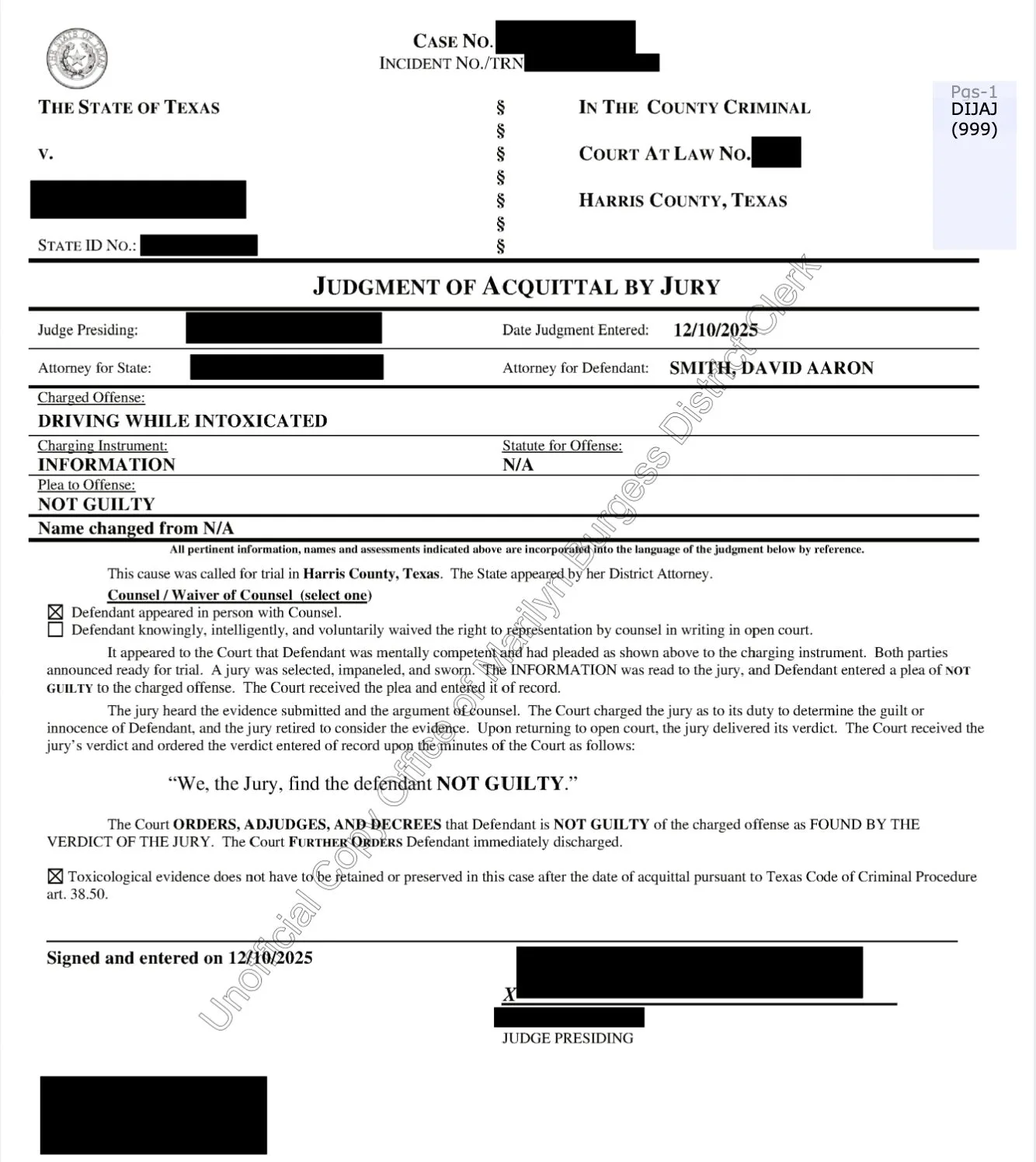
An arraignment hearing is your first formal court appearance after an arrest. It is the critical moment where the State of Texas officially presents the criminal charges against you. This initial hearing sets the stage for your entire case, and the decisions made here can have a profound impact on the outcome.
Your First Formal Court Appearance
For anyone unfamiliar with the criminal justice system in Houston, stepping into a courtroom for an arraignment can be an overwhelming and confusing experience. The legal jargon and formal procedures are intimidating. This hearing is the system’s official starting point, designed to ensure you understand the accusations you face and are aware of your constitutional rights.
Think of it as the court officially starting the clock on your case.
This is not a trial. No evidence will be presented, and no witnesses will testify. The arraignment serves a specific and vital purpose: to act as a procedural safeguard, ensuring you are fully informed before your case proceeds.
What to Expect During the Hearing
During the hearing, a judge will move through a series of procedural steps. These events happen quickly, and without experienced legal counsel, it is easy to become lost and make critical mistakes. The primary goals are to state the charges, address legal representation, and determine the conditions for your release while the case is pending.
Key events usually include:
- Formal Reading of Charges: The judge or prosecutor will state the specific offenses the State of Texas is accusing you of committing.
- Advisement of Rights: The court will inform you of your constitutional rights, including your right to an attorney and your right to remain silent.
- Bail and Bond Conditions: The judge will review and set the conditions for your pretrial release. This could mean setting a bail amount in a Harris County court or releasing you on your own recognizance.
This infographic gives you a basic visual of how things flow at an arraignment.

As you can see, each step builds on the last, from hearing the charges to entering a plea, which highlights just how structured and sequential the hearing really is.
To help you get a clearer picture, here’s a quick breakdown of the key moments and what they mean for you.
Key Events During Your Arraignment Hearing
| Event | What It Means for You |
|---|---|
| Formal Charges are Read | This is the first time you will officially hear what the government is accusing you of. Pay close attention. |
| Your Rights are Explained | The judge will confirm you understand your right to a lawyer and the right to remain silent. It’s crucial you grasp these. |
| You Enter Your Plea | You are assumed to plead “not guilty”. “Not guilty” is almost always the correct plea at this stage to preserve your rights. |
| Bail is Set or Reviewed | The judge decides if you can be released from custody and under what conditions (e.g., a cash bond, GPS monitoring). |
| Next Court Date is Scheduled | You will be given a date for your next appearance, which moves your case to the next stage of the process. |
Each action taken here lays the groundwork for all future legal proceedings.
The decisions made during these few minutes can have a lasting impact on your freedom and the strategic direction of your defense. An unguided choice at this stage could unintentionally waive important rights or lead to unfavorable bail conditions.
Knowing the sequence of events is the first step toward regaining some control. While this overview helps demystify the process, nothing replaces having a skilled attorney guiding you through it. To get a deeper look into this critical first court appearance, you can find more in our beginner’s guide to arraignment and bail.
The Strategic Advantage of Legal Counsel
Walking into a Houston arraignment hearing without a criminal defense lawyer is like trying to navigate a minefield blindfolded. It’s a colossal mistake that can jeopardize your entire future.
While the court may appoint a public defender if you cannot afford one, however it may mean you get only a few minutes of their time before you must make life-altering decisions. Meanwhile, the prosecutor has been building their case against you from the moment charges were filed.
A professional team is already working to secure a conviction. Hiring an experienced criminal defense attorney immediately is how you level the playing field. It is not just a good idea—it’s an urgent, fundamental strategic move that can alter the entire trajectory of your case, starting with this very first hearing.
Immediate and Decisive Actions
A skilled defense lawyer does much more than just appear in court. Before you even see the judge, they are analyzing the prosecution’s initial paperwork, known as the “complaint,” searching for procedural errors, factual inaccuracies, or constitutional violations. Sometimes, a single flaw in that initial document can provide powerful leverage for your defense.
Here’s what a lawyer starts doing right away:
- Challenging the Complaint: They scrutinize the official charges to determine if they are legally sound. Any defect could be grounds for a motion to dismiss.
- Preserving Your Rights: They ensure you do not inadvertently say or do anything that could be used against you later. This is absolutely critical.
- Initiating Discovery: They immediately file formal requests for all the evidence the prosecutor possesses—police reports, witness statements, bodycam footage, 911 calls, and more.
This proactive approach flips the script. You are no longer just reacting to the state’s actions; you become an active defender of your rights.
An attorney’s presence sends a clear message to the prosecutor and the judge: this case will be fought every step of the way. It signals that every piece of evidence will be challenged and every legal protection will be used to defend you.
Having a lawyer ensures your arraignment isn’t just a procedural check-box. It becomes the launchpad for a robust defense. They start gathering facts, talking to witnesses, and building a strategy designed specifically for your situation here in the Greater Houston Area.
Advocating for Favorable Release Conditions
One of the most immediate and impactful ways a lawyer can help is with bail. While the judge makes the final decision, a powerful argument from your attorney can be the difference between going home and remaining in jail, and what bond conditions, if any, you will be subect to following.
They can present evidence of your ties to the community—such as your job, family, and residence in Houston—to argue for a personal recognizance (PR) bond, which allows for your release without paying money upfront. In Harris County, General Order Bonds or Personal Recognizance bonds are more likely for alleged first-time offenders with non-violent accusations.
Without that advocacy, the judge might only hear the prosecutor’s side, which often leads to an excessively high bail amount and possibly burdensome bond conditions. Your attorney is there to counter that narrative and fight for the least restrictive conditions possible, allowing you to return to your life while the case proceeds.
Ultimately, hiring a lawyer early is the single most important action you can take to protect your freedom.
Decoding Your Plea Options
The single most important decision you’ll make at your arraignment hearing is how you plead. Think of it like a major crossroads—the path you choose here sets the direction for your entire case and will have consequences that stick with you.
In Texas, you generally have three options. Understanding the strategy behind each one is vital, and this is a decision that should never, ever be made without talking to a lawyer first.
The Standard Plea: Not Guilty
Let’s cut to the chase: pleading “not guilty” is almost always the right move at an arraignment. It’s the standard, correct, and wisest choice you can make at this early stage.
Why? Because this plea does so much more than just deny the accusations. It’s a powerful way to assert your constitutional rights.
When you plead not guilty, you are formally telling the State of Texas that it must prove its case against you beyond a reasonable doubt. This single act triggers the entire legal process. It kicks off the discovery phase, where your attorney can finally get their hands on the prosecution’s evidence and start picking it apart.
A “not guilty” plea isn’t a statement about what actually happened. It’s a strategic legal maneuver at this point. It keeps every single one of your defense options open, gives your lawyer time to investigate, and creates the opportunity to negotiate a plea deal or prepare for a fight at trial.
Simply put, this plea keeps all possibilities on the table. It’s the essential first step in building a real defense and gives your legal team the time and leverage needed to effectively challenge the state’s case.
Understanding Guilty and No Contest Pleas
While “not guilty” is the go-to plea, it’s still important to know what the other two options mean. You’ll hear them mentioned, so let’s break them down.
- Guilty: A plea of “guilty” is exactly what it sounds like—a direct, formal admission that you committed the crime as charged. This plea waves goodbye to your right to a trial and sends your case straight to the sentencing phase. It’s a final decision that should only be made after deep consultation with your defense attorney, almost always as part of a carefully negotiated deal.
- Nolo Contendere (No Contest): This is a bit different. A “no contest” plea means you aren’t admitting you’re guilty, but you aren’t fighting the charges either. For the purposes of the criminal case, the court will find you guilty and sentence you just as if you’d pleaded guilty. The main benefit? A “no contest” plea usually can’t be used against you as an admission of fault if someone later files a civil lawsuit against you over the same incident.
Deciding between taking a plea deal or going to trial is one of the most complex and high-stakes choices in any criminal case. It’s absolutely critical to explore your full range of criminal defense options before you commit to any path. The plea you enter at arraignment is just the starting point of that journey.
Navigating Bail and Pretrial Release

Dramatization
For most people sitting in court for an arraignment, the legal jargon fades into the background. The most pressing question isn’t about pleas or future court dates—it’s about getting out of jail.
The bail decision is a pivotal moment. It determines whether you’ll fight your case from the comfort of your home or from behind bars, a reality that dramatically impacts the road ahead.
In Texas, judges have a great deal of power when setting bail. But they aren’t just pulling numbers out of thin air. They are legally required to weigh several key factors to decide if you’re a flight risk or a potential danger to the community.
Key Factors in a Judge’s Bail Decision
A defense attorney’s first critical job at arraignment is to paint a compelling picture of you as a person, not just a defendant. An effective lawyer must show the judge who you are beyond the allegations in the criminal complaint.
In Houston and Harris County, judges are looking at:
- The Nature of the Alleged Crime: Serious or violent accusations almost always result in higher bail. It’s just a fact of the system.
- Your Criminal History: A track record of prior convictions, and especially any past failures to appear in court, will work against you.
- Your Ties to the Community: Do you have a steady job? A local family? Have you lived here for years? Strong community connections are powerful evidence that you’re not a flight risk.
- Your Ability to Pay: Bail is not supposed to be a tool of oppression. The judge must consider your financial situation when setting an amount.
Presenting this information effectively is an art form. It means gathering proof of your stability and making a persuasive argument for the least restrictive release conditions possible, all within a very short timeframe.
Understanding Your Release Options
When it comes to getting out of jail, there isn’t a one-size-fits-all solution. The judge will typically order one of several types of bonds.
- Personal Recognizance (PR) Bond or General Order Bond (GOB): These are the best-case scenario. The court releases you on your written promise to show up for future hearings. No money is required upfront.
- Cash Bond: You or your family must pay the full bail amount directly to the court. As long as you make all your court dates, that money is returned when the case is over, minus some administrative fees.
- Surety Bond: This is what most people are familiar with. You pay a non-refundable fee—usually 10-15% of the total bail amount—to a bail bondsman. The bondsman then posts the full amount with the court on your behalf. To learn more, check out our guide on the key criteria to consider when choosing a bail bondsman.
The stakes here are incredibly high. The inability to afford bail is a primary reason our jails are overcrowded. National studies show that rising jail populations are largely driven by people held before trial simply because they cannot pay for their release.
Beyond just setting a dollar amount, a judge can also impose pretrial conditions. These might include GPS monitoring, regular check-ins with an officer, or travel restrictions. A strong legal argument can not only lower your bail but also minimize these intrusive conditions, preserving as much of your freedom as possible while your case is pending.
The Legal Journey After Arraignment

Dramatization
The arraignment hearing isn’t the main event. Think of it as the starting pistol for a long, complex legal marathon. Once you enter a “not guilty” plea, the real work of building your defense begins. What comes next is a series of critical stages, and each one demands a careful strategy and expert navigation.
Understanding this legal roadmap is everything. The journey ahead is where a skilled lawyer tests the prosecution’s case, challenges their evidence, and ultimately shapes the outcome of your case. This is not a path you want to walk alone.
The Discovery Phase: Uncovering the Evidence
Right after the arraignment, your defense team will formally demand every piece of evidence the prosecution has gathered against you. This isn’t a polite request—it’s a legal right known as the discovery process.
The prosecutor is legally required to turn over everything they have, including things like:
- Police reports and the officers’ handwritten notes
- Statements and interviews from any witnesses
- Body camera and dashcam video footage
- Lab results, crime scene photos, and any other physical evidence
This stage is all about leveling the playing field. A good defense attorney meticulously combs through every page, every video, and every report. They are hunting for weaknesses in the state’s case, contradictory statements, or evidence that was collected illegally. This deep-dive analysis is the bedrock of a strong defense.
The discovery phase can be where a case is won or lost. It’s the point where a skilled attorney can spot procedural errors or constitutional violations that could get evidence thrown out—or even get the entire case dismissed.
Motion Hearings and Pretrial Conferences
Once all the evidence from discovery is obtained, the next strategic phase begins: filing motions. A motion is a formal request asking the court to make a specific ruling on an issue. For example, a “motion to suppress” could argue that the police found evidence during an illegal search and that it should be excluded from the trial.
After motions are filed, there will be one or more pretrial conferences. These are meetings between your defense attorney, the prosecutor, and potentially the judge. They discuss the status of the case, sort out any procedural issues, and often, this is where serious plea negotiations occur. A strong defense—one that has been exposed through discovery and motions—gives your attorney serious leverage in these discussions.
Every step, from digging through discovery to arguing motions and negotiating with the prosecutor, is a critical battleground. Having a professional legal team in your corner from the very beginning is the only way to ensure you’re in the best possible position at every turn. The road is long, but a strategic defense makes all the difference.
You Should Not Face Your Arraignment Alone
Navigating the Texas criminal justice system is not something you should ever attempt to do on your own. As this guide has shown, an arraignment hearing involves complex procedures, critical decisions, and consequences that can alter the entire course of your life. The core message is simple: facing the power of the state by yourself is a risk you cannot afford to take.
The prosecution does not walk into that hearing unprepared. They arrive with a clear strategy and the full weight of the government’s resources behind them. You deserve to be just as prepared.
Leveling the Playing Field
Hiring an experienced criminal defense lawyer before your arraignment hearing is the single most important step you can take to protect your rights, your freedom, and your future. An attorney does far more than just speak for you. They challenge the prosecution’s story, pick apart the evidence looking for weaknesses, and fight fiercely for your release under the best possible conditions.
They turn what could be a procedural formality into the first real line of defense.
Without that professional advocacy, you are at a serious disadvantage. You can miss crucial opportunities to question the charges, argue for a reasonable bond, or preserve key rights for later in your case—all in the blink of an eye.
Acting decisively right now is an investment in the best possible outcome for your case. It ensures your side of the story is heard and that your constitutional protections are aggressively defended from the very start.
The Urgency of Seeking Counsel
The time between an arrest and an arraignment is incredibly short, but it is also profoundly important. Every moment counts. This is your window to get a legal advocate on your side who can start analyzing your case and preparing a strategy before you ever set foot in that courtroom.
Waiting until the last minute—or simply hoping for the best—leaves your fate in the hands of a system that is not designed to look out for you. We strongly encourage you to seek a confidential consultation with a qualified criminal defense attorney to understand your options and build the strong defense you deserve.
Common Questions About Arraignment Hearings
Even after you understand the basic flow of an arraignment hearing, the practical questions are often the ones that cause the most stress. Here are some straightforward answers to the questions people ask most when facing their first court date in Texas.
What Should I Wear to My Arraignment Hearing?
Think of it like a job interview or a serious business meeting. Your appearance sends an immediate message to the judge and the prosecutor about how seriously you’re taking the situation. Business casual is always a safe bet.
You want to show respect for the court, which means avoiding anything that could be seen as casual or distracting. That includes:
- Shorts, athletic wear, or flip-flops
- T-shirts with graphics or logos
- Hats and sunglasses (take them off before you enter the courtroom)
It might seem like a small detail, but dressing professionally shows the court you understand the gravity of the proceedings. It’s a simple way to start off on the right foot.
Can My Case Be Dismissed at the Arraignment?
It’s possible, but it’s not common. A dismissal this early in the game almost never happens by chance; it’s usually the result of a sharp legal argument from your defense attorney.
This typically only happens when there’s a significant, glaring legal flaw in the prosecution’s initial paperwork or the arrest itself—something so obvious that the judge or prosecutor recognizes it can’t be fixed.
An experienced defense attorney knows exactly what to look for. They’ll scrutinize the state’s filings for these kinds of critical errors from day one, ready to argue for a dismissal on your behalf at the very first opportunity.
What Happens If I Miss My Arraignment Date in Texas?
Missing your court date is a serious mistake with immediate and compounding consequences. If you don’t show up, the judge will almost certainly issue a bench warrant for your arrest.
On top of that, you could be hit with a brand new criminal charge for Failure to Appear. If you think there’s any chance you can’t make your scheduled date, you or your lawyer must contact the court clerk ahead of time to try and resolve the issue. Don’t just ignore it.
Do I Have to Speak to the Judge Myself?
If you have a lawyer, they will do virtually all the talking for you. Your attorney’s job is to be your voice and your shield in the courtroom.
They will handle all the communication with the judge, enter your plea of “not guilty,” and make the arguments about your bail and release conditions. This is a critical part of your defense, as it prevents you from accidentally saying something that could be twisted and used against you later on. Your silence is a strategy.
Discover more from David Smith Law Firm, PLLC
Subscribe to get the latest posts sent to your email.