When you’re facing a DWI charge in Texas, one of the most urgent questions is almost always the same: “Will my boss find out?” The fear of losing your job can be even more stressful than the legal proceedings themselves, especially for professionals in the Greater Houston Area whose careers depend on a clean record.
The simple answer is no—the police or the courts will not generally call your HR department to tell them about your arrest. But that’s just the beginning of the story. The truth is, your employer is far more likely to discover a DWI indirectly, long after the flashing lights are gone. A conviction can create a permanent public record, jeopardizing your professional future. This is why securing experienced legal counsel immediately is not just a recommendation; it’s a critical step toward protecting your livelihood.
How Your Employer Is Likely to Find Out
While there’s no official notification system linking Texas law enforcement to your job, the reality is a lot more complicated. A DWI arrest, and especially a conviction, creates a public record. It’s a digital footprint that can be uncovered in several ways, and Houston employers often use these methods to mitigate risk.
The real threat to your career doesn’t generally come from a direct phone call from the authorities. Instead, it comes from routine business practices and specific job requirements that can unintentionally expose your legal situation. Understanding these indirect pathways is the first step in building a defense to protect your job and your future. Time is of the essence, as each day that passes without a strategic defense plan increases the risk to your employment.
Common Scenarios Where a DWI Comes to Light
Several common situations can bring a DWI to your employer’s attention without anyone ever making a phone call.
- Routine Background Checks: Many companies run annual or pre-promotion background checks on their current employees. A conviction will almost certainly show up on these reports.
- Company Vehicle Policies: If you drive a company car or even just get a vehicle allowance, your employer’s insurance provider is probably running regular motor vehicle record (MVR) checks. A license suspension or DWI conviction will flag you as a high-risk driver, and that report goes straight back to your boss.
- Professional Licensing Requirements: For jobs like nursing, teaching, aviation, or commercial driving, there are often strict reporting mandates. State licensing boards frequently require you to self-disclose any criminal charges or convictions to keep your license in good standing. Prosecutors can and likely will notify the licensing board of your particular profession, and provide public documents, such as the judgement, to notify the board. It is advisable to retain the services of an attorney who represents professionals before professional licensing boards to discuss how to handle potential self-reporting to your respective licensing board, as well as to consult for representation if there is any further inquiry from the licensing board into your conviction.
How Your Employer Can Discover a DWI in Texas
This table breaks down the most common ways an employer in Houston learns about an employee’s DWI. Notice that none of them are automatic or direct notifications from the state—the biggest risks come from existing company policies and professional rules.
| Discovery Method | Is it Automatic? | Common Triggers |
|---|---|---|
| Background Checks | No | Pre-promotion screening, annual reviews, security clearance updates. |
| Company Vehicle Policy | No | Annual insurance renewal, random MVR checks by the insurer. |
| Professional Licensing Boards | No, but self-reporting is often required. | License renewal applications, mandatory disclosure rules for your profession. |
| Court Appearances | No | Needing to take time off work for court dates without a clear explanation. |
| Coworker Gossip | No | Someone you know seeing the public arrest record or hearing about the incident. |
Ultimately, the threats to your job are not generally a direct result of the arrest itself, but the consequences that flow from it. This is why a proactive and urgent legal defense is so critical—it’s not just about what happens in the courtroom, but about protecting your career for years to come.
As you can see, the primary risks to your employment are the public nature of a criminal record and the contractual or professional obligations you already have. This is why fighting the charge from day one with a skilled attorney is so important—it’s about more than just avoiding fines or jail time; it’s about safeguarding your entire future.
For most people in Texas, a DWI arrest is a private legal battle. But for a growing number of professionals, it’s a career bombshell with an immediate and unavoidable fuse.
If your job requires a state or federal license, the question isn’t if your employer will find out about a DWI—it’s when and how. In these fields, you have a direct, legal duty to report it yourself.
Certain careers are held to a much higher standard. When your work involves public trust and/or safety, a criminal charge can put your professional standing on the line instantly. Forgetting—or choosing not to—report an arrest can trigger consequences far worse than the DWI itself, like immediate license suspension or even permanent revocation.
Professions with Mandatory Reporting Duties
This higher standard isn’t optional; it’s built into the rules that govern your license. The burden is on you, the employee, to notify the right people.
- Commercial Drivers: Anyone with a Commercial Driver’s License (CDL) is governed by strict federal regulations.
- Licensed Healthcare Professionals: This includes nurses, doctors, pharmacists, and therapists, all of whom answer to state licensing boards.
- Educators and School Staff: Teachers, principals, and other school employees typically have contractual and state-mandated duties to report arrests.
- Pilots and Aviation Personnel: The Federal Aviation Administration (FAA) has zero tolerance for unreported alcohol-related driving offenses.
- Government Employees and Contractors: If you hold a security clearance or work in a sensitive government role, you face tough reporting rules and constant background checks.
For these professionals, silence is a gamble you can’t win. A failure to disclose is often treated as a separate ethical violation, which could get you fired even if the DWI charge is eventually dismissed.
The biggest mistake a licensed professional can make is thinking the court case is the only battle. Your licensing board has its own set of rules and punishments that are completely separate from the criminal justice system. A qualified Houston criminal defense lawyer can help you navigate both.
The Special Case for CDL Holders
If you drive for a living, the rules are especially tough. Federal regulations from the Federal Motor Carrier Safety Administration (FMCSA) are crystal clear: commercial drivers must notify their employer of any DWI conviction within 30 days.
This rule doesn’t just apply to incidents in your big rig. It covers a DWI in your personal car on a Saturday night. You can learn more about how a DWI impacts a CDL to see the full picture.
This puts CDL holders in a tough spot right away. An arrest can trigger a license suspension, while a conviction forces you to report to your boss. Juggling that timeline without losing your job requires a sharp legal strategy from day one. An experienced attorney can help manage both the criminal charges and the administrative deadlines to give you the best shot at protecting your CDL and your career.
How a Background Check Puts a DWI on Your Employer’s Radar
Let’s clear up a common misconception. The single most likely way an employer discovers a DWI isn’t a dramatic phone call from the police. It’s through the quiet, routine, and almost universal process of a background check.
Once a DWI charge in Texas is brought against you, it creates a permanent mark on your criminal record. This isn’t just some dusty file in a courthouse basement; it’s a digital footprint that follows you everywhere you go professionally.
Think of background checks as a standard part of doing business today. Companies aren’t necessarily trying to pry into your personal life. They’re trying to mitigate risk, and a background check is their primary tool for doing so.
- Pre-Employment Screening: This is the big one. Nearly all employers run background checks on new hires. A DWI conviction can be a major red flag, especially for jobs that involve driving, handling money, or positions of public trust.
- Internal Promotions: Moving up the corporate ladder often triggers a new background check. A conviction that wasn’t on your record when you were hired can absolutely halt your career advancement in its tracks.
- Annual Reviews: Some companies, particularly in highly regulated industries like healthcare or finance, conduct yearly, or more frequent, checks on all employees to ensure everyone remains in good standing.
The Critical Difference: Arrest vs. Conviction
It’s incredibly important to understand the difference between an arrest and a conviction. An arrest is just an accusation; it means you were taken into custody because an officer suspected you committed a crime. A conviction, on the other hand, is a formal judgment of guilt handed down in a court of law.
Most standard employment background checks are designed to uncover convictions, not just arrests.
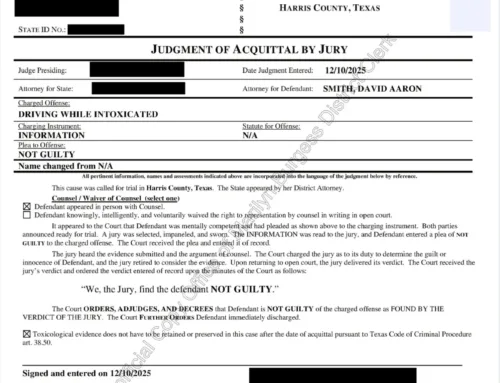
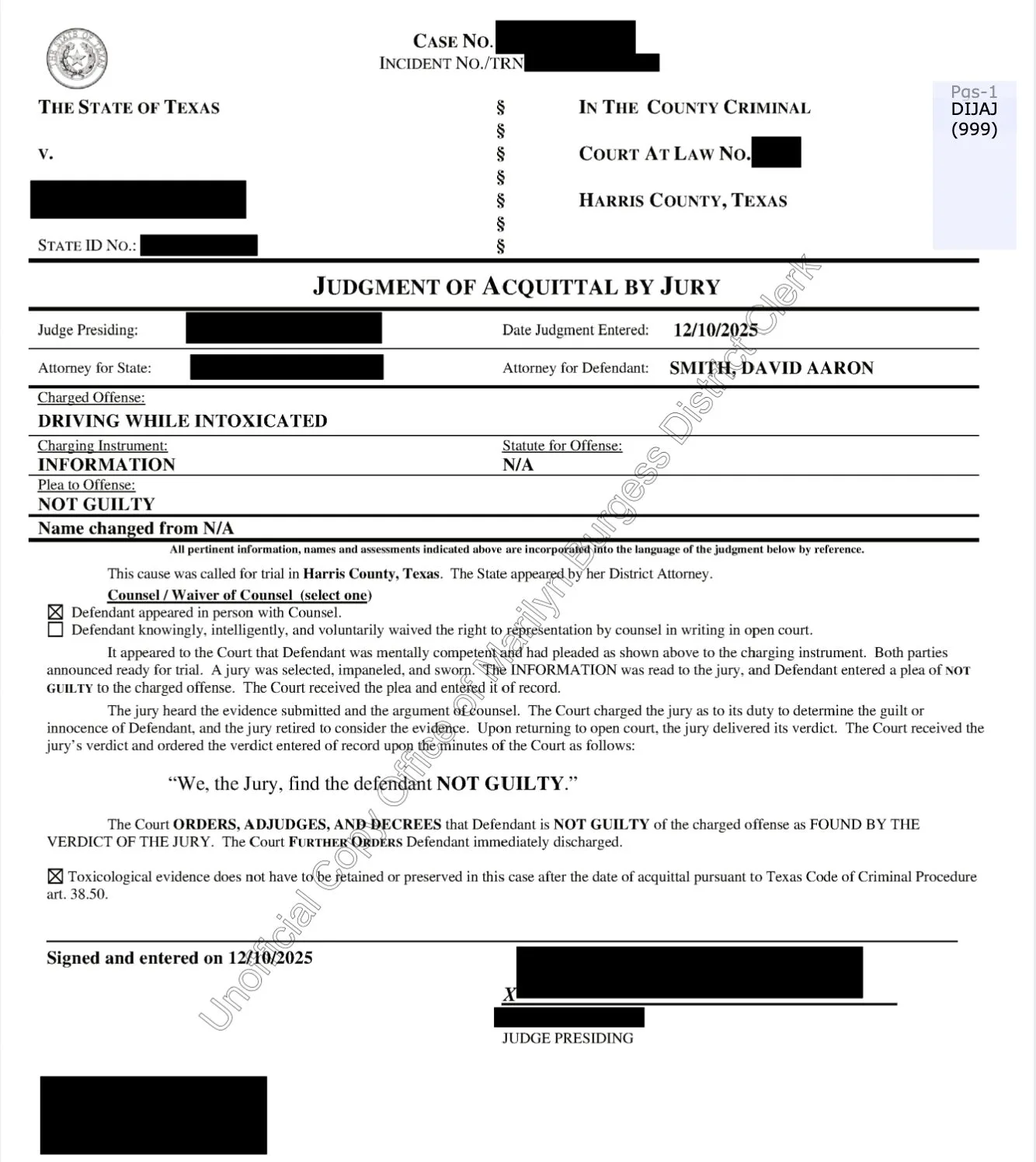
This distinction is precisely why mounting a vigorous legal defense with a dedicated criminal defense attorney is so crucial from the very beginning. The number one goal is to prevent the accusation—the arrest—from ever turning into a conviction. If your case is dismissed or you are found not guilty at trial, there is no conviction for a background check to find.
A DWI conviction is not just a legal outcome; it’s a piece of public data that can be accessed by employers for years to come. Your best defense for your career is preventing that data from ever being created.
The Lasting Impact on Your Career
The consequences of a DWI conviction popping up on a background check can be severe and long-lasting. It can make it incredibly difficult to find a new job, get that promotion you’ve been working toward, or even keep the job you already have.
The impact of a conviction on employment and professional licenses can be profound, often slamming the door on opportunities you’ve spent years earning.
Ultimately, the best strategy is always a proactive one. An aggressive defense aimed at preventing a conviction is the single most effective way to keep your record clean and ensure a routine background check doesn’t derail your entire professional life. It’s about protecting your future, not just dealing with the present.
How a License Suspension Can Alert Your Employer
Long before your criminal case ever sees the inside of a courtroom, a separate legal process is already kicking into gear—one that can put your job on the line almost immediately. This is the Administrative License Revocation (ALR), a civil proceeding that runs on a completely different track from your criminal DWI charge. And it moves a lot faster.
This administrative process doesn’t wait for a guilty verdict. It’s triggered the moment you either refuse a breath or blood test or provide a sample showing a blood alcohol concentration (BAC) over the legal limit of 0.08. The result? An automatic license suspension, unless you fight back, and fight back fast.
For countless professionals across the Greater Houston Area, this is the most immediate threat to their livelihood. If driving is any part of your job—even just running errands in a company truck—a suspended license creates a problem that’s impossible to hide. The urgency of retaining counsel cannot be overstated, as the deadline to challenge this suspension is incredibly short.
The Insurance Company Connection
Here’s something most people don’t realize: your boss probably won’t hear about your suspension from the Texas Department of Public Safety (DPS). They’ll hear about it from their insurance company.
Businesses that have employees on the road are required by their insurers to keep a list of approved, insurable drivers. To manage their risk, these insurance companies constantly run Motor Vehicle Record (MVR) checks on all covered employees.
An ALR suspension pops up on your MVR almost instantly, flagging you as a high-risk driver. The moment that happens, the insurance company notifies your employer. At that point, your boss has little choice but to take you off all driving duties. For many, this is the same as being fired.
This is how the civil side of a DWI can wreck your career before the criminal side even gets started. You can learn more in our guide on how a license suspension can result from various convictions.
A Problem That Cannot Be Ignored
Impaired driving is a massive issue, with consequences that ripple out far beyond the driver. Shockingly, about 14.5% of U.S. workers—that’s around 22 million people—admitted to driving under the influence in the past year, though only a tiny fraction of those instances ever result in an arrest.
A license suspension is more than an inconvenience. It’s a public record that broadcasts risk to insurers and employers. It can force your employer’s hand, sparking a professional crisis that demands immediate legal help.
To get a better handle on the mechanics of this, it’s worth reviewing the state’s rules on understanding the point system and license suspension rules. Ultimately, fighting the administrative suspension is the critical first step in protecting both your license and your job.
Finding Your Obligations in Company Policies
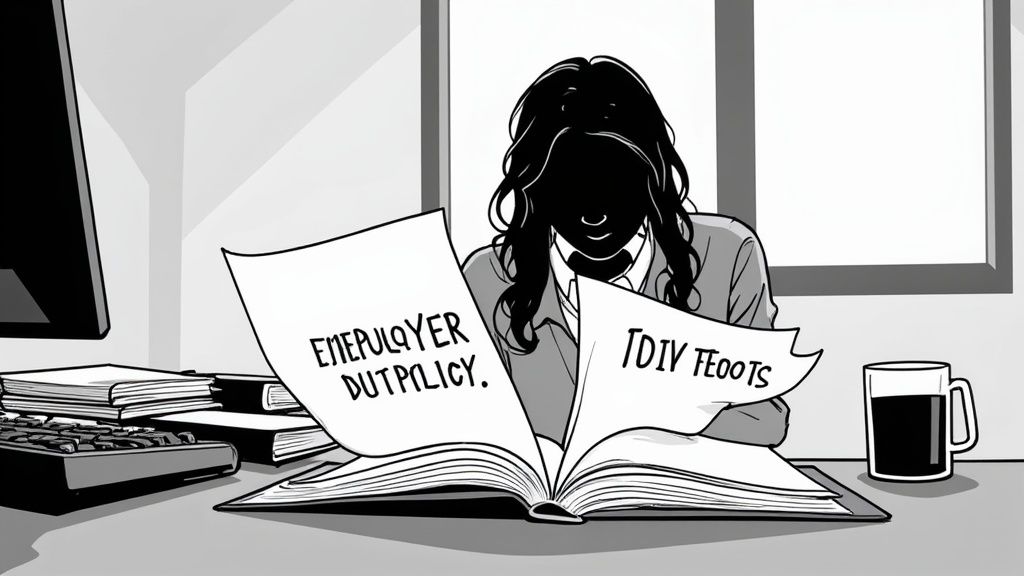
It’s not just about state laws and licensing boards. The question of whether your employer will find out about your DWI often comes down to a different set of rules—the ones in your company’s own handbook.
The employee handbook and your employment contract aren’t just suggestions; they’re your contractual duties. Ignoring them can be just as damaging as the DWI charge itself, sometimes even more so.
Many companies, especially larger corporations here in Houston, have specific policies that force an employee to report any criminal arrest or conviction. If that’s the case for you, failing to speak up is a direct breach of your employment agreement. That alone can be grounds for immediate termination, no matter what happens with your DWI case.
Digging into Your Employee Handbook
Your first move should be to pull out your employment documents and read them carefully. You’re looking for sections with headings like “Employee Conduct,” “Code of Ethics,” or “Criminal Conduct Reporting.” These are the sections that spell out the company’s expectations and what you’re required to do.
You might find very specific language in there. Some policies demand that you disclose an arrest within a ridiculously short timeframe, like 24 or 48 hours. This puts you on the clock immediately and makes understanding your obligations a top priority.
An employment contract is a two-way street. While your employer has obligations to you, you have contractual duties to them. Violating a disclosure policy can be seen as a breach of trust, giving them a clear path to end your employment.
Identifying Key Contractual Clauses
Not all policies are written in plain English. Some are buried in dense legal language that’s hard to make sense of. As you go through your documents, keep an eye out for these key terms and clauses:
- Morality Clauses: These are common in executive or public-facing roles. They basically prohibit any behavior that could tarnish the company’s reputation. Since a DWI arrest is a public record, it could easily fall into this category.
- Conviction Reporting Policies: Some policies are a little more forgiving. They might only require you to report a final conviction, which gives you more breathing room. But you have to know their exact definition and deadlines.
- Driving Record Requirements: This is a big one for any job that involves getting behind the wheel. Your contract almost certainly states that you have to maintain a clean driving record and immediately report anything that could put it at risk.
Trying to navigate these internal rules while also fighting a criminal charge is a nightmare. One wrong move, one misinterpreted clause, and you could lose your job. Getting a legal professional to review these policies isn’t just a good idea—it’s a critical step in building a strategy that protects your rights, your career, and your future.
Taking Proactive Steps to Protect Your Career
That feeling of dread after a DWI arrest is real and totally normal. But letting that anxiety freeze you in place is a massive mistake. The hard truth is that doing nothing is the single biggest threat to your career right now.
If there’s one thing you can do to protect your job and your future, it’s this: mount a proactive, aggressive legal defense the second you’re charged.
This isn’t just about trying to stay out of jail; it’s a strategic career move. If you just wait to see what happens, you’re giving the prosecution—and the administrative license revocation process—a huge head start. That delay can cause serious, sometimes irreversible, damage to your job before your criminal case even gets off the ground.
The Power of an Immediate Defense
An experienced Houston DWI attorney does a lot more than just show up for you in court. They get to work immediately, digging into the details of your arrest, challenging the state’s evidence, and looking for every weakness in the prosecution’s case.
- Challenging Evidence: Was the traffic stop even legal in the first place? Was the breathalyzer machine calibrated and maintained correctly? A skilled lawyer knows exactly what to look for to get questionable evidence thrown out.
- Navigating Deadlines: In Texas, you only have a few short days to request an ALR hearing to fight an automatic license suspension. Missing that deadline can cost you your driving privileges right away, which is often the first thing that tips off an employer.
- Negotiating with Prosecutors: A good attorney can often negotiate to get the charges reduced or, in the best-case scenario, dismissed entirely. A dismissal is the ultimate way to protect both your criminal record and your career.
The only surefire way to control whether your employer finds out about your DWI is to prevent an arrest in the first place, and short of that, trying to preven a conviction. And even if a conviction seems unavoidable, a strong defense can dramatically lessen the blow.
The consequences of impaired driving are severe. In the United States, about 31% of all traffic-related deaths involve alcohol, highlighting why these cases are prosecuted so aggressively. Discover more insights about the national impact of DWIs and traffic safety from this comprehensive federal study.
Building a Long-Term Strategy
A proactive defense also means planning for every possible outcome. This includes knowing how to talk about a DWI on job applications in case you need to find a new job down the road.
If a conviction makes your current job impossible to keep, being prepared is everything. For those who find themselves in that tough spot, understanding how to pivot careers can be a crucial next step.
Ultimately, taking immediate action and partnering with a skilled legal professional is the most powerful move you can make. It transforms you from someone just waiting for things to happen into an active defender of your rights, your record, and your livelihood.
Common Questions About DWI and Employment
A DWI charge in Texas kicks off a tidal wave of urgent, stressful questions. Most of them boil down to one central fear: “Am I going to lose my job?”
Below are some clear, direct answers to the most common worries people have when a DWI threatens to collide with their career.
Should I Tell My Boss About My DWI Arrest?
This is one of those questions where the right answer is, “It depends.” Making the wrong move here can create a problem where one didn’t exist before.
Your first step isn’t to walk into your boss’s office—it’s to read your employment contract and company handbook. If your company policy requires you to disclose an arrest, then failing to do so could get you fired, regardless of what happens with the DWI case. But if there’s no such rule, you might not be obligated to say a thing.
Before you make a move, talk to a criminal defense attorney. They can review your company’s policies and help you figure out the smartest strategic play for your specific situation. This is not a decision to make alone; professional legal advice is paramount.
Can I Get Fired for a DWI in Texas?
Yes, you can. Texas is an “at-will” employment state, which is a legal way of saying that an employer can fire an employee for almost any reason that isn’t illegal (like discrimination).
A DWI conviction is often seen as a perfectly valid reason for termination, especially if driving is part of your job or if it violates a company conduct policy. The absolute best way to protect your job is to attack the charge itself with the help of a seasoned lawyer.
Preventing a conviction is your best form of job security.
Does a DWI Arrest Show Up on a Background Check?
Here’s where things get tricky. Most standard background checks are looking for convictions, not just arrests. However, more thorough screenings can and do turn up arrest records. An arrest can linger on your record even if the case is eventually dismissed or you’re found not guilty. It is imperative to hire an attorney to handle a petition for expunction in dismissed or not guilty cases.
A complete defense strategy doesn’t just end in the courtroom. It includes planning for the future by pursuing legal tools like an expunction or an order of non-disclosure to wipe the slate clean after the case is over.
An experienced attorney can guide you through this process, ensuring a single mistake doesn’t follow you around and block future opportunities. Don’t leave your professional reputation to chance; take action to protect it now.
Discover more from David Smith Law Firm, PLLC
Subscribe to get the latest posts sent to your email.