

Facing a criminal charge in Texas is a terrifying experience. In an instant, your world shrinks. Every second feels like an hour. In these disorienting moments, finding the best criminal defense attorney Texas has to offer isn’t just another task—it is the single most urgent and critical action you can take to reclaim your future.
The right lawyer is more than a representative in court; they are your strategic shield from the moment of accusation. Time is your enemy, and every moment of hesitation gives the prosecution an advantage you cannot afford.
Why Your First Move Must Be Swift and Smart
Once the justice system has you in its sights, it moves with overwhelming resources and a singular objective. The time immediately following an arrest or accusation is a critical window—a period where crucial evidence can be preserved, witness memories are sharpest, and devastating mistakes can be avoided.
Navigating this period without an expert legal guide is like walking through a minefield blindfolded. The prosecution is already building its case. Every moment you wait is another inch of ground ceded to them, uncontested.
The shock and fear are normal. But you cannot let them paralyze you. Your freedom, your reputation, your career, and your family’s stability hang in the balance. This is not the time to wait and see what happens. It is the time to act with urgency.
The Steep Cost of Waiting
Delaying the search for a qualified attorney is not a passive act; it actively harms your defense. The risks are severe and often irreversible. Here is what happens when you wait:
- Critical Evidence Vanishes. Surveillance footage is recorded over. Text messages are deleted. Physical evidence degrades. A proactive lawyer immediately issues preservation letters to lock down this information before it’s lost forever.
- Witness Memories Fade. People forget key details. Memories become fuzzy. An attorney’s investigator can locate witnesses and secure favorable testimony while it is still clear and credible.
- You Risk Self-Incrimination. Without a lawyer, you might speak to police, friends, or family in ways that can be twisted and used against you in court. An attorney will immediately advise you to invoke your Fifth Amendment rights and protect yourself.
- Procedural Deadlines Are Missed. The legal system operates on a rigid timeline of deadlines for filing motions and requesting hearings. Missing one can mean forfeiting important rights or losing the opportunity to present a key part of your defense.
A dangerous myth is that you only need a lawyer if you’re guilty. The truth is, you need a lawyer to ensure your rights are protected, no matter the circumstances. The system is designed to be complex, and facing it alone is a gamble you cannot afford to take.
Recognizing the gravity of the situation is the first step. The next is taking decisive action. Find a legal advocate who will begin building your defense today. To understand more about this vital decision, our detailed guide explains the immediate value of hiring a criminal defense attorney from day one.
Remember, your first move often determines the final outcome. Make it the right one.
Verifying Credentials and Legal Specializations
When your future is on the line, you don’t just need a lawyer; you need a specialist. While any licensed attorney in Texas can technically handle a criminal case, it doesn’t always mean they should. The chasm between a general practitioner and a true criminal law expert can be the difference between a dismissed case and a conviction.
Therefore, your first step is to look beyond a fancy law degree and investigate the credentials that truly matter. This is about identifying an attorney whose skills have been tested, proven, and officially recognized. The stakes are far too high for on-the-job training.
Board Certification in Criminal Law
In the Texas legal community, a credential in particutlar stands for expertise for a criminal law attorney: Board Certification in Criminal Law. This is not a purchased award or a simple membership. It is an elite qualification earned by a tiny fraction of attorneys who have demonstrated the absolute highest level of skill and knowledge in their field.
To grasp what this certification signifies, consider what is required to earn it from the Texas Board of Legal Specialization:
- Substantial Trial Experience: An attorney must have served as lead counsel in a significant number of criminal trials, including numerous felony jury trials. They must live and breathe the courtroom.
- Rigorous Peer Review: They must receive positive evaluations from judges and fellow lawyers who have witnessed their work firsthand, confirming their reputation and ethical standards.
- A Grueling Examination: They must pass a demanding, day-long written exam covering every aspect of criminal law, from procedure to evidence.
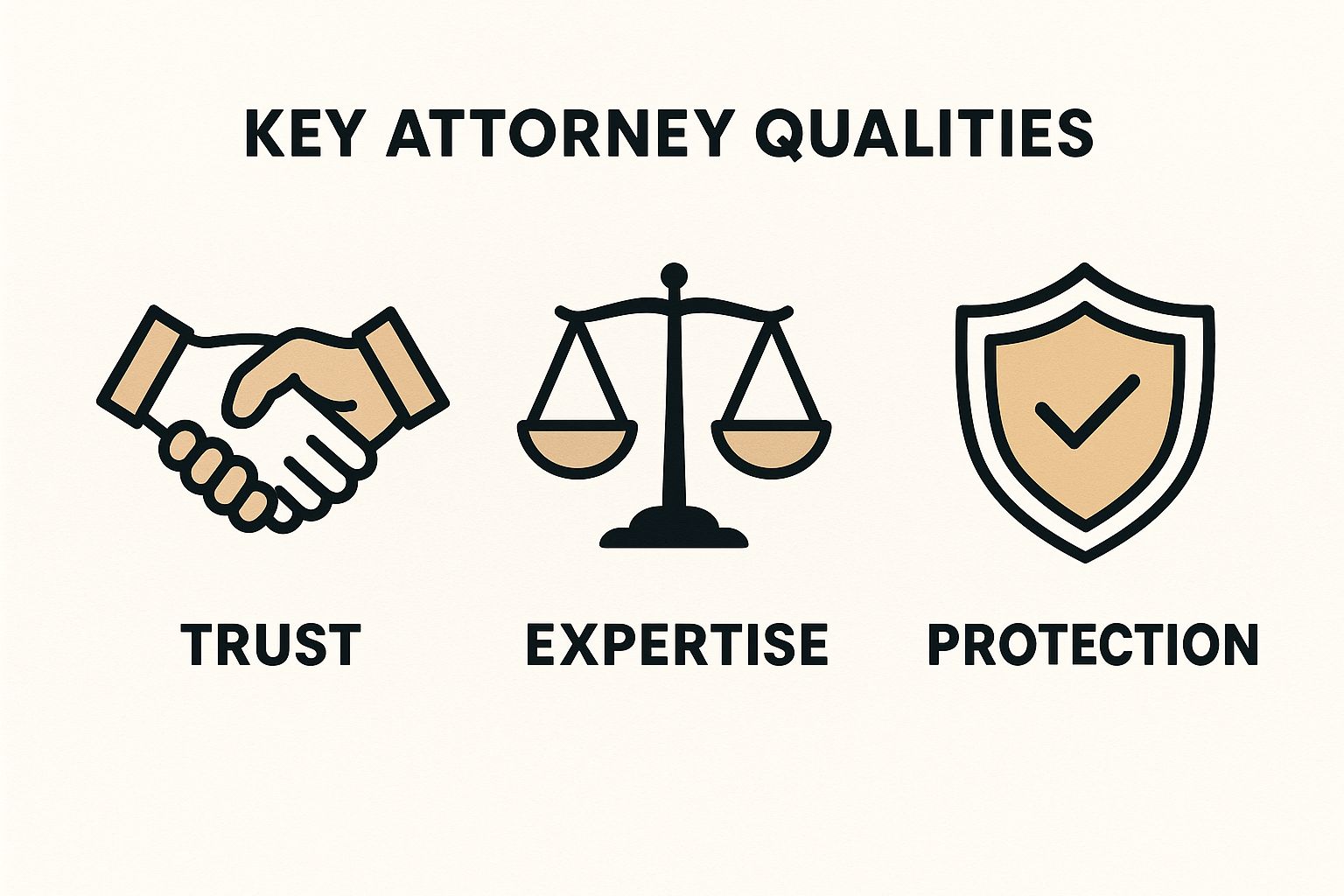
This credential is a clear signal that an attorney possesses the expertise, trust, and protective instincts you urgently need.
How rare is it? Less than 1% of all licensed attorneys in Texas hold a Board Certification in Criminal Law. That statistic alone tells you everything. It highlights the difficulty of finding a truly specialized attorney in this state and why this certification is such a reliable indicator of top-tier talent.
The Strategic Edge of a Former Prosecutor
Beyond official certifications, an attorney’s professional background can provide a massive strategic advantage. Specifically, hiring a defense lawyer who previously served as a prosecutor.
Consider this: these attorneys spent years on the other side, building cases for the state. They know firsthand:
- How police and investigators assemble a case—and where they potentially cut corners.
- The playbook the District Attorney’s office may use against you.
- The internal pressures that influence a prosecutor’s decisions on plea bargains.
- What arguments and evidence actually persuade a prosecutor to back down.
An attorney with a prosecutorial background knows the opponent’s playbook. This foresight allows them to potentially anticipate the prosecution’s moves, identify weaknesses in their case that others might miss, and build a defense designed to dismantle the state’s arguments from the inside out.
This is not knowledge learned from a book; it is forged through years of direct experience on the front lines. It can be a genuine game-changer, especially in complex cases involving serious charges like DWI or assault in the Greater Houston Area.
When vetting potential lawyers, asking about their background and credentials is non-negotiable. For a more detailed breakdown, explore our guide on how to choose a criminal defense lawyer and the questions you must ask.
The Importance of Local Courtroom Experience
The Texas legal system is not a monolithic entity. It is a network of county courthouses, each with its own distinct culture, unwritten rules, and key figures. An argument that succeeds in a Harris County courtroom might fall completely flat in Fort Bend or Montgomery County.
This is precisely why local courtroom experience isn’t just a bonus—it’s a non-negotiable strategic advantage. An attorney who is in these specific courts day in and day out brings an invaluable layer of insight to your defense. This goes far beyond knowing the law; it’s about knowing the environment.

Navigating the Human Element of the Justice System
Law is practiced by people, not robots. Every judge, prosecutor, and court clerk has their own tendencies and expectations. An attorney with local roots understands this human element intimately.
This “insider knowledge” translates directly into practical advantages. A local lawyer almost always has established professional relationships with the prosecutors on the other side. This does not mean they get special favors, but it often leads to negotiations that are more direct, efficient, and grounded in mutual respect.
An out-of-town lawyer might know the law cold, but they won’t know a particular judge’s pet peeves or a specific prosecutor’s willingness to negotiate on certain types of cases. A local attorney walks in with a mental map of the courtroom dynamics. That’s a powerful tool.
This familiarity also means they know how specific local police departments conduct investigations, which is critical for identifying procedural errors or other weaknesses in the state’s evidence.
Local Knowledge in Action
Imagine you are facing a DWI charge in Harris County. An experienced local attorney will know which judges are more receptive to scientific arguments challenging a breathalyzer test. They will also know which prosecutors are more likely to offer a favorable plea deal, such as a reduction to a non-DWI offense, if certain mitigating factors are presented effectively.
Conversely, an attorney unfamiliar with that specific court might waste precious time on arguments a particular judge is known to dismiss. They may not know the most effective way to approach plea negotiations with that D.A.’s office. These small nuances of local practice can have a massive impact on the outcome of your case.
How Local Experience Shapes Trial Strategy
If your case proceeds to trial, a local attorney’s value skyrockets. They understand the local jury pool—what kinds of arguments resonate with people in that community. This insight is crucial for jury selection and for crafting a compelling narrative during the trial itself.
A seasoned local lawyer can anticipate how a jury from downtown Houston might perceive a case differently than a jury from a neighboring county, allowing them to tailor their entire trial strategy from day one.
- Understanding Judicial Preferences: Knowing how a specific judge prefers motions to be filed or arguments structured prevents friction and keeps the focus on your defense.
- Effective Prosecutor Negotiations: Established relationships can lead to more productive discussions about plea options. A deep understanding of tactics may lead to a trial setting dismissal and how local courts handle them can be a game-changer.
- Informed Trial Tactics: Familiarity with the local jury pool’s attitudes helps an attorney select sympathetic jurors and present a defense that connects with them on a human level.
When searching for the best criminal defense attorney Texas has, you are not just looking for someone who knows the law books. You need a master of the specific legal arena where your future will be decided. Their local expertise is one of the most powerful weapons in your arsenal.
Digging Into an Attorney’s Track Record
Let’s be blunt: a slick website and a firm handshake don’t win cases. When your freedom is at stake, part of what matters is an attorney’s track record. Past performance can be a trustworthy indicator of potential future success, making this the area where you must do your homework.
Evaluating a lawyer’s history isn’t just about looking for a “win” column. It’s about investigating two critical areas: their actual results in cases similar to yours, and whether they have a genuine reputation for being willing to go to trial. An attorney who consistently achieves favorable results and is not afraid of a courtroom fight is the ally you need.
Look for Relevant Experience, Not Just General Experience
A lawyer might have a fantastic record in corporate law, but that means nothing for your felony assault charge. You need to find someone who lives and breathes the specific area of criminal law you are dealing with. This is especially true for the most common offenses filed in Texas courts.
The Texas Judiciary’s 2023 Annual Statistical Report provides a clear picture of court dockets. For misdemeanors, the big three are DWIs (21%), assaults (16%), and theft (8%). Attorneys specializing in these high-volume areas have seen nearly every tactic prosecutors can employ and have built a career on the specific nuances of these charges. You can see the full breakdown in the Texas Judiciary statistical findings here.
During your consultation, ask direct, pointed questions. Do not accept vague answers.
- “How many DWI cases have you handled in Harris County in the last year?”
- “What is your experience defending aggravated assault charges with facts similar to mine?”
- “Can you walk me through your strategy in drug possession cases where the search and seizure was questionable?”
An attorney with a solid, relevant track record will provide specific examples. If their answers are fuzzy, this could be a major red flag.
Gauging a Lawyer’s Willingness to Go to Trial
Here is a fact most people don’t realize: the vast majority of criminal cases—over 90%—end in a plea bargain, not a trial. However, an attorney’s reputation as a skilled and ready trial lawyer is a powerful negotiating tool.
Prosecutors know which defense attorneys will roll over and accept the first deal offered, and they know which ones will fight them tooth and nail in front of a jury.
A lawyer who is always looking for the quickest plea deal is negotiating from a position of weakness. The best outcomes are often secured by attorneys who prepare every single case as if it’s going to trial. This meticulous preparation signals to the prosecution that you are ready for a fight, which often leads to better plea offers or even a full dismissal.
This trial-ready mindset is what separates the good from the great. It tells the prosecutor you will not be bullied. You can learn more about how a proactive approach helps in getting charges dropped or reduced in our detailed guide.
Are They Too Busy to Actually Help You?
Finally, a stellar track record is useless if the attorney is juggling too many cases to give yours the attention it demands. An overworked lawyer can quickly become a liability.
Get a feel for their current caseload during your first meeting. Ask them directly:
- How many active cases are you personally handling right now?
- Will you be my primary point of contact, or will I be handed off to a junior associate?
- What is your process for returning client calls and emails?
A successful attorney manages their caseload carefully to ensure every client receives the focus they deserve. They should provide clear, confident answers about their availability and communication. If they seem rushed, distracted, or state that a paralegal will handle everything, it’s a sign they may not have the bandwidth to properly defend you. Your case is too important for that.
How Will They Communicate? And What’s the Game Plan?
A strong defense isn’t just about what happens in the courtroom. It’s built on a foundation of clear, consistent communication and a strategy you understand. This relationship is a partnership, and like any good one, it requires trust. Without it, you are merely a passenger on the most stressful ride of your life.
Your initial consultation is more than a sales pitch. It’s your single best opportunity to see how this attorney will communicate with you when things get tough. Pay close attention to their style. Do they listen more than they talk? Do they answer your questions directly, or do you receive vague, lawyerly non-answers?
Your First Meeting is a Two-Way Interview
From the moment you walk in, you should feel that your story matters. A great lawyer has a way of making you feel like your case is truly important. They should be able to break down complex legal jargon into plain English without making you feel small or confused.
Consider what you need. Some people prefer daily updates. Others are fine with a weekly call. A good attorney will ask about your preferences and establish a clear communication plan from the start.
An attorney who cannot explain their strategy to you in a way you understand may not have a clear one. They should be able to map out the different paths your case could take, explaining the pros and cons of each option—not just telling you what to do. They are your guide, not your boss.
Questions That Reveal Their Strategic Mind
Beyond being a good communicator, you need to see how they think. Their strategy is the roadmap for your case, and you must know they are thinking three steps ahead.
Here are questions to ask in a consultation to truly understand their approach and how they treat their clients:
- “Based on what I’ve told you, what is your initial assessment of my case?” This question cuts through the fluff and tests their ability to think on their feet.
- “What are the best- and worst-case scenarios we are looking at here?” A great lawyer provides the unvarnished truth, not an unrealistic sales pitch.
- “How will you keep me updated? And if I call or email, how long will it take to hear back?” This sets clear expectations from day one.
- “Will I be working directly with you, or will my case be handled by an associate?” You need to know exactly who is in charge of your defense.
- “What is your philosophy on accepting a plea deal versus fighting at trial?” This reveals if they prepare every case for a fight or are just looking for the quickest exit.
- “Can you walk me through the first two or three steps you would take to start building my defense?” Their answer will demonstrate if they have a proactive, organized plan of attack.
Finding the best criminal defense attorney in Texas means finding someone who is not just a shark in the courtroom but also a trusted advisor. Their ability to communicate clearly and think strategically is every bit as critical as their trial record. Your peace of mind depends on it.
Why You Need a Dedicated Attorney Right Now
The Texas criminal justice system is a machine. It is complex, overloaded, and in many places, strained to the breaking point. This isn’t an abstract political talking point; it’s a harsh reality that crushes people facing criminal charges every single day.
When a system is built for volume, individual rights can get lost in the shuffle. Cases are rushed. Crucial details are overlooked. This is precisely why hiring a private, dedicated attorney isn’t a luxury—it is an urgent, critical necessity for your protection.
Common Questions About Hiring a Defense Attorney
When you are facing a criminal accusation, the legal system feels like a maze. It’s confusing and isolating, and you are bound to have questions. Getting straight answers is the first step toward making a smart decision about who to trust with your defense.
Let’s tackle some of the most common questions head-on.
Should I Hire an Attorney Before I’m Charged?
Many people wait until they have been formally charged to call a lawyer. This is a critical error. If you even suspect you are under investigation, you must retain legal counsel immediately.
Hiring an attorney early is a powerful strategic move. A skilled lawyer can get ahead of the investigation, communicate with law enforcement on your behalf, and sometimes prevent charges from ever being filed. That is the best possible outcome, and it often happens before an arrest is ever made.
Understanding the Cost of a Strong Defense
Naturally, cost is a primary concern. Top-tier criminal defense attorneys in Texas almost always work on a flat fee basis for a specific case. This is advantageous—it provides certainty about the total cost upfront, so you do not have to worry about surprise hourly bills.
During your initial meeting, the attorney should provide a clear, written fee agreement. Be wary of lawyers offering unusually low prices. While a bargain might seem tempting, a rock-bottom fee can be a red flag for inexperience or an indication that they plan to spend very little time on your case or drop a huge bill on you if you do anything other than quickly plead guilty.
When you retain an attorney, you are paying for focus. Their caseload is frequently intentionally smaller than a prosecutor’s, which allows for a completely different level of service:
- Deep Investigation: They have the time to track down witnesses, scrutinize every piece of evidence, and find the holes in the prosecution’s story.
- Personal Attention: Your case gets the focus it deserves. When you call with a question, you talk to your lawyer, not just a paralegal.
- Proactive Strategy: They are not just reacting to the prosecutor. They are building a comprehensive defense designed to anticipate and counter the other side’s every move.
Choosing a private attorney is an investment in a personalized, aggressive defense. When your future is on the line, that kind of focused approach is a necessity, not a luxury.
So Who is the Best Criminal Defense Attorney?
That answer is usually different for every person. Only YOU can decide who is the best lawyer for you and your circumstances. A person can have a hugely successful practice, but not communicate with you the way you want. For some people that matters and for others, it doesn’t. Treat the phone call and initial conversation as a two-way interview, do your research, follow the suggestions in this post, and you should be armed with the information to make the best choice for you.
Discover more from David Smith Law Firm, PLLC
Subscribe to get the latest posts sent to your email.