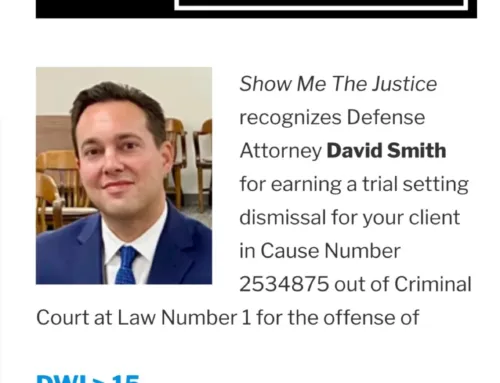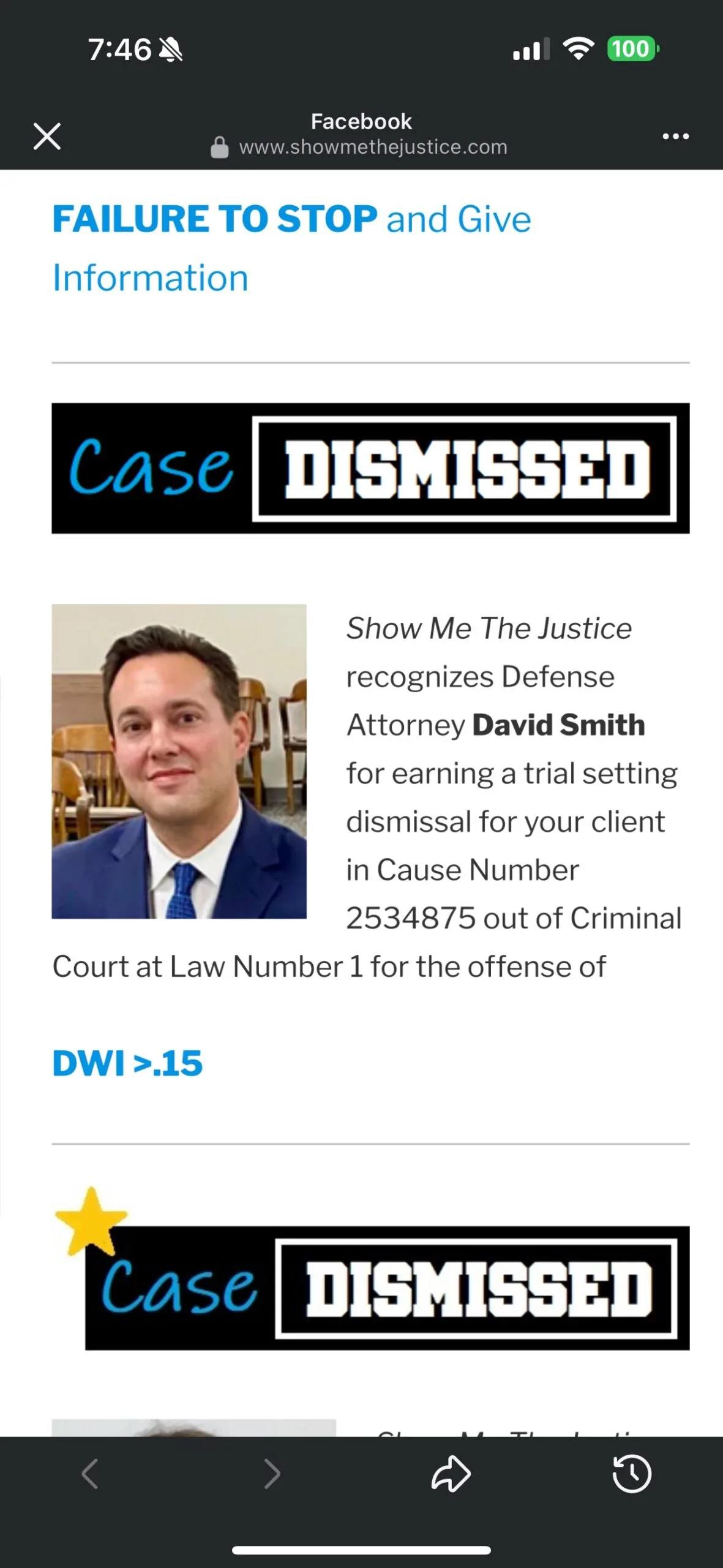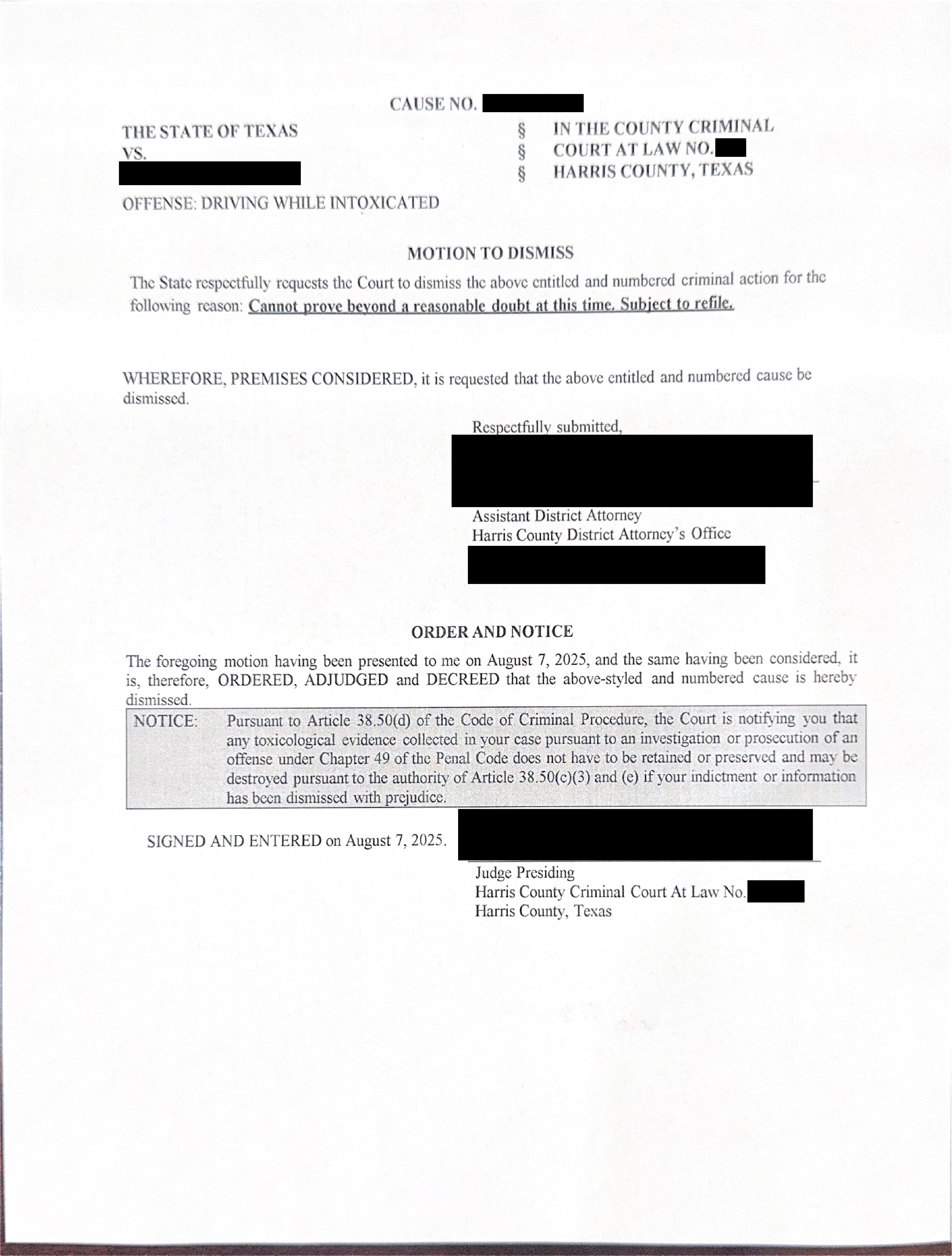

In Texas, driving while intoxicated (DWI) charges can have life-altering consequences. A conviction can lead to jail time, steep fines, license suspension, and a permanent criminal record. But what happens when the State cannot prove a critical element of the offense—such as whether the accused was actually operating a motor vehicle? Recently, a case in Harris County highlighted this very issue, resulting in a complete dismissal and allowing the client to move forward without being labeled a criminal.
The Allegations: BAC of .141 and a DWI Arrest
The case began with an allegation that the client had a blood alcohol concentration (BAC) of .141—well above the legal limit of .08. On paper, this might seem like an open-and-shut case for the prosecution. However, Texas law requires more than just proof of intoxication. The State must also establish that the accused was operating a motor vehicle in a public place while intoxicated. While the offense is called “driving” while intoxicated, the actual statute specifies the offense requires proof of operating a motor vehicle in a public place while intoxicated. Without clear evidence of operation, a conviction cannot stand for DWI.
This is where effective advocacy made all the difference.
Texas Law: What Does “Operating” Mean?
Interestingly, Texas does not have a statutory definition of “driving” or “operating” a motor vehicle in the context of DWI. Instead, jurors are tasked with evaluating the evidence to determine whether a person exerted control over a vehicle. Courts have interpreted “operating” broadly, but it is not enough for someone to merely be present in a car. There must be evidence that the individual took action to affect the functioning of the vehicle—such as starting the engine, putting the car in gear, or manipulating controls.
This ambiguity often becomes a battleground in DWI cases, and in this instance, it was the decisive factor.
The Defense Strategy: Challenging Operation
From the outset, the defense focused on the State’s inability to prove that the client was operating the vehicle. By carefully analyzing the facts and applying Texas case law, the defense demonstrated that the State’s evidence fell short of proving operation beyond a reasonable doubt.
Prosecutorial Discretion: A Commendable Decision
One of the most notable aspects of this case was the prosecutor’s professionalism. Rather than pushing forward with a weak case and wasting taxpayer dollars, the prosecutor reviewed the evidence well in advance of trial and made the right call: dismissing the charges. This decision reflects a commitment to justice and efficiency, ensuring that resources are allocated to cases where the evidence supports a conviction.
In an era where many defendants feel the system is stacked against them, this outcome serves as a reminder that fairness still matters in Texas courtrooms. One of the most powerful tools in the prosecutor toolbelt is the ability to pardon. The standard of proof is not what likely happened, or even what someone thinks happened. It is proof that rules out any reasonable doubt. Hats off to this prosecutor for having a firm grasp of the state of the law and the evidence in this case.
The Result: A Fresh Start for the Client
Thanks to effective advocacy and a prosecutor willing to evaluate the evidence objectively, the client avoided a wrongful conviction. They can now continue their life without the stigma of a criminal record, without the burden of fines, and without the collateral consequences that often accompany a DWI conviction—such as employment challenges and skyrocketing insurance rates.
This case underscores the importance of having a skilled defense attorney who understands the nuances of Texas DWI law and knows how to challenge the State’s evidence effectively.
Why Operation Matters in Texas DWI Cases
Many people assume that a high BAC automatically equals guilt. In reality, Texas law requires proof of several elements: intoxication and operation of a motor vehicle, in a public place. If any element is missing, the State cannot, and should not, secure a conviction. This is why cases involving parked cars, sleeping drivers, or unclear timelines ofen hinge on whether the accused was operating the vehicle.
Jurors are instructed to consider all the evidence admitted in a case—location of the vehicle, position of the accused, whether the engine was running, and any other relevant facts, and assign weight to that evidence (is it reasonable, believable, and rules out any reasonable doubt?). But when the evidence is ambiguous, the benefit of the doubt goes to the defendant.
Lessons for Anyone Facing a DWI Charge
If you are arrested for DWI in Texas, do not assume that your case is hopeless—even if your BAC is allegedly above the legal limit. The State must prove every element of the offense beyond a reasonable doubt. A knowledgeable defense attorney can identify weaknesses in the prosecution’s case, such as lack of evidence of operation, improper testing procedures, or constitutional violations during the stop or arrest.
Time is critical. The sooner you seek legal representation, the better your chances of protecting your rights and your future.
Key Takeaways
- Texas does not have a statutory definition of “operating” a motor vehicle in DWI cases.
- Jurors decide whether a person exerted control over a vehicle based on the evidence.
- A high BAC alone does not guarantee a conviction; the State must also prove operation of a motor vehicle in a public place.
- Prosecutors have a duty to review evidence carefully and should dismiss cases that cannot be proven.
- Skilled advocacy can mean the difference between a conviction and a fresh start.
Facing a DWI Charge in Houston? Act Now.
DWI cases are complex, and the consequences are severe. If you or someone you know is facing a DWI charge in Harris County or the Greater Houston area, do not wait. Every moment counts when it comes to building a strong defense. Explore your options, understand your rights, and take action today.
Discover more from David Smith Law Firm, PLLC
Subscribe to get the latest posts sent to your email.