

When you are facing criminal charges in Texas, the weight of the unknown can be overwhelming. It is crucial to understand one fundamental truth: an arrest is not a conviction. The Texas justice system provides several legal avenues that can lead to charges being dropped, from a prosecutor declining to file the case—a “no-file”—to a formal dismissal in court.
Achieving such an outcome, however, is rarely a matter of luck. It almost always depends on strategic, urgent, and well-informed legal action.
The Reality of Getting Charges Dropped in Texas
Many believe that once an arrest occurs, the legal process moves forward unstoppably toward conviction. The truth is far more nuanced—and often, more hopeful. The Texas legal system has built-in off-ramps where a case can be dismissed. The key is understanding how and when these opportunities arise.
The entire process begins the moment law enforcement sends a case to the prosecutor’s office, such as the Harris County District Attorney’s Office. At that initial stage, the prosecutor holds immense power and discretion. They are not obligated to file charges simply because an arrest was made.
Prosecutorial Discretion and Its Impact
A prosecutor’s duty is not merely to secure convictions; it is to pursue justice. Before formally filing charges, they must evaluate the case and determine if there is enough credible evidence to prove guilt beyond a reasonable doubt.
Several factors heavily influence this critical decision:
- Strength of Evidence: Is the case built on weak, circumstantial, or illegally obtained evidence? A case with a shaky foundation is a prime candidate for dismissal.
- Witness Credibility: Are the state’s witnesses unreliable? Do they have a bias or a history of dishonesty? If the main witness lacks credibility, a prosecutor may be unwilling to risk a trial.
- Constitutional Violations: Did police conduct an illegal search? Did they fail to read you your Miranda rights? Any procedural violation can lead to crucial evidence being thrown out.
- Interests of Justice: Sometimes, even with sufficient evidence, a prosecutor may conclude that pursuing a conviction does not serve the community’s best interests, particularly for minor offenses or defendants with a clean record.
This initial review is a critical window of opportunity where a skilled defense attorney can intervene and present a compelling counter-narrative.
The Two Main Paths to Dismissal
In the Texas system, a case can be dismissed in two primary ways. Understanding the distinction is vital.
- No-File or Declined Charges: This is the most favorable outcome. It occurs when a prosecutor reviews the police report and evidence and decides not to file formal charges. The case is effectively over before it ever receives a court date.
- Formal Dismissal: This happens after charges have been filed and the case is active in the court system. A dismissal can occur at any point before trial, often as a result of pre-trial motions, the discovery of new evidence that weakens the state’s case, or successful negotiations.
A dismissal is not a long shot; for cases with identifiable weaknesses, it is a common and achievable outcome.
A Summary of Dismissal Pathways
To clarify, here is a breakdown of how charges are typically dismissed in Texas.
| Dismissal Method | Timing | Key Objective |
|---|---|---|
| No-File / Declined | Pre-Filing (After arrest, before court) | To convince the prosecutor that the case lacks sufficient evidence or legal merit to proceed. |
| Pre-Trial Dismissal | Post-Filing (During court proceedings) | To have the case thrown out based on legal motions, new evidence, or constitutional violations. |
| Negotiated Dismissal | Post-Filing (Anytime before trial) | To secure a dismissal in exchange for completing a diversion program, class, or other conditions. |
As you can see, opportunities for a positive resolution exist both before and after charges are formally filed.
The most important takeaway is that an arrest is just the beginning of a process, not the final word. A dismissal is not just a possibility; it’s a common outcome for cases with identifiable weaknesses.
Knowing how to identify and leverage those weaknesses is the core of an effective criminal defense. The right strategy for a drug possession charge, for example, is very different from that for an assault case. The specific facts are paramount, as can be seen when reviewing the common outcomes in Texas drug crime cases. Retaining an advocate who understands these nuances can be the difference between a conviction and a dismissal.
The Power of Pre-File Intervention
Most people imagine the legal fight beginning in a crowded Houston courtroom. However, the most decisive victories are often won long before a case is even formally filed.
This critical, early stage is where a proactive strategy called pre-file intervention is deployed. It is an aggressive approach aimed at preventing a criminal case from ever getting off the ground.
The time between an arrest and a prosecutor’s decision to file charges is a vital window of opportunity. During this period, the case is merely a file on a prosecutor’s desk—a collection of police reports and initial evidence. It has not yet gained the momentum of a formal court case with public records and scheduled appearances. This is the moment to act decisively.
How Pre-File Intervention Works
Instead of passively waiting for the State to build its case, a skilled defense attorney must go on the offensive. This involves engaging directly with the arresting law enforcement agency and, more importantly, with the prosecutor assigned to review the case at intake.
The goal is simple: to present a compelling counter-narrative supported by hard evidence that undermines the State’s version of events from the outset.
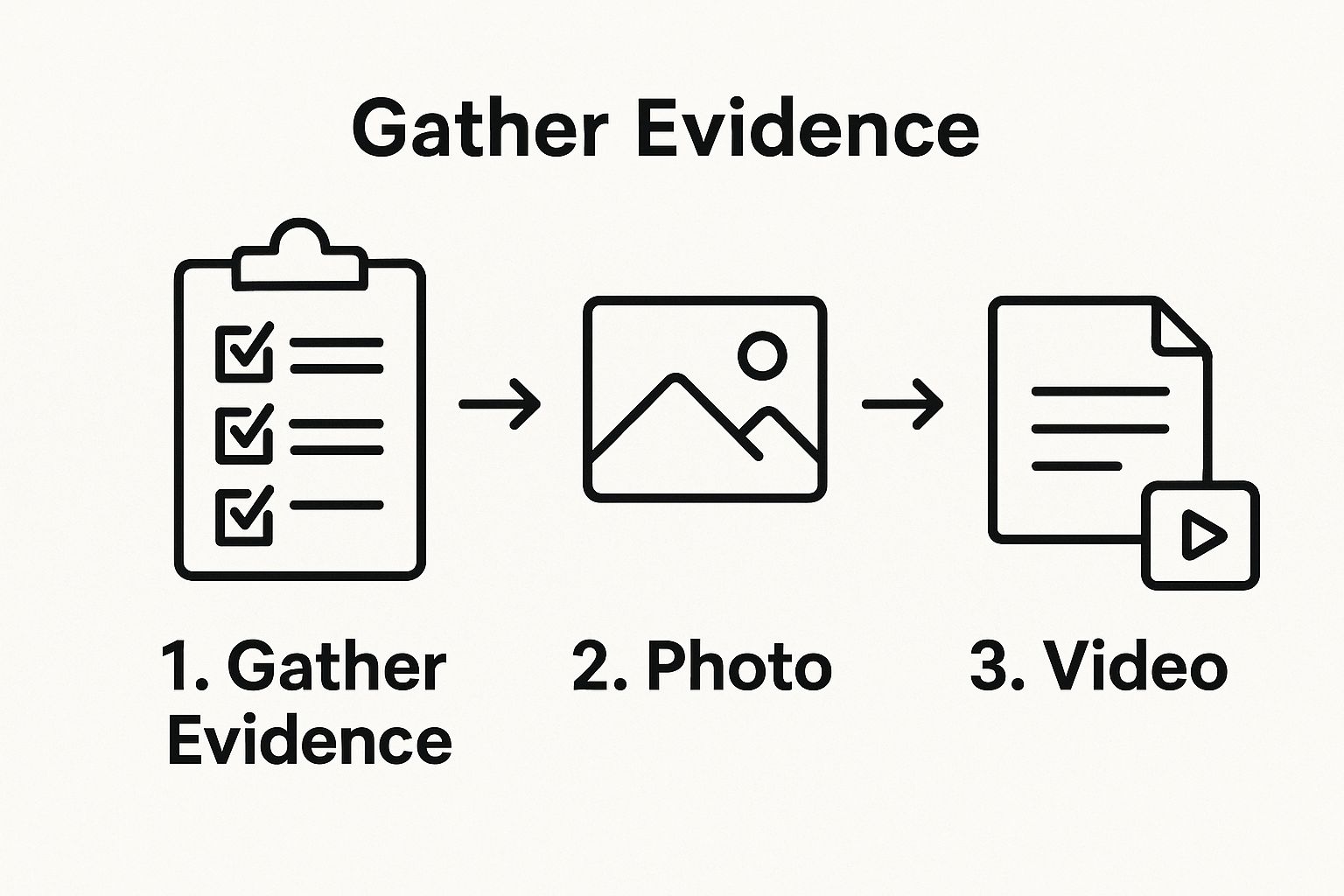
This is not about making empty arguments. It is about providing concrete proof that raises serious, undeniable doubts about the allegations. This is accomplished by:
- Presenting Exculpatory Evidence: This is any evidence that points toward innocence, such as text messages establishing an alibi, surveillance footage that contradicts the police report, or financial records that disprove a theft allegation.
- Providing Witness Affidavits: This involves locating and securing sworn statements from credible witnesses who can challenge the accuser’s story or provide crucial context that was omitted from the police report.
- Challenging the Initial Investigation: Meticulously analyzing the police work to identify flaws in how officers gathered evidence, conducted interviews, or reached conclusions can fatally weaken a prosecutor’s confidence in their case.
By introducing these elements early, the defense can shape the prosecutor’s initial perception, transforming what may have looked like a straightforward case into a questionable prosecution they may choose not to pursue.
Real-World Scenarios in the Houston Area
Consider how this plays out in real situations here in Harris County.
Imagine you were arrested for assault following a heated argument. The accuser claims you were the aggressor, but you acted in self-defense. A proactive attorney would immediately:
- Identify and contact neutral witnesses who observed the accuser initiating the conflict.
- Obtain security camera footage from the establishment that clearly shows the other person’s aggressive actions.
- Package these findings and present them directly to the prosecutor before a filing decision is made.
This type of proactive evidence-gathering can dismantle a weak accusation before it gains any traction.
Another common scenario is a DWI arrest where the traffic stop itself was questionable. Perhaps the officer claimed you were swerving, but your dashcam footage shows you were driving properly. Submitting that video to the prosecutor can expose the lack of reasonable suspicion for the stop, rendering any evidence obtained afterward inadmissible in court.
A prosecutor’s primary duty is to seek justice, not merely to accumulate convictions. When presented with credible evidence demonstrating that a case is fundamentally flawed or that the accused is likely innocent, they are often ethically obligated to decline the charges.
This is the real power of pre-file intervention. It shifts the entire dynamic from reactive defense to proactive engagement, often resolving the matter quietly and completely.
The Urgency Cannot Be Overstated
Once a case is formally filed, the situation changes dramatically. Your name enters the public record. The process becomes far more complex, stressful, and expensive. The entire goal of pre-file intervention is to prevent that from ever happening.
The clock starts ticking the moment an arrest is made. Evidence can disappear, witnesses’ memories can fade, and the prosecutor’s office moves quickly. As our detailed guide explains, the reasons why hiring an attorney early makes a difference are numerous, but none are more critical than preserving the chance to avoid charges altogether. Seizing this brief but powerful opportunity is fundamental to achieving the best possible outcome.
Using Legal Motions to Challenge Evidence

Once the prosecutor formally files criminal charges, the battle shifts from the intake desk to the courtroom. The strategy evolves from informal negotiation to the formal process of dismantling the state’s case piece by piece. The most powerful tools for this are pre-trial motions.
These are not simple requests; they are structured, powerful legal arguments designed to attack the very foundation of the prosecution’s case.
A well-executed motion can cripple a case before it reaches a jury, sometimes forcing an outright dismissal. It is the primary method for asking a judge to exclude illegally obtained evidence or, in some instances, the entire charge. Success requires a deep, practical understanding of constitutional law and Texas criminal procedure.
Filing a Motion to Suppress Evidence
One of the most effective tools in a defense attorney’s arsenal is the Motion to Suppress Evidence. The argument is direct: law enforcement obtained evidence against you illegally, and therefore, the prosecution should not be permitted to use it in court. If the judge agrees, the state can lose its key evidence, often making a conviction impossible.
These motions are almost always rooted in violations of your constitutional rights—most often the Fourth Amendment’s protection against unreasonable searches and seizures. They operate under the legal principle known as the “fruit of the poisonous tree” doctrine. This means that if the initial police action (the “tree”) was illegal, then any evidence discovered as a result of that action (the “fruit”) is tainted and must be excluded.
Consider a classic DWI scenario here in the Greater Houston area. An officer pulls you over, alleging you failed to signal a lane change. During the stop, they claim to smell alcohol, which leads to field sobriety tests, an arrest, and a breath or blood sample.
A sharp defense lawyer will immediately obtain the patrol car’s dashcam video. If that video shows you did use your signal properly, the entire legal basis for the traffic stop evaporates. A Motion to Suppress would be filed, arguing that because the initial stop was illegal, everything that followed—the officer’s observations, the sobriety tests, the breath test results—is inadmissible. When such a motion is granted, the prosecutor often has no choice but to dismiss the case.
Key Takeaway: A Motion to Suppress is not about arguing innocence or guilt. It is about holding law enforcement accountable to constitutional rules. A win on a procedural violation is still a complete victory.
For anyone facing charges where evidence was seized, understanding the specific legal grounds for the suppression of illegally obtained evidence is the critical first step in building a robust defense.
Seeking a Full Dismissal of Charges
Sometimes, it is possible to go beyond challenging a single piece of evidence and ask the court to dismiss the entire case. A Motion to Dismiss argues that a fundamental legal flaw makes it unlawful for the state to proceed with the prosecution.
Several situations can support a Motion to Dismiss in Texas:
- Insufficient Evidence: This motion argues that even if a jury believed every piece of the state’s evidence, it is still not legally sufficient to prove guilt beyond a reasonable doubt.
- Violation of Speedy Trial Rights: The Sixth Amendment guarantees the right to a speedy trial. If the state causes unreasonable delays, charges can be dismissed.
- Prosecutorial Misconduct: This covers serious errors, such as hiding evidence favorable to the defense (a Brady violation) or other improper conduct that violates the right to a fair trial.
Filing these motions requires a precise legal argument. For example, claiming “insufficient evidence” involves a detailed legal analysis showing how the state failed to prove one of the essential elements of the specific crime charged. It is also crucial to understand the broader principles surrounding the importance of evidence in legal proceedings before challenging its validity.
Ultimately, pre-trial motions are not a silver bullet, but they are a non-negotiable part of a strong defense strategy. They compel the state to justify every action taken by police and every piece of its case. An experienced lawyer knows how to find the subtle procedural mistakes and constitutional violations that can be leveraged into a successful motion—creating the pressure needed to get charges dropped.
Negotiating Dismissals Through Diversion Programs
A full-blown courtroom battle is not always the only path to a successful resolution. For many individuals, particularly first-time offenders, the best route to a dismissal is through strategic negotiation and alternative resolutions that occur entirely outside of a trial.
This often involves what is commonly called a “plea bargain,” though that term can be misleading. It does not always mean pleading guilty. In many favorable outcomes, it means securing an agreement where you complete certain requirements, and in exchange, the prosecutor dismisses the charges completely. This is where diversion programs become an indispensable tool.
Understanding Pre-Trial Intervention in Texas
Here in Texas, one of the most powerful tools available is the Pre-Trial Intervention (PTI) program, also known as pre-trial diversion. These programs are designed for individuals, typically first-time offenders, who are considered a low risk to the community. The core principle is simple: provide an opportunity to demonstrate responsibility without the lifelong burden of a criminal conviction.
It functions like a contract with the state. You agree to a period of supervision, which resembles probation and can last from six months to two years. During that time, you must adhere to a strict set of conditions.
The Goal of Diversion: These programs aim to address the root causes of the alleged offense, focusing on rehabilitation rather than mere punishment. This saves taxpayer money on costly trials and helps reduce recidivism. For the accused, the reward is immense: a full dismissal of the charges upon successful completion.
Think of it as a probationary period before a conviction instead of after one. If you fulfill your obligations, the prosecutor dismisses your case. You are never convicted, and you can later file a petition to have the entire arrest record expunged—as if it never happened.
Who Is Eligible for Diversion Programs?
Admission into PTI or other diversion programs is not automatic. Prosecutors in Harris County, Fort Bend County, and other jurisdictions have complete discretion over who is offered this opportunity. It is a chance that must be earned—and often, fought for.
Several key factors influence a prosecutor’s decision:
- The Offense Itself: PTI is typically reserved for non-violent misdemeanors and some lower-level state jail felonies, such as a first-time DWI, misdemeanor theft, or minor drug possession.
- Your Criminal History: A clean record is almost always a prerequisite. A prior conviction significantly reduces the chances of being accepted.
- The Facts of Your Case: Even for an eligible offense, certain details can cause a prosecutor to hesitate. A DWI with a very high blood alcohol concentration or a theft case involving a significant amount of money may make them reluctant to offer a diversionary path.
Because admission is not guaranteed, a skilled defense attorney can make a critical difference. By building a compelling “mitigation packet” that highlights your positive attributes—your employment, family ties, and character—we can argue effectively why you are an ideal candidate for the program. To learn more, you can explore the nuances of alternative sentencing, drug courts, and diversion programs in our detailed guide.
What to Expect in a Diversion Program
If accepted into a program like PTI, you must comply with a list of conditions tailored to your case. It is crucial to understand that failing to meet even one requirement can result in termination from the program, placing you back at the starting point to face the original charges.
Common requirements include:
- Reporting to a Supervisor: Regular check-ins with a supervision officer are mandatory.
- Community Service: Completing a set number of volunteer hours is standard.
- Counseling or Classes: This may include a substance abuse course, an anger management class, or an anti-theft workshop.
- Paying Fines and Fees: You will be responsible for program fees and court costs.
- Staying Out of Trouble: A new arrest for any offense is the quickest way to be removed from the program.
Successfully completing all requirements is the final step toward getting your case dismissed. It demands focus and commitment, but the reward—a second chance with a clean slate—is well worth the effort.
Why a Trial Is the Last and Rarest Option
Courtroom dramas often culminate in a dramatic moment where a jury foreman declares the defendant “not guilty.” In the real world of the Harris County criminal justice system, that scene is exceedingly rare. A full-blown jury trial is not the main event; it is the absolute last resort.
It is a high-stakes gamble that involves risk. The real work—the strategic battles that decide your future—happens long before a jury is ever selected. The pre-trial strategies discussed, from investigating the case and filing aggressive motions to suppress evidence, are where most cases are won. The goal is to dismantle the prosecution’s case so thoroughly that a trial becomes entirely unnecessary.
The High Stakes of a Jury Trial
Why are trials the exception and not the rule? It comes down to risk.
For a defendant, the risk is obvious and potentially life-altering. A conviction at trial almost always results in the harshest possible sentence. Any leniency that may have been available during plea negotiations is permanently off the table.
But prosecutors also face risks. They must convince 6 or 12 strangers, for misdemeanors or felonies, respectively, of your guilt “beyond a reasonable doubt”—the highest standard of proof in our legal system. If just one juror has doubts, it can result in a hung jury. An acquittal is a definitive loss for the state.
The unpredictability of a jury is the great equalizer. One can enter a trial with the best facts and the most solid legal arguments, but there is simply no way to know what a dozen individuals will decide behind closed doors. That uncertainty pushes both sides toward a more predictable, negotiated outcome.
A Trial as the Final Defensive Stand
A trial becomes the necessary path forward only when all other options have been exhausted. It is the final battleground when the State refuses to dismiss a weak case or when its plea bargain offer is patently unreasonable.
Understanding that a trial is the riskiest, final option clarifies the entire purpose of retaining a strong defense attorney. Their job is to create opportunities to get your charges dropped long before you ever see the inside of a courtroom. A lawyer’s true value is measured not just by their performance before a jury, but by their ability to make that final, unpredictable step completely unnecessary.
Common Questions About Getting a Case Dismissed
When navigating the criminal justice system, questions arise constantly. When your future is on the line, you deserve clear, direct answers. Here are some of the most common questions individuals have about getting their charges dropped in Texas.
If My Charges Are Dropped Do I Still Have a Criminal Record?
Yes. This is one of the most critical and misunderstood aspects of the process.
A dismissal is a monumental victory—it means you were not convicted. However, the arrest record itself remains public. This means that an arrest, even for a case that was later dismissed, can still appear on background checks for employment, housing, and loans.
To truly clear your name, you must take an additional legal step called an expunction. This is a separate civil lawsuit that, if successful, orders the complete destruction of all records related to your arrest. An experienced attorney can guide you through this final, vital step to ensure your record is wiped completely clean after the dismissal.
How Long Does It Take to Get Charges Dropped in Houston?
There is no single answer. The timeline for a dismissal depends entirely on the unique facts of your case and the legal strategy employed.
- Pre-File Intervention: If we can successfully intervene before charges are formally filed, the matter could be resolved within a few weeks of the arrest. This is the fastest path.
- Motion-Based Dismissal: Getting a case dismissed based on a pre-trial motion, such as a Motion to Suppress, can take several months. The case must work its way through the court’s docket before a judge can hear the arguments.
- Diversion Programs: Successfully completing a program like Pre-Trial Intervention (PTI) typically requires a supervision period of 6 to 18 months. The court officially enters the dismissal only after you complete the program.
Factors like the complexity of the evidence, the prosecutor’s caseload, and the court’s schedule all play a significant role in the timeline.
Can I Talk to the Prosecutor Myself to Drop the Charges?
This is extremely risky and is strongly advised against. Prosecutors are highly skilled attorneys whose sole job is to represent the State of Texas and secure convictions. They are not on your side.
Anything you say to a prosecutor can and will be used against you. You could inadvertently admit to a key element of the offense, waive your constitutional rights, or provide them with information that strengthens their case—all without realizing it.
All communication must be handled by a qualified criminal defense attorney. An experienced lawyer knows how to advocate on your behalf, present the weaknesses in the state’s evidence, and negotiate effectively without jeopardizing your case. Never do the prosecutor’s job for them.
What Is the Difference Between Dismissed With or Without Prejudice?
These legal terms define the finality of a dismissal, and the distinction is crucial.
A dismissal “with prejudice” is the ultimate goal. It is a final, permanent end to the case. It means the prosecutor is legally barred from ever refiling the same charges against you in the future. The case is over for good.
A dismissal “without prejudice” means the prosecutor retains the option to refile the charges later if, for example, new evidence comes to light. While this is rare, it leaves the door open. A skilled attorney will always fight to secure a final resolution that fully and permanently protects you from future prosecution.
Discover more from David Smith Law Firm, PLLC
Subscribe to get the latest posts sent to your email.