
How to Bail Someone Out of Jail in Houston, Texas: A Step-by-Step Guide
Receiving a late-night phone call from a loved one in jail is a jolt of pure panic. In these first critical hours, your actions can set the tone for their entire legal journey. While the urge to rush into action is strong, a methodical approach is essential to navigate the complex Houston legal system effectively. Rushing in without a plan can lead to costly mistakes and delays.
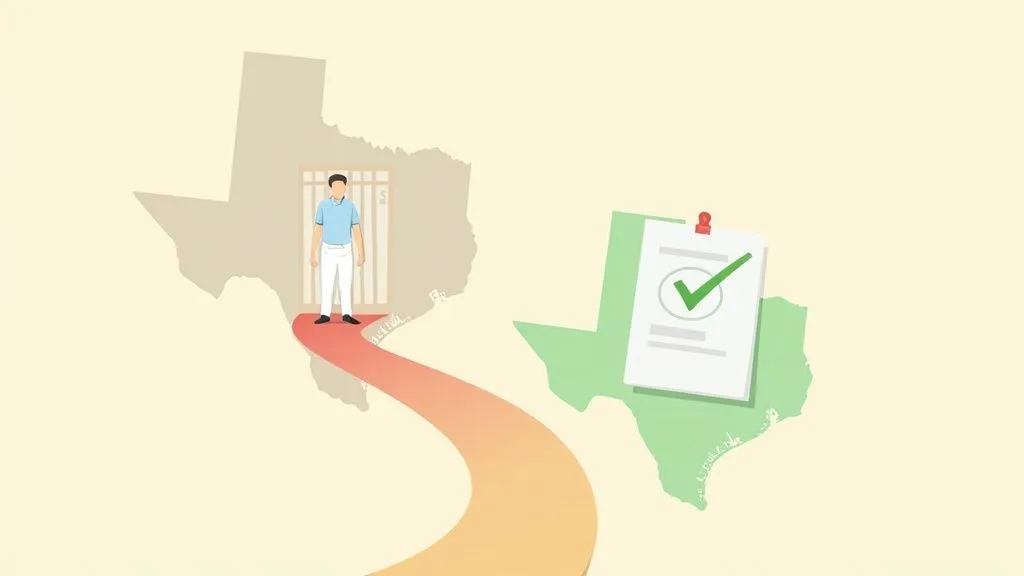
To bail someone out of a Harris County jail, you must first confirm their location and gather their full legal name and booking number (“SPN”). Only with this information can you begin the process of posting bond, either by paying the full cash amount directly to the court or by engaging a bail bondsman for a surety bond. However, the most critical decision you can make is to secure experienced legal counsel immediately. An attorney’s involvement at this early stage can dramatically alter the outcome, potentially reducing the bail amount or even eliminating it entirely.
Your Urgent First Steps After a Houston Arrest
The moments after learning of a loved one’s arrest are a blur of stress and confusion. Your first instinct might be to drive directly to the jail, but this is rarely the most effective move. Right now, your role must shift from panicked family member to strategic information gatherer. Securing their release as quickly as possible depends on obtaining precise details.
Your primary task is to determine exactly where they are being held. In the Greater Houston area, this could be the main Harris County Jail, a city facility like the Houston Police Department’s jail, or a smaller municipal jail in a surrounding suburb like Pasadena or Sugar Land. You cannot initiate the bail process until you know which law enforcement agency has custody.
What to Do Immediately
Once you have confirmed their location, precision is paramount. Guesswork will only lead to delays. Use this checklist to gather the necessary information:
- The Defendant’s Full Legal Name: Obtain the exact spelling, including any middle names or suffixes.
- Date of Birth: This is crucial for distinguishing them from others with a similar name in the system.
- Booking Number: This unique identifier is the single most important piece of information for tracking them within the jail system and processing their release. In Harris County, it is called the SPN.
- Specific Charges: Understanding the accusations helps gauge the seriousness of the situation and anticipate the potential bail amount.
- Bail Amount: A judge or magistrate sets this, typically during an initial court appearance known as an magistration.
This first court appearance in Harris County is a pivotal moment. The presence of a skilled criminal defense attorney can profoundly influence the judge’s decisions regarding bail. To understand this critical step better, explore our beginner’s guide to arraignment, bail, and the first court appearance.
The Importance of Staying Composed
In this high-stakes situation, remaining calm is your most powerful tool. Stress leads to poor decisions. Take a deep breath, focus, and work through your checklist methodically. Contacting a jail or bail bondsman in a panic without the correct information will result in frustration and wasted time.
Acting with a clear head now lays the foundation for a smoother bail process and, more importantly, for the legal defense that must follow. Your composure today can have a significant impact on the entire trajectory of the case.
The bail bond industry is a substantial part of the American justice system, valued globally at approximately $5.7 billion. It offers a vital service for families who cannot afford to pay the full bail amount upfront. Although reported U.S. violent crime rates dropped significantly, the need for these services remains constant in a bustling metropolis like Houston. When that unexpected call arrives, a bondsman is often the only viable option to bring a loved one home while they await trial.
Understanding Your Bail Bond Options in Texas
Once a judge sets the bail amount, you are faced with an immediate and significant financial decision. The method you choose to post bail has different consequences for your finances and the defendant’s freedom. In Texas, you generally have three distinct options, each governed by its own set of rules and costs: Cash Bonds, Surety Bonds, and the highly desirable Personal Recognizance (PR) Bonds or General Order Bond (GOB).
Understanding these differences is critical to making an informed choice under immense pressure.
Cash Bonds vs. Surety Bonds
A Cash Bond is precisely as it sounds: you pay the entire bail amount directly to the court. If bail is set at $10,000, you must provide $10,000 in cash or a cashier’s check. This money serves as a guarantee that the defendant will appear at all required court dates. If they comply, the court refunds the money (less administrative fees) after the case concludes.
However, most Houston families do not have thousands of dollars readily available. This is where a Surety Bond becomes the most common solution, if a PR or GOB is unavailable.
With a surety bond, you hire a bail bondsman who acts as a “surety,” or guarantor, for the defendant. You pay the bondsman a non-refundable fee, which in Texas is typically 10% of the total bail amount. For that same $10,000 bail, you would pay the bondsman $1,000. The bondsman then posts the full $10,000 with the court, assuming the financial risk if the defendant fails to appear. The 10% fee is the cost of their service and is never returned.
Before proceeding with either option, you must have specific information readily available.
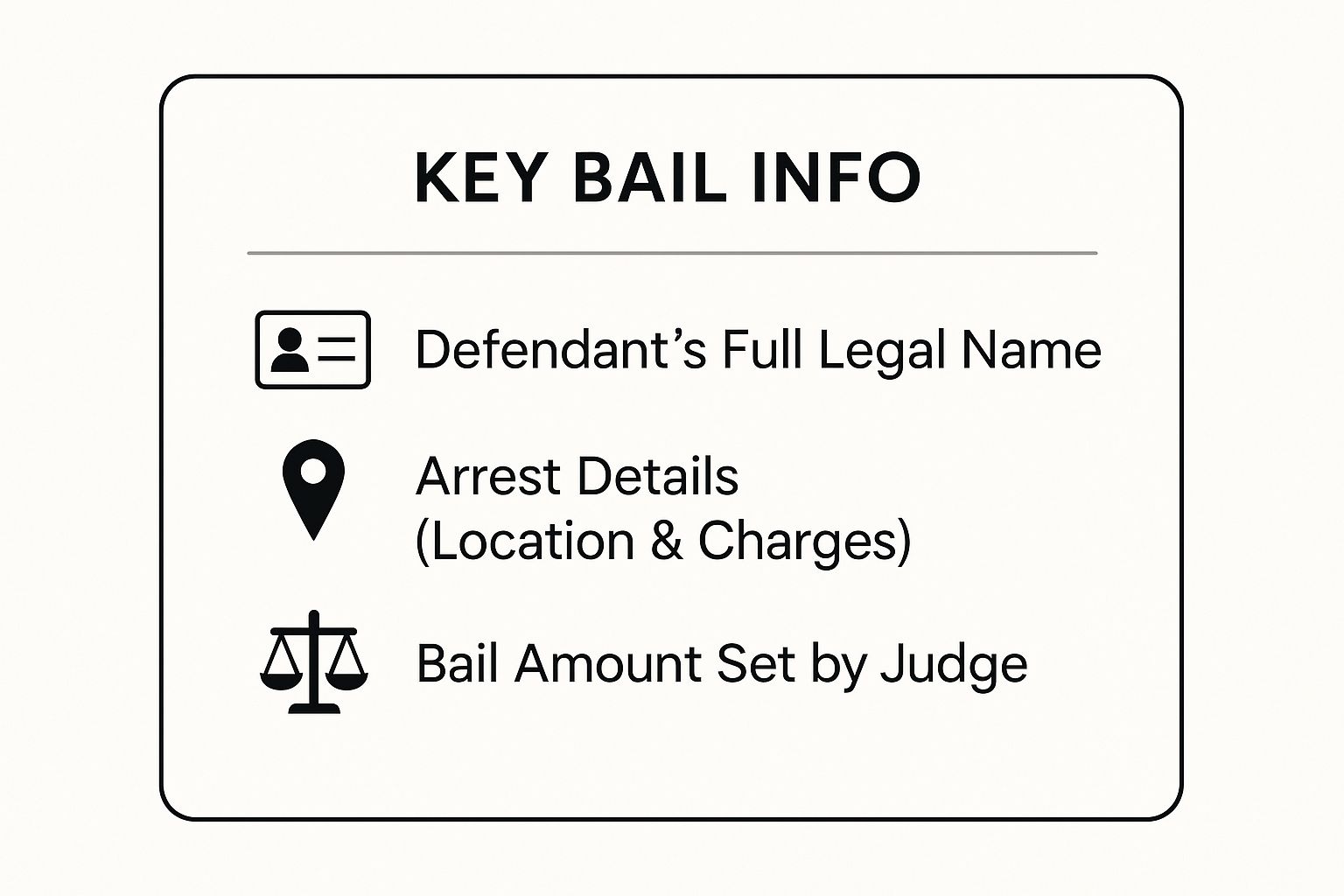
Think of this information as a pre-flight checklist. Having it organized will make your interactions with the court or a bondsman infinitely more efficient.
Comparing Bail Bond Options in Texas
| Bond Type | Who You Pay | Typical Cost | Key Requirement |
|---|---|---|---|
| Cash Bond | The Court | 100% of the bail amount (refundable) | Access to the full cash amount |
| Surety Bond | A Bail Bondsman | 10% of the bail amount (non-refundable) | Qualifying for the bond (collateral may be needed) |
| PR/GOB Bond | No one | $0 (possible small administrative fees) | Judge’s approval based on low risk |
As illustrated, the decision often hinges on your immediate financial capacity versus the permanent cost of a fee.
The Coveted Personal Recognizance Bond
A Personal Recognizance (PR) Bond or General Order Bond (GPB) is the most favorable outcome. With a this type of bond, the defendant is released from jail without any payment. They are released based on their written promise—their personal recognizance—to appear for all future court dates.
A PR or GOB bond is not an entitlement; it is granted at the judge’s discretion. It is typically reserved for individuals with minimal criminal history, strong ties to the Houston community, and who are charged with non-violent, lower-level offenses.
This is precisely where retaining an attorney early provides an immense advantage. A seasoned criminal defense lawyer can advocate for a PR bond during the initial arraignment hearing. By presenting a persuasive argument about the defendant’s reliability and deep roots in the community, an attorney can substantially increase the likelihood of a judge granting a PR bond, saving the family from financial hardship.
Choosing and Working with a Bail Bondsman

Dramatization
If a cash bond is financially impossible, a bail bondsman is the most common path to securing a loved one’s release from a Houston jail. This is not a simple purchase; it is a serious financial contract.
Choosing the right professional is crucial, as a poor choice can introduce a new layer of complications to an already stressful ordeal.
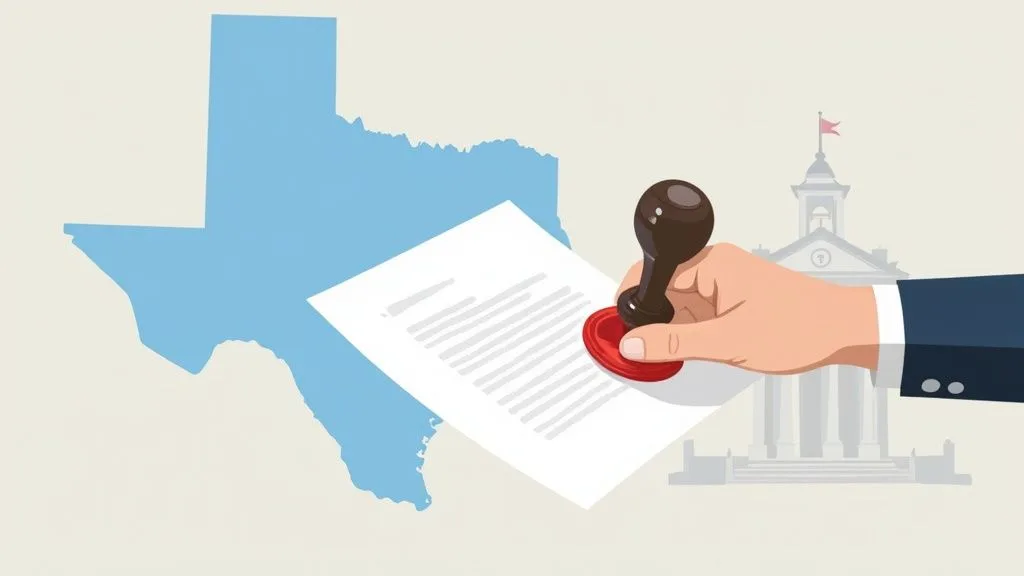
When you hire a bondsman, you are signing a legally binding agreement. The fee—typically 10% of the bail in Texas—is their non-refundable payment for guaranteeing the full bail amount. It does not matter if the charges are dismissed the next day; that money is their earned premium.
The Application and Co-signer Agreement
A bondsman’s primary concern is mitigating their financial risk. They are liable for the entire bail amount if the defendant absconds. Consequently, they will conduct a thorough assessment to ensure you can cover that debt if necessary.
Be prepared to answer detailed personal and financial questions. You, as the co-signer (or “indemnitor”), will need to provide:
- Personal ID: Driver’s license and Social Security number.
- Employment History: Your employer, job title, and length of employment.
- Residential History: Current and past addresses.
- Financial Information: Income, bank accounts, and other assets.
For high bond amounts, the bondsman will likely require collateral—a lien on your home, the title to your car, or other valuable property—to secure the bond. You are placing your own assets on the line.
Finding a reputable professional is vital. We have compiled a guide to help you make an informed choice; learn more by reading about the 7 key criteria to consider when choosing a bail bondsman.
Understanding Your Legal and Financial Risks
Signing a co-signer agreement is a momentous decision. You are not merely helping someone get out of jail; you are accepting full legal and financial responsibility for them until their case is fully resolved.
As a co-signer, you are legally guaranteeing the defendant’s appearance at every court date. If they miss even one, the bondsman has the right to demand the entire bail amount from you. This could be tens or even hundreds of thousands of dollars.
The bondsman may first employ a bounty hunter to locate the defendant, but if that fails, their collection efforts will turn to you. They can sue you, seize the collateral you pledged, and take legal action that could devastate your financial stability.
This commitment cannot be taken lightly. Before signing any contract, it is imperative to seek professional legal advice to fully understand the risks. An attorney can review the agreement and ensure you are not making a decision that could lead to your own financial ruin.
Why an Attorney Is Your Most Crucial Ally
A common and costly mistake is believing an attorney’s work begins after bail is posted. This misunderstanding can compromise the entire defense from the outset. A lawyer is not just for trial; they are your most powerful advocate during the bail process itself.
While a bail bondsman addresses the financial transaction, a skilled criminal defense attorney focuses on legal strategy. Their intervention can make the bail payment significantly smaller—or, in some cases, entirely unnecessary. Their work starts the moment you retain them.
Fighting for a Favorable Outcome at the Bail Hearing
An experienced attorney can appear at the initial arraignment hearing to argue directly for a lower bail or a PR bond. They achieve this by presenting a complete picture of the accused, highlighting factors such as:
- Strong community ties in the Houston or Harris County area.
- A stable employment history.
- Lack of a significant criminal record.
- The specific circumstances surrounding the alleged offense.
Without an attorney, the judge sees only the allegations in the police report as presented by the prosecutor. A lawyer gives the defendant a voice, portraying them as a reliable individual who is not a flight risk. This advocacy can be the difference between a $5,000 bond and a $50,000 one.
The money saved by successfully arguing for a lower bail can often exceed the cost of hiring the attorney for this initial stage. It is a direct and immediate return on your investment in their future.
Preserving Evidence and Opening Lines of Communication
Engaging a lawyer immediately is also critical for the defense. In the first 48 hours after an arrest, crucial evidence can disappear, witness memories can fade, and strategic opportunities can be lost forever.
An attorney can take immediate action to preserve evidence, such as sending a preservation letter to a business to save surveillance footage before it is erased. They can also begin identifying and interviewing key witnesses while events are still fresh in their minds.
Furthermore, a lawyer can establish communication with the prosecutor’s office right away. This early dialogue can influence charging decisions and sets a professional tone for future negotiations. Discover more about the benefits in our article on why hiring an attorney early makes a difference. Your attorney is bound by strict ethical duties, including maintaining client confidentiality, creating a secure foundation for a robust defense strategy from day one.
Life After Bail: What Happens Next

Securing a loved one’s release from jail is a monumental victory, but it is the starting line, not the finish. The period between release and the final court date is the most critical time for building a formidable defense. This is not a pause from the legal process—it is an active and essential phase.
Upon release, the defendant must adhere to a strict set of bond conditions. These are not mere suggestions; they are court orders. Violating any condition can lead to the bond being revoked and an immediate return to jail, often with no possibility of being released again.
Navigating Strict Bond Conditions
Bond conditions are designed to ensure the defendant appears in court and poses no threat to the community. Common conditions in Harris County courts include:
- Regular Check-ins: Reporting to a pretrial services officer or a bail bondsman on a set schedule.
- Travel Restrictions: Prohibitions against leaving Harris County or the state of Texas without explicit court permission.
- No-Contact Orders: Standard in cases involving assault or family violence, legally forbidding any contact with the alleged victim.
- Substance Abuse Monitoring: The court often requires random drug or alcohol testing.
The freedom granted by bail is conditional. A single misstep can nullify all the effort and money invested in securing the release and can be used by the prosecution to portray the defendant in a negative light.
The broader economy can also have an indirect effect. For instance, the global economic outlook for 2025 anticipates a growth rate of about 3.0%, with some financial conditions easing. Such trends can influence everything from household budgets to the cost of services like bail bonds, as economic health impacts credit availability and interest rates. You can read the full analysis on IMF.org to understand these macroeconomic forces.
Using Pre-Trial Freedom Wisely
This period of pre-trial release is an invaluable window of opportunity. It is the time to collaborate closely with an attorney to prepare the strongest possible defense. Your legal counsel will be investigating the prosecution’s evidence, interviewing witnesses, and building a counter-narrative.
The defendant’s actions are under constant scrutiny. By maintaining employment, supporting their family, and strictly adhering to all bond conditions, they demonstrate to the court that they are a responsible member of the community. These positive actions can significantly influence plea negotiations or create a more favorable impression at trial. This is the time to build a case, not simply wait for a court date.
Common Questions About the Houston Bail Process
Receiving a call that a loved one has been arrested in Houston is jarring, plunging you into the complex world of bail bonds, courts, and legal terminology. Here are answers to some of the most urgent questions that arise.
How Long Does Release Take After Posting Bail in Harris County?
This is the most common question, and the answer is frustratingly inexact: it depends. Posting bail does not trigger an immediate release. The process can take anywhere from a few hours (rarely) to over 12 hours (more likely), sometimes longer.
Several factors influence this timeline. The time of day the bond is posted is significant; nights and weekends are typically slower. The jail’s current population and staffing levels are also major variables. Even with an attorney ensuring all paperwork is filed correctly, the physical release is subject to the jail’s internal procedures.
What Happens to My Bail Money After the Case Ends?
The fate of your money depends entirely on how you posted bail.
- Cash Bond: If you paid the full amount in cash directly to the court, that money will be returned to you after the case concludes, provided the defendant attended all court appearances. The court will deduct minor administrative fees.
- Surety Bond: The 10-15% fee paid to a bail bondsman is their non-refundable payment for their service. You do not get this money back, regardless of the case’s outcome—even if charges are dismissed.
A bondsman’s fee is analogous to an insurance premium. You are paying for the service of securing a release, and that transaction is final.
What if I Co-signed and the Person Skips Bail?
Co-signing a bail bond is a serious legal commitment. If the defendant fails to appear in court, you become legally responsible for paying the entire bail amount.
The bail bond company will attempt to locate the defendant, but if they are unsuccessful, they will initiate collection actions against you. This can include seizing collateral you pledged (like your home or car) and filing a lawsuit to recover the full debt. The financial risk is severe, underscoring the importance of seeking legal counsel before agreeing to co-sign.
Can a Lawyer Help Lower the Bail Amount?
Yes, possibly. This is one of the most immediate and impactful services a criminal defense attorney can provide.
At the initial arraignment hearing, an experienced lawyer can argue directly to the judge for a more reasonable bail. More importantly, they can advocate for a General Order Bond (GOB) or Personal Recognizance (PR) bond, which would allow for release without any payment.
By presenting compelling evidence of the defendant’s ties to the Houston community—such as employment, family, and residence—an attorney can persuade the court that the individual is not a flight risk. This crucial advocacy can save a family thousands of dollars and is the foundational first step in mounting a successful defense.
Discover more from David Smith Law Firm, PLLC
Subscribe to get the latest posts sent to your email.