When you’re told to write a letter for court in a Texas criminal case, it’s easy to dismiss it as just another piece of paperwork. But this letter is so much more. It’s a rare and powerful opportunity to show the judge a side of the defendant that the formal court record—piled high with motions and evidence—can never reveal. Facing criminal charges is a daunting experience, and every tool must be used strategically. Attempting to navigate this process alone, especially in Harris County courts, can have devastating consequences.
The True Purpose of a Court Letter
At its core, the letter’s job is to humanize the person facing charges. A judge in Houston sees an endless stream of cases involving DWI, assault, or drug possession, and the details can easily blur into facts and statutes. A character letter cuts through the legal noise. It offers a personal glimpse into the defendant’s life, their responsibilities, and their positive contributions to the community—details that a prosecutor will never present.
Why This Letter Matters So Much
While it isn’t sworn testimony, a compelling letter can absolutely influence outcomes, especially during sentencing for criminal charges. The right words can paint a picture of someone who is genuinely remorseful, has deep community ties, and is capable of turning their life around.
This isn’t just wishful thinking; it’s a long-standing tool in legal advocacy. Well-crafted character letters may contribute to sentence reductions where they effectively demonstrated a defendant’s remorse and potential for rehabilitation.
But you must be extremely careful. The stakes are incredibly high in any criminal proceeding. A letter that comes off as demanding, questions the court’s authority, or makes emotional pleas without factual backup can seriously backfire. You might annoy the judge or, even worse, contradict the official legal strategy your attorney has meticulously built.
A court letter is your chance to add a human dimension to a sterile legal file. It transforms a case number into a person—a father, an employee, a neighbor—and that can make all the difference in a judge’s final decision.
Striking this balance is the most important part of the entire process. The line between helping and hurting is razor-thin, and one misstep can have lasting consequences for your freedom. You need to understand what the court needs to hear and, more importantly, what it absolutely should not. For a bigger picture on how this fits into the overall process, take a look at our guide on preparing for court step-by-step. Taking this on without expert legal guidance isn’t just a bad idea—it’s a dangerous risk.
Structuring Your Letter for Maximum Impact
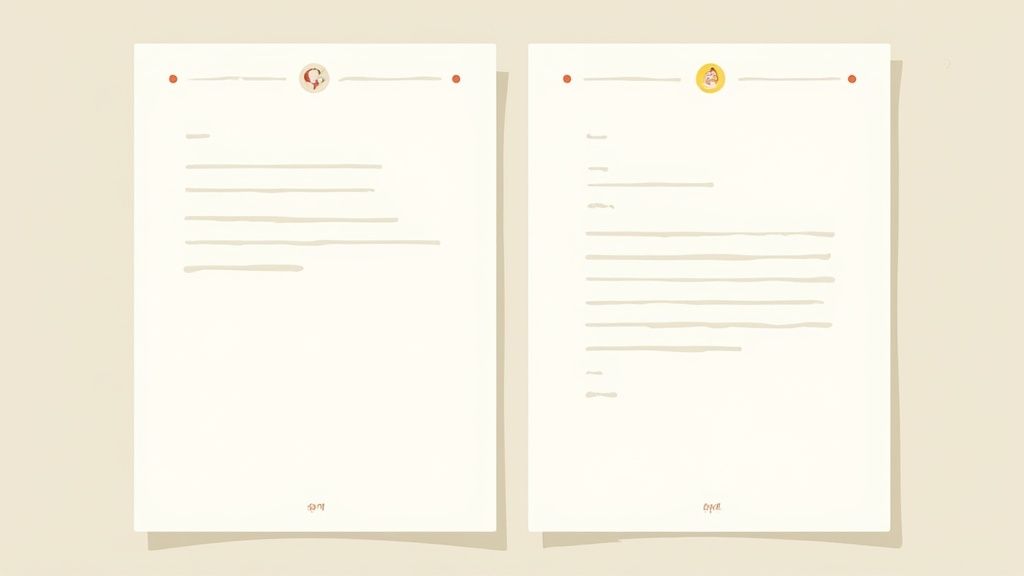
How your letter looks sends an immediate message. A clean, professional document shows you respect the court and take this process seriously. Think of the structure less like a set of rules and more like a roadmap—it guides the judge through your thoughts clearly and persuasively, which is crucial when your future is on the line.
Every detail, right from the top, makes a difference. A simple formatting mistake can suggest carelessness, and you do not want a judge questioning your credibility before they’ve even read your first sentence.
The Essential Opening
Your letter must start with the correct formalities. This isn’t just about being polite; it’s about making sure your letter gets to the right person and is filed with the right case, a critical detail in the busy Harris County court system.
- Formal Salutation: Always address the judge by their proper title. Start with “The Honorable Judge [Last Name]” to show respect for their position.
- Case Information: Right below that, you must include the full case name (for example, The State of Texas v. John Doe) and the case number. Without this, your letter is just a piece of paper with no context, and it might never make it into the case file.
Getting this part right establishes your letter as an official document that belongs in the proceedings.
Crafting a Clear Introduction and Body
Jump straight to the point in your introduction. State who you are, what you do, and your relationship with the person you’re writing about. Something like, “My name is Jane Smith, and I have been John Doe’s direct supervisor at ABC Company in Houston for the past five years.”
The body of the letter is where you share your story. Don’t just say someone is a “good person”—that’s too vague to be persuasive. Instead, share a specific example that shows their good character. Tell a story about a time they demonstrated honesty, kindness, or responsibility. Dedicate each paragraph to a single, powerful memory or quality.
A well-structured letter guides the judge through your perspective logically. It builds a compelling narrative of character, one specific, truthful story at a time, making it easy for the court to understand and absorb your message.
If you’re struggling to get started, you may resort to wanting AI to write this, however, these tools are no substitute for legal counsel and judges generally don’t appreciate the letter if they feel AI wrote it. The sincerity and facts must come from you, but it is essential to have a legal professional review your draft to avoid any catastrophic missteps.
Finding the Right Words and Tone

Once you have the structure down, it’s time to focus on what really matters: the words themselves. This is your chance to give the judge a genuine glimpse into the defendant’s character. But the tone you strike is just as critical as the stories you tell. The goal here is to be sincere, respectful, and humble.
This isn’t the place for grand, over-the-top praise. Judges have read countless letters claiming someone is a “good person.” Frankly, those generic statements are forgettable and carry almost no weight in a Texas courtroom.
Show, Don’t Just Tell
To make a real difference, you have to get specific. The single most important rule is to show, not tell. Don’t just state that the person has good character; provide a concrete, truthful example that proves it.
Think of a specific moment that reveals who they are. For instance, instead of saying, “He is a generous and caring neighbor,” paint a picture for the judge:
“I’ll never forget how he spent his weekends helping my family rebuild our fence after Hurricane Harvey devastated our Houston neighborhood. He never asked for anything in return; he just saw a need and stepped up to help.”
That one short story says more about selflessness and community spirit than a full page of vague compliments ever could. It’s the personal anecdotes that make a letter feel real—and powerful.
Navigating Critical Boundaries
Knowing what to say is only half the battle. Knowing what not to say is arguably even more important. A well-intentioned letter can backfire spectacularly if it crosses certain lines, potentially jeopardizing the entire defense.
It is absolutely critical that you avoid these common mistakes:
- Making legal arguments: You are not the lawyer. Leave the legal strategy to the professionals. Trying to argue the case yourself will only muddy the waters and potentially harm the defense.
- Questioning the verdict or the justice system: This is a big one. Criticizing the judge, the jury, or the process will be seen as disrespectful and will do the defendant zero favors.
- Making excuses for the offense: Never downplay the seriousness of what happened or try to justify the defendant’s actions. This can easily be interpreted as a lack of remorse, which is the last thing you want to convey to the court.
Writing letters to a court is a recognized and often powerful tool. Even in our digital age, the directness of a personal, well-crafted letter still resonates, a point highlighted in this analysis on the power of the pen in a digital world. Your sincerity is your greatest asset, but ensuring it helps—rather than hurts—the case requires the delicate touch and strategic oversight of an experienced attorney.
Common Mistakes That Can Wreck a Character Letter
Writing a character letter feels straightforward, but it’s a minefield of potential missteps. You’re trying to help, of course, but a well-meaning letter can backfire and actively damage the very case you want to support. The difference between a helpful letter and a harmful one often comes down to legal expertise.
A poorly executed letter can easily undermine the defense strategy, annoy the judge, and do far more harm than good. Let’s walk through the most common traps that individuals without legal counsel fall into.
Mistake 1: Getting Overly Emotional or Dramatic
Passion is understandable, but the courtroom runs on facts and objectivity. Filling your letter with dramatic, tearful pleas or exaggerated claims will likely make you seem less credible to a judge. Your freedom is not a drama; it’s a serious legal matter.
Your sincerity is a powerful tool, but it has to be grounded in believable statements, not hyperbole. Stick to respectful, calm language that highlights character through real-world examples. An attorney can help you channel that passion into a persuasive and professional narrative.
Mistake 2: Downplaying the Offense
This is a critical, and often fatal, error. Never, ever try to downplay the severity of the offense or make excuses for the defendant’s actions.
Phrases like, “It wasn’t that serious,” or, “She just made one little mistake,” send a terrible message to the court. It signals that neither you nor the defendant truly grasps the gravity of the situation. This comes across as a profound lack of remorse, which is the last thing you want to convey. Instead of helping, this approach often just reinforces a negative perception of the defendant.
- Avoid Making Excuses: Your job is to speak to their character, not to explain away or justify the alleged crime. You are not re-litigating the case.
- Focus on the Future: Instead of getting stuck on the mistake, talk about their potential for positive contributions going forward. Back it up with examples from their past that prove they’re capable of it.
Mistake 3: Criticizing the Justice System
This is an absolute non-starter. Your letter must avoid any language that criticizes the police, the prosecutor, the court, or the legal system in general.
Venting your frustration or claiming the defendant was treated unfairly will be seen as disrespectful and will instantly discredit your letter. The courtroom isn’t the place for those arguments. They only serve to alienate the very person you’re trying to persuade.
A letter that questions the court’s integrity or makes demands is a wasted opportunity. The goal is to build a bridge of understanding with the judge, not to burn it down with misplaced criticism or emotional arguments.
Navigating these pitfalls is trickier than it looks. The line between effective advocacy and a harmful error is often razor-thin—something a legal professional is trained to see. Going it alone introduces a serious, unnecessary risk to the defendant’s future.
Why a Legal Review Is Non-Negotiable
You’ve poured your heart into writing this letter. But once it’s in the court’s hands, it’s not just a letter anymore—it’s a legal document. It becomes part of a much bigger, more complex strategy, and simply hoping your good intentions are enough is a massive gamble with your life and liberty.
Submitting that letter without a lawyer’s review is like navigating a minefield blindfolded. An experienced Houston criminal defense attorney makes sure your words actually support the case’s defense narrative, whether you’re in a Harris County courtroom or any other in Texas.
Aligning Your Letter with the Legal Strategy
Here’s where a lawyer’s review is so critical: they spot the hidden dangers you’d never see.
For example, a simple sentence you wrote to show remorse could be twisted by a prosecutor into an unintentional admission of guilt. That one misstep could undermine the entire defense. A lawyer ensures every word helps, not hurts. The risk of self-incrimination is too high to proceed without counsel.
They also make sure the letter follows all the local court rules and formatting quirks that could otherwise get it dismissed on a technicality.
Think of a legal review not as an expense, but as a critical safeguard. It’s a small but crucial investment in the defendant’s outcome, ensuring your well-intentioned support actually helps the case instead of causing unforeseen harm.
While most court letters are private, some legal strategies involve making them public for maximum impact. However, as legal scholars have pointed out, these letters often lean so heavily on legal jargon that they lose their power with a wider audience. You can read more about the strategic use of legal letters at academic.oup.com. This is exactly why you need a professional to strike the right balance between legal precision and human connection.
Finding the right lawyer is the most urgent step. For more on that, check out our guide on how to choose a criminal defense lawyer and the questions you should ask. With the right guidance, your sincere support becomes a powerful, strategic asset for the defense.
Answering Your Questions About Court Letters

Writing a letter for court involves a lot of moving parts. To help you navigate it, here are answers to some of the most common questions. This practical advice should clear things up, but it also shows why having professional legal guidance is so critical.
Who Is the Best Person to Write a Character Letter?
The best person is someone who knows the defendant well and holds a credible, respected role in their life. Think long-time employers, mentors, coaches, or even a trusted neighbor.
But here’s the thing: their title is far less important than their ability to write with genuine sincerity. A heartfelt letter from a close friend who can share a specific, powerful story often carries more weight than a generic letter from a high-profile acquaintance who barely knows the person.
An experienced criminal defense attorney can help you brainstorm and identify which people in a defendant’s life would be the most impactful and persuasive voices to put in front of the judge.
Should My Letter Be Typed or Handwritten?
A typed letter is almost always the right call. It looks professional and, most importantly, it’s legible. A judge can’t be influenced by a letter they can’t easily read.
While a handwritten note might feel more personal, the risk of it being set aside because of messy handwriting is just too high. Stick to these simple rules:
- Font: Use a standard, professional font like Times New Roman or Arial.
- Size: Keep the font size at 12-point for easy reading.
- Signature: After you print the letter, sign it by hand in blue or black ink.
Proper formatting ensures your letter gets the serious consideration it deserves.
The most powerful letter is one that is both authentic in its message and professional in its presentation. Legibility is the first step toward credibility in the eyes of the court.
How Many Letters Should We Submit?
This is a huge strategic decision where quality always, always triumphs over quantity.
Submitting a few compelling, well-written letters from a diverse group of credible people is far more effective than overwhelming the court with dozens of generic or repetitive ones. Flooding a judge’s desk can dilute the impact of your strongest letters and may even signal a disorganized or desperate defense effort.
This is not a numbers game; it’s about strategic influence. The ideal number and type of letters should be decided in close consultation with your criminal defense attorney. They understand the nuances of your specific case and can help you figure out what kinds of cases benefit most from this strategy. This calculated approach ensures every single letter adds real value to the defense.
When facing criminal charges in the Greater Houston Area, every decision matters. A well-written letter can be a powerful tool, but it is just one component of a comprehensive legal defense. Your freedom is too important to leave to chance. Explore this site to learn more about building a strong defense.
Discover more from David Smith Law Firm, PLLC
Subscribe to get the latest posts sent to your email.