
Harris County offers pretrial diversion programs for certain first-time drug offenders that can result in a complete dismissal of charges and an expungeable record. For the right candidate, these programs are one of the best outcomes available in the Texas criminal justice system. But entering a program is not a simple administrative step; it involves a formal agreement with the District Attorney’s Office, a supervision period with specific requirements, and a 60-day window from your first court date to decide whether to enter.

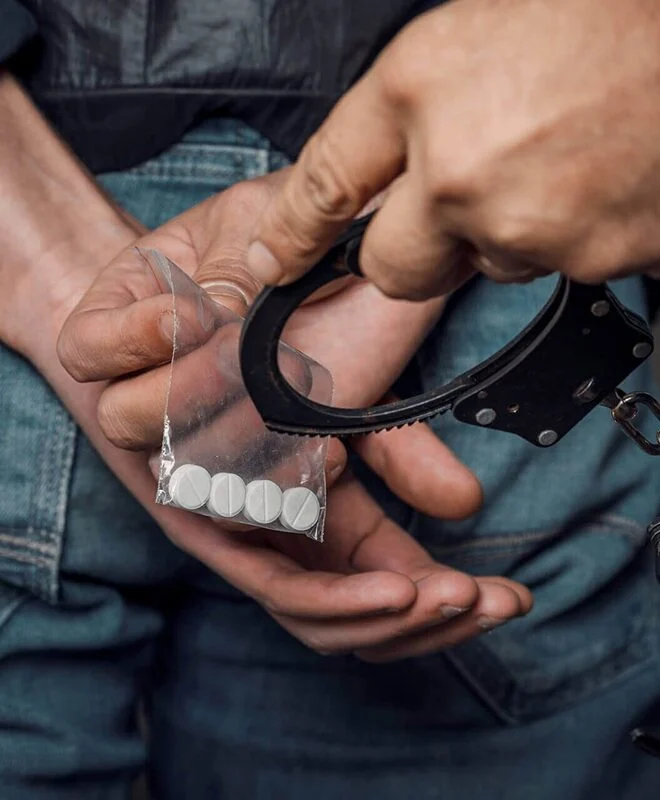
The Harris County District Attorney’s Office operates two specific pretrial diversion programs for drug offenses. The Felony Controlled Substance Pretrial Intervention Program was introduced in 2016 for first-time offenders charged with personal-use amounts of felony controlled substances. The First Chance Intervention Program covers first-time offenders charged with possession of two ounces or less of marijuana at the Class B misdemeanor level.
Both programs follow the same core principle: a defendant agrees to complete a set of requirements over a supervised period in exchange for the District Attorney’s Office agreeing to dismiss the charges. A successful completion means the charge is dismissed and the arrest record becomes eligible for expunction. That outcome – a clean record is what makes these programs so significant for first-time offenders whose entire future employment, licensing, and housing prospects depend on what does or does not appear on a background check.
Pretrial diversion is not probation, and it is not deferred adjudication. It is an agreement between the defendant and the DA’s Office that takes place while the case is still pending before any finding of guilt. Unlike deferred adjudication, a successfully completed pretrial diversion agreement results in a record that can be fully expunged. That distinction matters significantly for long-term record consequences.
That 60-day deadline is one of the most important facts about these programs that defendants often do not learn until it has passed. The decision has to be made before full discovery is typically complete meaning before you or your attorney have seen all of the evidence the state is relying on. Understanding what you are agreeing to, whether you actually qualify, and whether the program is genuinely your best option requires an attorney who knows how Harris County runs these programs and what the fine print means for your specific situation.
Harris County currently operates the following pretrial diversion programs for drug offenses. Eligibility is not automatic; it requires an application, DA approval, and judge approval. An attorney who understands the process can significantly affect whether and how quickly you are accepted.
This program is available for first-time offenders charged with personal-use amounts of felony controlled substances — typically under 1 gram (state jail felony level). Cases involving 1 to 4 grams may be considered on a case-by-case basis at the DA’s discretion.
To qualify, the applicant must have no prior felony convictions or deferred adjudication, no evidence of delivery or manufacturing, no current felony investigation in any jurisdiction, and must never have participated in a pretrial intervention program for a felony offense. The program runs for one year under supervision by the Harris County Community Supervision and Corrections Department. Fees include a $200 initial assessment, $60 per month supervision fee, and $10 per month lab fee.
This program covers first-time arrests for possession of two ounces or less of marijuana — a Class B misdemeanor. Eligible participants are monitored for 60 to 90 days by Harris County Pretrial Services depending on the intake assessment. A $100 program fee applies. Community service or a class may be required.
To qualify, the person must have no prior criminal convictions above Class C misdemeanor level, no outstanding warrants, and no additional charges at the time of arrest other than Class C tickets. A person who was also charged with DWI at the time of the marijuana arrest does not qualify.
This is the part of the program that is rarely explained before a defendant signs the agreement. If you are terminated from the program for any reason — a new arrest, a failed drug test, missed reporting, or non-payment of fees — the case is immediately re-docketed and prosecution resumes as though the program never existed.
The District Attorney’s Office has sole discretion over whether a violation has occurred. There is no appeals process. You will then face a choice between a plea agreement or trial — without the benefit of the diversion agreement you already entered. This consequence makes it critical to fully understand what you are agreeing to before signing, and to consult with an attorney who can evaluate both the program and your underlying defense before you make that decision.
Before entering either Harris County pretrial diversion program, you should understand the full scope of the requirements. These are not minor conditions. They are legally binding obligations that run for the entire program period. Failure to meet any of them can result in immediate termination and resumption of prosecution.
Supervision Period Felony PCS Program: One year of active supervision. First Chance marijuana: 60 to 90 days. Both programs require monthly reporting to the Harris County Community Supervision and Corrections Department unless otherwise directed in writing.
Drug and Alcohol Testing: Both programs require compliance with drug and alcohol testing as directed by the supervising department. A failed test is a program violation. There is no tolerance for positive results during the supervision period.
Fees Felony PCS: $200 initial assessment fee plus $60 per month supervision fee and $10 per month lab fee for the full year. First Chance: $100 program fee. Additional fees may be ordered by the court. Non-payment is a violation.
60-Day Decision Deadline: You must agree to participate within 60 days of your first court setting. This deadline does not pause for discovery. In many cases the prosecution’s full evidence file has not been disclosed within that window meaning you may be deciding whether to waive a potential defense before you have seen the state’s case. This is the single most important reason to retain an attorney before your first court date.

