A DWI arrest in Texas starts two separate clocks simultaneously. The criminal case and the administrative fight to save your license and you have only 15 days from your arrest date to request an Administrative License Revocation (ALR) hearing. Miss that window and your driving privileges are suspended automatically, regardless of what happens in court. The decisions you make in the first 48 hours matter more than any other stage of your case.
David Smith is Board Certified in Criminal Law by the Texas Board of Legal Specialization and a former Brazoria County prosecutor with extensive jury trial experience. We understand how the state builds DWI cases, how prosecutors evaluate BAC evidence, and where those cases are most vulnerable to challenge. That inside knowledge now works entirely in your defense. Contact our DWI law firm today for a free consultation.
No. It is not illegal to drink and then drive. It is illegal to drink to the point of intoxication and then operate a motor vehicle in a public place.

A first DWI offense is typically a Class B misdemeanor under Texas Penal Code §49.04, punishable by:
A third DWI offense is a Third-Degree Felony under Texas Penal Code §49.09, punishable by:
A second DWI offense is a Class A misdemeanor, punishable by:
Certain circumstances can increase the severity of your charges:
A DWI charge involves layers of scientific, procedural, and constitutional evidence that a generalist criminal defense attorney may not be equipped to fully challenge. Board Certification in Criminal Law by the Texas Board of Legal Specialization signals that your attorney has demonstrated a measurable standard of expertise verified by an independent body, not self-reported.
A DWI charge puts your license, your record, and your freedom at risk. As a Board Certified criminal defense attorney and former prosecutor, David Smith knows exactly where the state’s case is most vulnerable and how to attack it, by:
Answer: Under Texas Penal Code 49.01, a person is legally intoxicated in one of two ways. The first is having an alcohol concentration of 0.08 or higher. The second is not having the normal use of mental or physical faculties due to alcohol, a controlled substance, a drug, a dangerous drug, or any combination of these. You do not have to be above the 0.08 limit to be charged, because an officer can decide your faculties are impaired regardless of a breath or blood test result. That is why the circumstances of the traffic stop and the way field sobriety tests were given are often the most contestable parts of a DWI case. DWI is the adult offense for driving while intoxicated. DUI is a separate, minor-only offense under the Texas Alcoholic Beverage Code that applies to drivers under 21 with any detectable amount of alcohol.
Answer: A DWI arrest in Texas starts two separate cases at once. One is the criminal case in court. The other is an administrative case run by the State Office of Administrative Hearings where the opposing party to the driver is the Texas Department of Public Safety. In this process, DPS is trying to suspend your driver’s license, known as Administrative License Revocation, or ALR. You have only 15 days from the date of arrest to request an ALR hearing to contest the suspension. If you miss that window, the suspension becomes automatic on the 40th day after arrest, with no hearing. The suspension period is typically 90 days for a first failed test, or 180 days for a first refusal, with longer periods in repeat situations. Commercial Driver’s License (CDL) holders face an even stiffer penalty where a the CDL privileges can be lost for an entire year. Requesting the ALR hearing on time also lets your attorney gather information about the state’s evidence before the criminal case reaches court, which is why this is one of the most time-sensitive steps in any DWI case. An even easier solution to have an attorney that handles your ALR as well, and requests the ALR hearing on your behalf.
Answer: What you do in the first hours and days can shape the rest of the case. Stay calm and respectful, but do not try to explain what happened to officers, friends, or anyone else, because anything you say can be used later. Use your right to remain silent beyond identifying yourself and ask for a lawyer. Hold on to every piece of paperwork you were given at the scene or at the jail, since some of those documents start the 15-day ALR clock. Follow any bond conditions exactly, including any ignition interlock requirement, no-alcohol order, or court appearance, because a violation can bring new problems. Then call a lawyer as soon as you can, so the ALR deadline is not missed and the defense can begin while the evidence is still fresh.
Answer: Yes, DWI charges can be dismissed or reduced when the right legal issues are raised. Common defenses include challenging the basis for the traffic stop, since a stop without reasonable suspicion or probable cause can lead to the evidence being thrown out. Field sobriety tests are often vulnerable, because they must be given under standardized protocols, and small departures from those protocols can affect the result. Breath test machines must be calibrated and maintained, and the officer running the test must be properly certified. In blood cases, the chain of custody from collection through lab analysis must be documented and properly handles. A rising-BAC defense can apply when alcohol was still being absorbed and the level at the time of driving was lower than at the time of testing. The state also has to prove that you were actually operating the vehicle in a public place, which is not always as clear as it seems. We examine every part of the stop, the testing, and the evidence to find the strongest defense the facts support.
Answer: The cost depends on the facts of your case, including whether the charge is a misdemeanor or a felony, how much evidence there is to review, such as breath test data, blood results, dash cam, and body cam, the number of court settings, and whether the case proceeds to trial. DWI cases are more technically complex than many other criminal charges, so the work involved varies widely from case to case. The best way to get a real answer is to talk through your specific situation with an attorney. We offer a free consultation with no obligation, and you can call any time at (713) 769-5000 to discuss your case and your options.
Answer: Yes, and the effects can last a long time. A DWI conviction in Texas creates a permanent criminal record that can show up on background checks run by employers, licensing boards, and landlords. It can affect current employment, future job prospects, and certain professional licenses, and for non-citizens it can have immigration consequences that depend on the specific situation. Car insurance is also affected, since most insurers raise rates significantly after a DWI for 5 years, and many drivers are required to carry SR-22 proof of high-risk insurance for a period of time. If the case ends in a dismissal or a not guilty verdict, you may be eligible for expunction, which removes the arrest from your record. If the case ended in successfully completed deferred adjudication or even a straight probation, a nondisclosure order may be available to seal the record from most public searches.
Answer: Yes, a DWI is serious enough that having a lawyer is strongly advised. The case has technical evidence, strict deadlines, and consequences that reach beyond the courtroom into your license, your insurance, and your record. Board certification matters because in Texas it is granted by the Texas Board of Legal Specialization, which requires years of substantial criminal law experience, peer reviews from judges and other lawyers, extensive continuing legal education, and passing a comprehensive day-long exam. Only a small percentage of Texas attorneys hold board certification in any specialty. David Smith has been Board Certified in Criminal Law by the Texas Board of Legal Specialization since 2015, and is a former prosecutor, which means your DWI case is handled by someone who has worked both sides of a Houston courtroom.
Answer: A first DWI in Texas is generally charged as a Class B misdemeanor, which carries the possibility of jail time, a fine, and a license suspension. If the alcohol concentration is 0.15 or higher, a first offense can be raised to a Class A misdemeanor. Second offenses are typically charged as Class A misdemeanors, and a third or subsequent DWI can be charged as a felony, which carries the possibility of prison time. Certain situations carry their own elevated penalties, including DWI with a child passenger, DWI involving an accident with serious bodily injury, and DWI involving a death. Because the level of the charge changes everything that follows, your first step is to know exactly how your case is being charged. For the specific consequences that apply to each type of DWI, see our first time, second and third, felony, child passenger, commercial driver, intoxication assault, intoxication manslaughter, repeat, and underage DUI pages.
Answer: An ignition interlock device, often called an IID, is a small breath testing unit installed in your vehicle. Before the car will start, you have to provide a breath sample that is below a set alcohol level, and the device will request additional samples while you are driving. Texas courts require an IID in a wide range of DWI situations, including some first offenses with higher alcohol concentrations, certain bond conditions while the case is pending, and most repeat DWI cases. The device is installed by a certified provider, and there are setup and monthly costs that depend on the provider. Whether your case will require an IID, and for how long, depends on the specific charge and the court, which is something we can review with you.
Answer: If you are arrested for DWI in Houston with a license from another state, Texas cannot directly suspend your home-state license, but it can suspend your privilege to drive in Texas through the same ALR process that applies to Texas drivers. The 15-day deadline to request an ALR hearing still applies to you. Texas also reports the arrest and any resulting suspension to your home state through the Driver License Compact, an information-sharing agreement that most states are part of, which means your home state may take its own action based on what Texas reports. You may not have to be in Texas for every court setting, since in many cases an attorney can appear on your behalf, although certain settings and a trial will require your presence. Skipping a required appearance can result in a warrant, so the safer route is to work with a lawyer who can manage the case across state lines.
Answer: It can, and the rules depend on your profession. Nurses, doctors, teachers, CPAs, financial advisors, pilots, commercial drivers, and other licensed professionals often have a duty to report certain criminal charges or convictions to their licensing board, and the board can investigate or take action regardless of what happens in the criminal case. The level of the charge, whether you are convicted, and the specifics of your license rules all matter. There is also a tool that may help during a license suspension, called an Occupational Driver’s License, which can allow limited driving for work, school, and essential household duties. If you hold a professional or commercial license, this is worth raising at the start of your case so the criminal defense and the license issues can be handled together. We are glad to review your case in a free consultation.
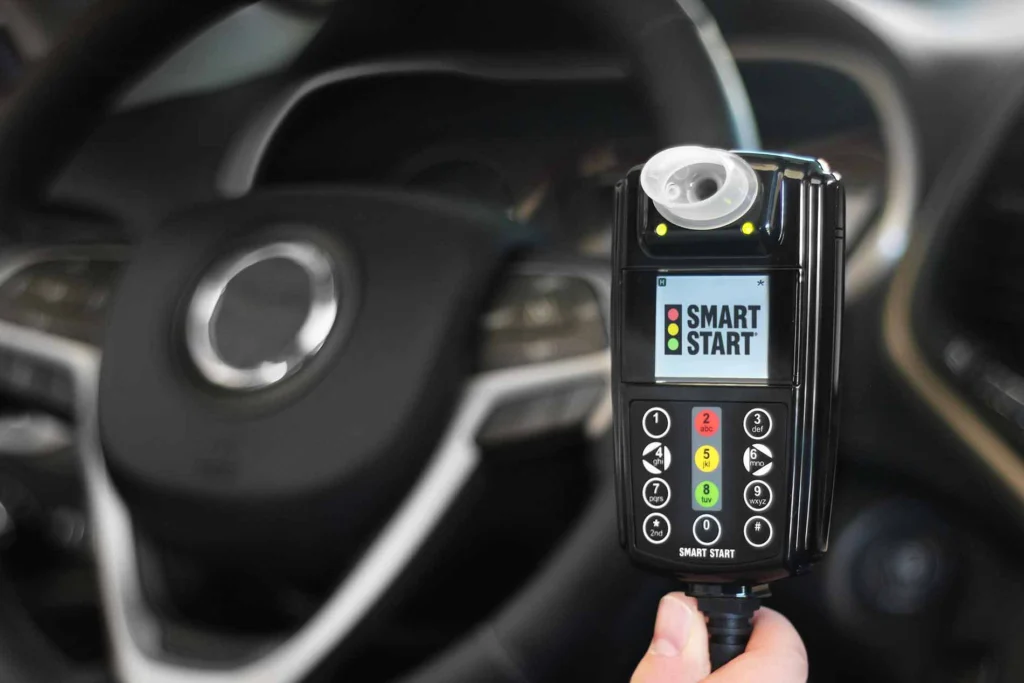
As part of a DWI sentence or plea agreement in Texas, courts frequently order the installation of an Ignition Interlock Device (IID) , a breath-testing instrument connected to your vehicle’s ignition that requires a clean breath sample before the engine will start. For clients in the Greater Houston area, David Smith Law Firm has arranged access to SmartStart IID services, including a free first month for qualifying clients.
Choosing a reliable IID provider matters. Non-compliance with IID requirements including missed calibration appointments or tampered devices can result in additional criminal penalties or probation violations. SmartStart provides 24/7 support and is available across Houston and Harris County.