
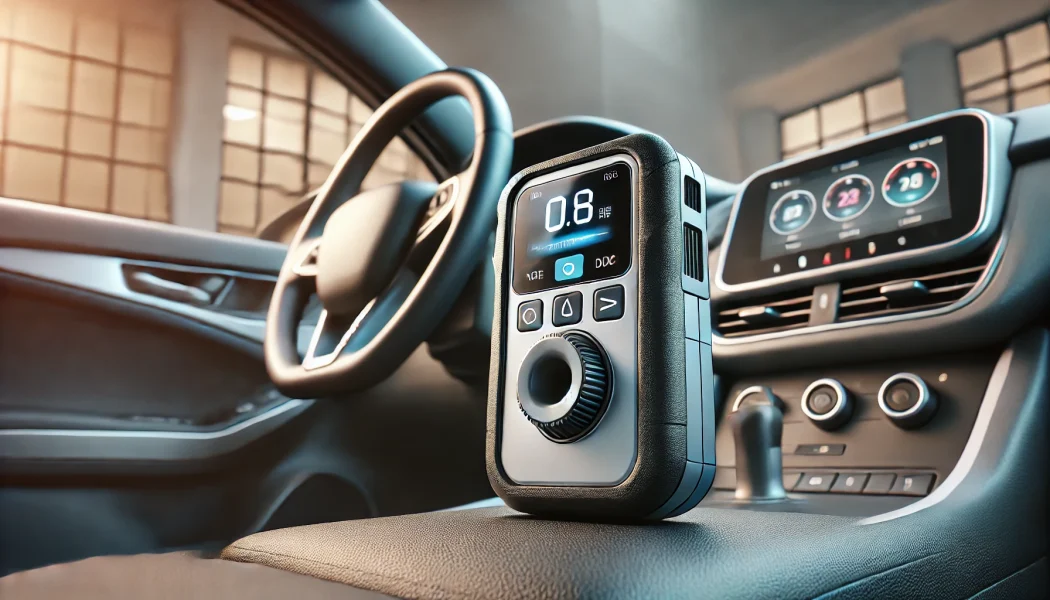
If you are facing a DWI in Texas, one of the first questions you probably have is what an ignition interlock device costs and whether you will be required to have one. An ignition interlock device, often called an IID, a BAIID, or simply a car breathalyzer, is a breath-testing unit wired into your vehicle. Before the car will start, you provide a breath sample, and depending on your case the device may also ask for additional samples while you drive.
In Texas, a typical IID runs roughly $70 to $150 to install and about $70 to $120 per month to lease and monitor, which usually works out to somewhere around $1,000 to $2,200 for a full year. Below we break down those costs in detail, when Texas actually requires an interlock, how long you have to keep it, and the everyday rules that cause people the most trouble.
Not every Texas DWI case automatically requires an ignition interlock. Whether you need one, how long you must keep it, and how much it costs can depend on your charge, prior history, court order, probation conditions, or driver’s license restrictions.
Key Takeaways
- Not every first-time Texas DWI automatically requires an ignition interlock device.
- An IID may be required as a condition of bond, probation, deferred adjudication, or certain driver’s license restrictions.
- Typical costs include installation, monthly monitoring, service appointments, and removal.
- The total annual cost is roughly $1,000 to $2,200, although actual costs vary.
- Drivers normally have to provide a breath sample before starting the vehicle and may receive additional testing prompts while driving.
- Failed tests, missed tests, tampering, or missed service appointments can create compliance problems.
- Do not remove a court-ordered IID until you have received the required authorization.
- Certain Texas license suspensions carry a mandatory interlock period, commonly around 6-18 months, before an unrestricted license is restored.
What Is an Ignition Interlock Device?
An ignition interlock device is installed in a vehicle and requires the driver to provide a breath sample before starting the engine.
If the sample meets the device’s requirements, the driver is allowed to start the vehicle. If alcohol is detected above the permitted level, the vehicle will not start.
The device may also request additional breath samples while the vehicle is being driven. These are usually called rolling retests.
A failed or missed rolling retest does not suddenly shut off a moving vehicle. Instead, the device records the event and may activate alerts or prevent the vehicle from being restarted after it is turned off.
When Is an Ignition Interlock Required in Texas?
There is no single rule that says every person arrested for DWI must install an ignition interlock. The requirement depends on the circumstances of the case.
An IID may be required as part of:
- A pretrial bond condition
- Probation or community supervision
- Deferred adjudication
- Certain driver’s license restrictions
- Certain occupational driver’s license arrangements
Prior DWI history, the type of intoxication-related charge, the court handling the case, and the final outcome all affect whether an IID is required. Repeat offenses generally carry stricter interlock rules than a first-time DWI, and a second or subsequent DWI often requires an interlock as a condition of bond and again after conviction.
Does a First DWI Automatically Require an IID?
Not necessarily. A standard first-offense DWI arrest does not automatically mean every driver must install an ignition interlock.
However, a judge may still order one as a condition of bond or later as part of the case. Requirements can also change depending on how the case is resolved.
Repeat DWI cases and certain more serious intoxication-related charges can be subject to stricter requirements. Because IID requirements can be case-specific, drivers should rely on their actual court order rather than assuming that another person’s DWI case will have the same requirements.
How Much Does an Ignition Interlock Device Cost in Texas?
This is the question most people search first, so here is the straight answer. The cost of an ignition interlock is not limited to the installation fee. You pay to install it, you pay a monthly lease and monitoring charge, you pay at each service visit, and you pay to remove it at the end.
Typical costs include:
| Ignition Interlock Cost in Texas | Typical Range |
|---|---|
| Installation (one-time) | $70 to $150 |
| Monthly lease and monitoring | $70 to $120 per month |
| Calibration / service visit | $20 to $50 per visit |
| Removal (one-time) | $50 to $100 |
| Possible extra fees | Lockouts, resets, missed appointments |
| Estimated total per year | $1,000 to $2,200 |
Your actual cost may be higher or lower depending on the provider, vehicle, how often servicing is required, additional fees, and how long you must keep the device installed.
When you compare providers, ask about the total cost over the full period you will need the device, not just the advertised installation price. A low install fee paired with a high monthly rate often costs more over 12 or 18 months than a slightly higher install fee with a lower monthly charge. If cost is a hardship, ask whether the provider and the court offer an indigency or reduced-fee option, which Texas allows in some situations.
How Long Do You Have to Keep an Ignition Interlock in Texas?
There is no universal IID period that applies to every Texas DWI case. How long you need the device depends on why it was ordered.
For example, an IID may be tied to:
- The length of a bond condition
- A portion of a probation or supervision period
- Deferred adjudication requirements
- The duration of a driver’s license restriction
- An occupational driver’s license order
Some probation situations can require the device to remain installed for a significant portion of the supervision period. The important point is that you should follow the dates and conditions in your actual order. Do not assume that you can simply remove the device after a certain number of months.
One common Texas period is 18 months. When an interlock is tied to a driver’s license suspension for certain intoxication offenses, Texas often requires the device to stay installed for about 18 months before an unrestricted license can be restored. The exact length still comes from your specific court and license order, so confirm your own dates rather than relying on a general figure.
What Is It Like to Drive With an Ignition Interlock?
The basic process is relatively simple once you become familiar with the device. You will generally:
- Provide a breath sample before starting the vehicle.
- Wait for the device to approve the test.
- Start the vehicle.
- Respond to rolling retest prompts if they occur while you are driving.
- Attend required service and calibration appointments.
The exact instructions can vary by device and provider, so it is important to pay attention during installation and learn how your specific device works.
How Often Does the Device Need to Be Serviced?
Ignition interlock devices require regular servicing and calibration. Service appointments may occur approximately every 30 to 60 days, depending on the device and requirements.
During these appointments, the provider checks the device and confirms that it is functioning properly. Missing a required service appointment can cause problems. The device may eventually enter a lockout state, and the missed appointment can also be recorded as a compliance issue. Put service appointments on your calendar as soon as they are scheduled.
What Can Count as an Ignition Interlock Violation?
An IID records more than successful startup tests. Potential violations may include:
- A failed breath test
- Missing a rolling retest
- Failing a rolling retest
- Tampering with or disconnecting the device
- Unexplained power interruptions
- Missing required service or calibration appointments
- Driving a vehicle that does not comply with your IID restriction
The device records activity, and potential violations may be reported to the authority supervising your case. Depending on the situation, that could be a court, probation department, pretrial supervision office, or another supervising agency. The consequences depend on the type of order involved and the facts surrounding the event.
What If Something Causes an Unexpected Positive Test?
Some products containing alcohol can temporarily affect breath readings. The safest approach is to follow the instructions provided by your IID company.
As a practical precaution, avoid using alcohol-containing mouthwash or consuming food or drinks immediately before testing. Plain water is generally the safest choice before providing a breath sample. Avoid eating, smoking, vaping, or drinking anything other than water shortly before a test.
If you receive an unexpected reading, do not attempt to manipulate or bypass the device. Follow the provider’s instructions and document legitimate problems when necessary.
Can You Drive Another Vehicle?
An IID restriction may limit which vehicles you are legally permitted to drive. If your order requires you to operate only vehicles equipped with an IID, borrowing a friend’s or family member’s unequipped vehicle could create a serious compliance problem.
The requirements can vary depending on whether the IID was imposed through a court order, probation, bond, or an occupational driver’s license. There can be limited exceptions involving certain employer-owned vehicles, but those exceptions have specific requirements. Do not assume that a work vehicle is automatically exempt.
Can Someone Else Drive Your IID-Equipped Car?
Generally, another person can drive a vehicle equipped with an ignition interlock. However, they will still have to use the device.
That means they must provide the required startup breath sample and complete any rolling retests while driving. Because activity is recorded, anyone using the vehicle should understand how the IID works before driving it.
Do not ask another person to provide breath samples for you so that you can drive. Attempting to bypass the testing requirement can create additional problems.
Can You Remove the IID When the Required Period Ends?
Do not remove the device simply because you believe you have reached the end of the required period. Court-ordered devices may require written authorization before an approved IID provider is allowed to remove them.
Reaching the apparent end of a probation, suspension, or IID period does not necessarily mean you can immediately have the device removed. Before scheduling removal, confirm that you have completed every requirement and received whatever authorization your situation requires.
Common Mistakes to Avoid
Most IID problems come from everyday compliance mistakes rather than the device itself. Try to avoid:
- Missing scheduled calibration appointments
- Ignoring rolling retest alerts
- Leaving the vehicle running while you are away from it
- Letting someone else provide breath samples for you
- Driving a vehicle that is not permitted under your IID restriction
- Disconnecting the vehicle battery without documenting legitimate repairs
- Ignoring unexpected failed tests or device problems
- Removing the device before receiving authorization
If your vehicle needs repairs that involve the battery or electrical system, contact the IID provider and keep receipts or repair documentation. That can help explain legitimate power interruptions recorded by the device.
Frequently Asked Questions
How much does it cost to install a breathalyzer in your car in Texas?
Installation of an ignition interlock (car breathalyzer) in Texas typically runs about $70 to $150, with a monthly lease and monitoring charge of roughly $70 to $120 on top of that. Over a full year, most drivers spend somewhere around $1,000 to $2,200 once service visits and removal are included.
Does every Texas DWI require an ignition interlock?
No. Whether an IID is required depends on the type of case, prior history, court orders, supervision requirements, and how the case is resolved.
How much does an ignition interlock cost per month?
Monthly lease and monitoring charges are around $70 to $120 per month. Remember that installation, calibration, removal, and possible additional fees can make the total cost higher.
Will an ignition interlock shut my car off while I am driving?
No. If you miss or fail a rolling retest, the device can record the event and trigger alerts, but it does not suddenly shut down a moving vehicle.
What happens if I miss a calibration appointment?
Missing a required service appointment may eventually result in a device lockout and can also be recorded as a compliance issue. Keep all scheduled appointments unless your provider tells you otherwise.
Can someone else drive my car?
Generally, yes. However, that person must use the ignition interlock properly, including completing startup tests and rolling retests.
Can I remove the ignition interlock myself?
No. If the device was required by a court or licensing order, follow the proper removal process and make sure you have authorization before having it removed.
How David Smith Law Firm Helps With Ignition Interlock and DWI Cases
An ignition interlock requirement is usually just one piece of a larger DWI case, and the details of your order, how long you keep the device, which vehicles you can drive, and what counts as a violation, can affect your license, your job, and your record. We help clients understand exactly what their order requires, work to keep interlock and license conditions as workable as possible, and defend the underlying DWI so the requirement does not last any longer than it has to.
If you are facing a DWI in Houston or the surrounding area and want to understand your ignition interlock requirements, contact David Smith Law Firm today for a free consultation. The sooner we are involved, the more we may be able to do to protect your driving privileges and your future.
Discover more from David Smith Law Firm, PLLC
Subscribe to get the latest posts sent to your email.