
A second DWI in Texas is more serious than a first offense. It is charged as a Class A misdemeanor, it carries mandatory jail exposure, higher fines, and a longer license suspension, and it comes with an ignition interlock requirement. Below is a clear look at what a second DWI actually means and the steps that matter most in the days right after an arrest.
One important thing to understand is that the criminal DWI case and the driver’s license case are not the same proceeding. A driver can face an administrative license suspension even before the criminal case is resolved.
Key Takeaways
- A second DWI in Texas is a Class A misdemeanor and carries more serious consequences than a first offense.
- It carries a jail range of 30 days to 1 year, a fine of up to $4,000, and an ignition interlock requirement.
- The criminal case and the driver’s license suspension process are separate.
- Refusing a breath or blood test can trigger an Administrative License Revocation, or ALR, suspension.
- A driver with a qualifying prior alcohol-related enforcement contact within the previous 10 years may face a longer ALR suspension.
- Drivers generally have only 15 calendar days after receiving notice to request an ALR hearing. This generally means 15 days from the date of your arrest.
- A previous DWI does not automatically allow police to take blood without a warrant.
What Counts as a Second DWI in Texas?
A second DWI generally means a person is facing a new DWI case after a previous DWI conviction. Under Texas law, a prior DWI conviction is used to enhance the new charge, which is what makes a second offense more serious than a first. In Texas, that prior conviction can count no matter how long ago it happened, or wherever it happened. A conviction for an offense in another state, that has similar elements to the Driving While Intoxicated Texas statute, can count as a prior DWI conviction. There is no time limit that makes an old DWI disappear for enhancement purposes. Whether a particular prior conviction qualifies can still depend on your record and the specific facts, which is something worth reviewing carefully.
What Are the Penalties for a Second DWI in Texas?
A second DWI is charged as a Class A misdemeanor under Texas law. That is a step up from the Class B misdemeanor that applies to most first offenses, and the penalty range reflects that.
A second DWI conviction can carry:
- Jail time of 30 days to 1 year, with the 30-day minimum being mandatory
- A fine of up to $4,000
- Driver’s license suspension of 180 days to 2 years
- A required ignition interlock device
- Probation or community supervision up to 2 years
- Community service
- Alcohol education or treatment requirements
The actual outcome can depend on your prior record, the facts of the arrest, the court handling the case, and whether any aggravating circumstances are involved. The enhancement that makes a second offense a Class A misdemeanor comes from Texas Penal Code § 49.09.
Will You Go to Jail for a Second DWI?
If given a jail sentence, a second DWI carries a mandatory minimum of 30 days, which is a major change from a first offense, where jail can often be avoided through probation.
That said, being arrested does not mean a person has already been convicted or sentenced. How the case is resolved, your criminal history, and the specific circumstances all affect the outcome, and it is important to separate the possible statutory punishment from what a particular person may actually receive. Those are not always the same thing.
What Happens to Your Driver’s License?

Driver’s license consequences are one of the most important issues after a DWI arrest. Texas uses an Administrative License Revocation process that is separate from the criminal DWI case. A person can therefore face a license suspension even while the criminal case is still pending.
ALR Suspension After the Arrest
If a driver refuses a requested chemical test or provides a failing test result, Texas DPS may begin an administrative driver’s license suspension.
The length of that suspension can depend on the driver’s prior alcohol-related enforcement history. A driver with a qualifying prior enforcement contact within the previous 10 years may face:
- A two-year ALR suspension after refusing a requested test
- A one-year ALR suspension after providing a failing test result
These are administrative consequences and are separate from any driver’s license consequences that may result from a criminal DWI conviction.
You May Have Only 15 Days to Request an ALR Hearing
One of the most important things to know after a Texas DWI arrest is that the deadline to challenge an administrative license suspension comes quickly.
A driver generally has 15 calendar days after receiving notice of the suspension to request an ALR hearing.
If the hearing is requested on time, the suspension may be delayed until an administrative law judge makes a decision. If the deadline is missed, the driver can lose the opportunity to challenge the suspension through that process. That makes the driver’s license paperwork received after the arrest especially important.
Can You Still Drive After a Second DWI?
A suspended license does not always mean a person has no possible way to drive.
Someone whose license has been suspended through the ALR process may be able to apply for an Occupational Driver’s License. An occupational license can provide limited driving privileges for essential purposes such as:
- Going to work
- Attending school
- Handling necessary household responsibilities
Conditions may apply. For example, a court may require proof of appropriate insurance or installation of an ignition interlock device. Eligibility depends on your individual circumstances, and the Texas State Law Library’s occupational license guide is a useful official starting point.
Will You Need an Ignition Interlock Device?
For a second DWI, the answer is generally yes. Texas law requires an ignition interlock device for repeat DWI offenders, and it can come up at more than one stage of a case, including as a bond condition while the case is pending, as a condition of probation, and in connection with an occupational license.
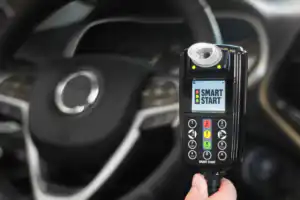
An ignition interlock device requires a driver to provide a breath sample before the vehicle can be started and periodically there may be requirements to perform rolling re-tests. If alcohol is detected above a set limit, the vehicle will not start and the Court can be notified.
What Happens If You Refuse a Breath or Blood Test?
Refusing a breath or blood test does not necessarily stop law enforcement from obtaining chemical evidence.
Texas drivers can refuse voluntary chemical testing, but refusal can have separate consequences. A refusal may:
- Trigger an administrative driver’s license suspension
- Be used as evidence in the criminal case
- Lead police to request a search warrant for a blood sample
During DWI investigations, law enforcement can present a sworn affidavit to a magistrate and ask for a search warrant authorizing a blood draw. Once a valid warrant is issued, the blood draw becomes a court-authorized search. Refusing to allow the blood draw after a search warrant is ordered by a magistrate can lead to additional criminal charges.
Can Police Force a Blood Draw Because This Is Your Second DWI?
Not simply because the person has a previous DWI.
Having a prior DWI does not automatically eliminate a driver’s constitutional protections. Generally, a nonconsensual blood draw requires one of the following:
- Voluntary consent
- A valid search warrant
- A legally recognized exception to the warrant requirement
The idea that prior DWI convictions automatically allow police to take blood without a warrant is a misconception. If a driver refuses testing, officers may instead seek a blood-draw warrant from a judge.
Can Blood-Test Evidence Be Challenged?
Yes. The fact that police obtained a blood sample does not automatically mean the blood evidence cannot be questioned. Depending on the circumstances, issues may involve:
- Whether the warrant was supported by probable cause
- Whether the warrant was properly issued
- How the blood draw was performed
- How the blood sample was handled
- Chain of custody
- Laboratory testing procedures
- Reliability of the test results
These issues are highly case-specific. A valid-looking BAC number does not by itself resolve every legal or evidentiary question in a DWI case.
Does a BAC Over 0.08 Automatically Mean a Conviction?
No. A test result showing a BAC at or above the legal limit can be significant evidence, but it does not automatically guarantee a conviction. The State still has to prove the required elements of the DWI offense and establish that the evidence was legally and reliably obtained.
Questions surrounding the stop, arrest, warrant, blood draw, handling of the specimen, and testing process may all affect how evidence is used.
What Can Make a Second DWI More Serious?
Certain circumstances can push a case beyond a standard second-DWI charge and into much more serious territory. Examples include:
- A vehicle accident
- Serious injury, which can lead to an intoxication assault charge
- A child passenger in the vehicle
- A more extensive history that can raise the case to a felony DWI
- Additional criminal allegations
These situations involve laws beyond a standard second-DWI charge, so the specific facts of the arrest matter a great deal.
Being Charged With a Second DWI Does Not Mean You Have Been Convicted
An arrest or criminal charge is an accusation. It is not the same thing as a conviction.
The State still has to prove the case. Chemical test results, police observations, warrant evidence, and other evidence may all become part of that process. Even blood evidence obtained through a search warrant can potentially be challenged if there are legal or reliability problems with how it was obtained or tested.
What Should You Do After a Second DWI Arrest?
The first practical priority is to pay attention to deadlines and paperwork. In particular:
- Review any driver’s license suspension notice carefully.
- Do not ignore the 15-day ALR hearing deadline.
- Keep copies of paperwork provided by police or DPS.
- Remember that the driver’s license case and the criminal case may move separately.
- Avoid assuming that an arrest, BAC result, or blood warrant automatically determines the outcome of the case.
Because a second DWI involves a prior history and potentially more serious consequences, case-specific legal advice may be especially important.
Frequently Asked Questions About a Second DWI in Texas
Is a second DWI automatically a felony in Texas?
No. A standard second DWI is a Class A misdemeanor, not a felony. A DWI generally becomes a felony in specific situations, such as a third offense, a DWI with a child passenger, or a case involving serious injury or death.
Will I automatically go to jail for a second DWI?
A second DWI carries a mandatory minimum of 30 days if a jail-only sentence is ordered, and a maximum of 1 year, but an arrest does not by itself determine the final sentence. The actual outcome depends on how the case is resolved and your circumstances.
How long could I lose my driver’s license?
There can be more than one type of license consequence. Through the separate ALR process, a qualifying prior alcohol-related enforcement contact within the previous 10 years can result in a two-year suspension after a refusal or a one-year suspension after a failed test. A conviction can carry its own suspension of 180 days to 2 years.
Can I drive to work if my license is suspended?
Possibly. Some drivers may qualify for an Occupational Driver’s License that allows limited driving for essential needs such as work, school, and household responsibilities. Restrictions and additional requirements may apply.
What happens if I refuse a breath or blood test?
Refusal can trigger an administrative driver’s license suspension and may be used as evidence in the criminal case. Police may also apply for a search warrant allowing them to obtain a blood sample.
Can the police take my blood just because I already have a DWI?
Not automatically. A prior DWI alone does not give police unlimited authority to conduct a warrantless blood draw. Officers generally need consent, a search warrant, or another legally recognized exception.
Can a blood test be challenged?
Possibly yes. Depending on the case, challenges may involve the warrant, probable cause, the collection procedure, chain of custody, or the reliability of the laboratory testing.
How Our Houston Team Defends a Second DWI
A second DWI raises the stakes on every front, from the mandatory jail exposure to the longer license suspension, and the case moves on two separate tracks at once. That is exactly why the first days matter so much. We move quickly to protect the 15-day ALR deadline so your license fight is not lost by default, we examine the stop, the testing, and any blood warrant for the weaknesses that can change an outcome, and we handle the criminal case and the license case together so nothing is missed. A prior DWI raises the pressure, but it does not decide the result, and being charged is not the same as being convicted.
If you are facing a second DWI in Houston or the surrounding area, contact David Smith Law Firm today for a free consultation. The sooner we are involved, the more we can do to protect your license, your record, and your future.
Discover more from David Smith Law Firm, PLLC
Subscribe to get the latest posts sent to your email.